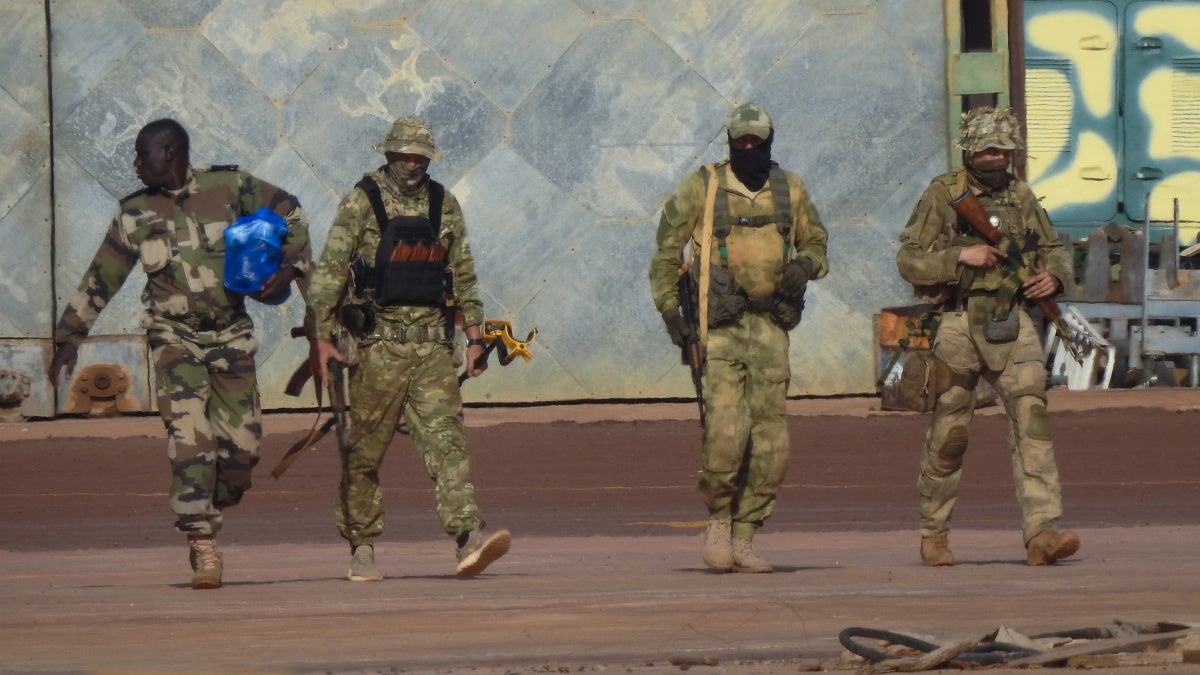
Investigations reveal that Malian armed forces, alongside the Russian-linked Wagner Group, have carried out extrajudicial killings and enforced disappearances targeting Fulani men since the beginning of 2025. These alleged crimes, occurring in multiple regions, have raised serious concerns about human rights violations and the protection of civilians in Mali.
Alleged atrocities in Mali’s counter-insurgency operations
Since early 2025, Malian troops and Wagner Group fighters—operating jointly against Islamist armed groups—have been implicated in dozens of summary executions and forced disappearances of Fulani men. Human rights organizations have documented at least 12 executions and the enforced disappearance of 81 others, primarily in regions where the Group for the Support of Islam and Muslims (JNIM) operates.
Witness testimonies indicate that soldiers and Wagner fighters have systematically targeted Fulani civilians, accusing them of collaborating with Islamist militants despite a lack of concrete evidence. International observers stress that all parties to the conflict must uphold international humanitarian law, including the prohibition of arbitrary killings and torture.
Calls for accountability and international intervention
Human rights advocates urge the African Union (AU) to step up pressure on Mali’s military junta to investigate these allegations thoroughly, ensure fair trials for perpetrators, and provide reparations to victims’ families. The AU’s involvement is seen as critical, especially given Mali’s recent withdrawal from the Economic Community of West African States (ECOWAS) in January 2025, which complicates regional legal recourse for victims.
Ilaria Allegrozzi, Senior Sahel Researcher at Human Rights Watch, emphasized: “The Malian junta bears ultimate responsibility for the crimes committed by its forces and Wagner allies. It must end these abuses, reveal the whereabouts of detainees, conduct impartial investigations, and hold those responsible to account.”
Specific incidents and eyewitness accounts
Mass killings in Sebabougou (Kayes region, April 2025)
A UN report corroborated local testimonies that Malian forces and Wagner fighters executed 65 Fulani herders and livestock traders in Sebabougou after forcibly gathering them. Survivors reported that detainees were transported to a military camp in Kwala, where many were allegedly killed. Families searching for their loved ones later discovered 43 decomposed bodies near the camp, though identification was impossible due to decomposition.
Extrajudicial executions in Belidanédji (Ségou region, March 2025)
On March 30, Malian soldiers and Wagner fighters stormed Belidanédji, executing six Fulani men—aged 35 to 63—after a skirmish with Islamist militants. Survivors described how soldiers showed no distinction between civilians and militants, summarily killing those fleeing or hiding. One witness recounted: “They shot my friend in the chest right in front of me. When they left, we picked up five bodies and evacuated a wounded man, but he died later in the hospital.”
Forced disappearances in Kourma (Ségou region, March 2025)
In Kourma, witnesses reported that Malian troops and Wagner fighters—including Russian-speaking mercenaries—rounded up 12 Fulani men at a livestock market, accusing them of ties to JNIM. The men, aged 22 to 62, remain missing. A local elder described the scene: “They called us terrorists, beat us brutally, and loaded us into a pickup truck like animals.”
Burning of homes and killings in Kobou (Douentza region, January 2025)
Satellite imagery analyzed by Human Rights Watch confirms that Malian soldiers burned at least 30 homes in Kobou after executing three Fulani men—including two elderly individuals with their hands and eyes bound. A survivor explained: “We all fled because we know soldiers target us, accusing us of being jihadists. If you don’t run, the jihadists kill you for helping the soldiers. No one is spared.”
Legal implications and international response
Mali is a party to the Geneva Conventions and the International Convention for the Protection of All Persons from Enforced Disappearance, both of which prohibit the crimes documented. Additionally, the International Criminal Court (ICC) has an ongoing investigation into war crimes in Mali since 2012, with potential jurisdiction over these recent atrocities.
Human Rights Watch has repeatedly documented widespread abuses by Malian forces and Wagner fighters in counter-insurgency operations since 2021. The recent withdrawal of Wagner Group from Mali—announced in June 2025—has raised concerns about the deployment of its successor, Africa Corps, a Russian-controlled paramilitary group. Analysts warn that the cycle of violence may continue unless robust international action is taken.
Why Fulani civilians are targeted
Islamist armed groups, including JNIM, have historically recruited within the Fulani community, fueling anti-Fulani sentiment among Malian security forces. Successive Malian governments have perpetuated this dangerous conflation, putting Fulani civilians at grave risk. International law prohibits collective punishment, yet these abuses suggest a pattern of stigmatization and violence against an entire ethnic group.
The situation demands urgent action from the African Union and the United Nations to protect civilians, ensure accountability, and prevent further atrocities. Failure to act could entrench impunity and deepen the humanitarian crisis in Mali.