Mali’s government puts Iyad Ag Ghaly and top jihadist allies on its most-wanted list
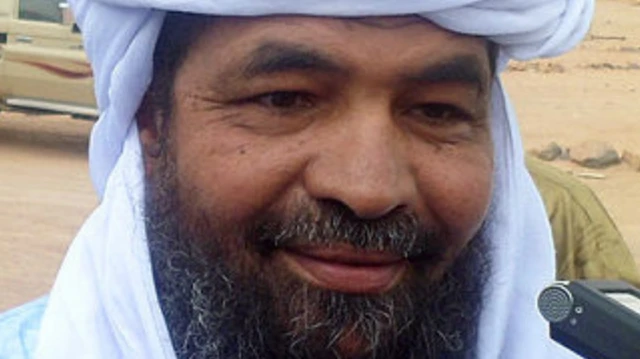
Photo credit, Getty Images
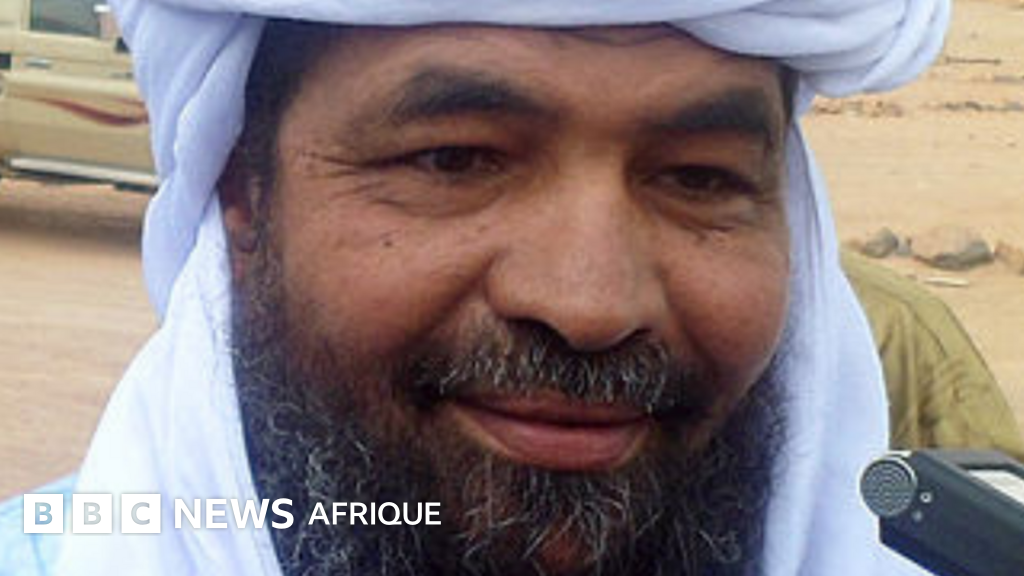
Bamako has escalated its counter-terrorism campaign by placing a 2 billion CFA franc bounty on the capture of Iyad Ag Ghaly, the notorious leader of the Jama’at Nusrat al-Islam wal-Muslimin (JNIM), and six of his close associates. The announcement follows coordinated attacks in late April that targeted strategic locations in Kidal and Kati, leaving the country’s Defense Minister dead and sending shockwaves through the capital.
The government issued the reward through a formal statement from the Ministry of Security and Civil Protection, broadcast on national television. The move underscores the growing threat posed by jihadist networks operating across the Sahel, particularly in regions where state authority remains fragile.
Government’s most-wanted list: targets and rewards
The Ministry’s communiqué details seven individuals now considered “high-risk threats” to Mali’s national security. Each carries a price tag on their head, reflecting their alleged roles in terrorism and separatist violence:
- Iyad Ag Ghaly – 2 billion CFA francs
Leader of JNIM and a long-standing figure in the Sahel’s jihadist landscape, Ag Ghaly has been linked to multiple attacks targeting Malian forces and civilian infrastructure. - Amadou Koufa – 1.5 billion CFA francs
Head of the Macina Katiba within JNIM, Koufa is known for orchestrating attacks in central Mali, disrupting trade routes and humanitarian access. - Abdoulaye Mohamed (Habib) – 1.5 billion CFA francs
A senior commander in the Macina Katiba, Habib is accused of planning and executing several high-profile assaults. - Algabas Ag Intallah – 1 billion CFA francs
A dual political-military leader of the Azawad Liberation Front (FLA), his group has been implicated in recent cross-border raids. - Ghita, Bilal Chérif, and Abderrahmane Al Banna – 500 million CFA francs each
Three senior FLA operatives now wanted for their alleged involvement in the April attacks on Kidal and Kati.
The authorities have called on citizens to share credible intelligence with security forces to assist in the capture of these individuals, emphasizing the need for public cooperation in the face of escalating violence.
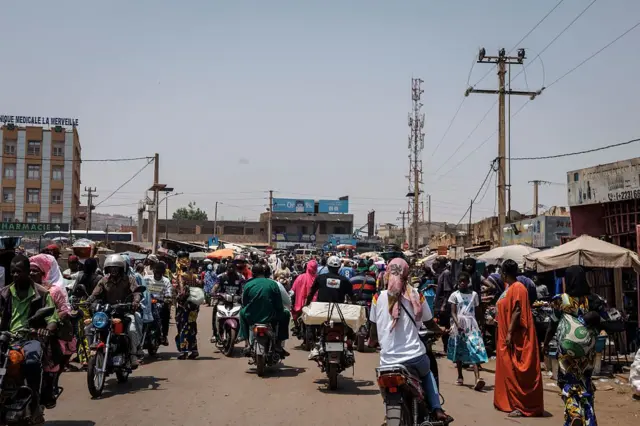
Photo credit, Getty Images
Who is Iyad Ag Ghaly?
Born in 1958 in Boghassa, near Kidal, Iyad Ag Ghaly rose from a young rebel leader to become one of the most influential jihadist commanders in West Africa. His trajectory reflects the shifting sands of Sahelian conflict, where regional alliances and militant ideologies have reshaped decades of instability.
In the 1970s, he sought refuge in Libya, joining the ranks of Colonel Muammar Gaddafi’s forces—a common path for many Tuareg fighters of his generation. He saw combat in Lebanon and Chad before returning to Mali in the early 1990s.
Ag Ghaly’s early militant career saw him founding the Popular Movement for the Liberation of Azawad (MPLA), launching a rebellion that challenged Bamako’s control over northern regions. He later led the Azawad Popular Movement (MPA), waging open war against the state before negotiating a peace accord in 1992.
By the late 2000s, his focus had shifted toward a stricter interpretation of Islam. He forged ties with the Salafist Group for Preaching and Combat (GSPC), an Algerian-based faction affiliated with Al-Qaeda that would later evolve into Al-Qaeda in the Islamic Maghreb (AQIM).
In 2012, he established Ansar Dine, a jihadist group that quickly aligned itself with AQIM during the northern Mali conflict. Five years later, he consolidated power by founding the Group for the Support of Islam and Muslims (JNIM), uniting several Malian jihadist factions under a single banner loyal to Al-Qaeda.
Today, Ag Ghaly is not only a military leader but a strategist who has adapted his tactics in response to government counter-measures. According to security analysts, he has shifted from direct confrontations with the army to a campaign of economic strangulation, targeting supply lines, power grids, and markets to destabilize life in the capital.
The International Criminal Court has issued an arrest warrant for Ag Ghaly, charging him with crimes against humanity and war crimes committed during the 2012–2013 occupation of northern Mali. Despite his fugitive status, he continues to direct operations across Mali, Burkina Faso, and Niger—nations bound together under the Alliance of Sahel States (AES).
His ultimate goal, analysts suggest, is not to govern Mali but to undermine the current regime in Bamako by making daily life unbearable for its citizens. By cutting off roads, destroying infrastructure, and disrupting commerce, he seeks to erode public trust in the state and force its collapse from within.