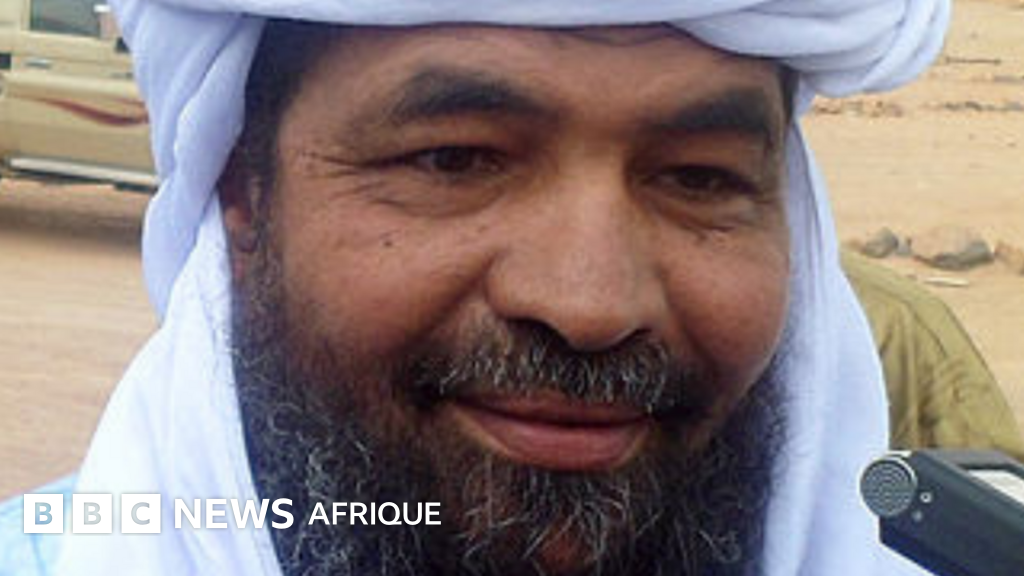
Mali’s 2 Billion CFA Bounty on Iyad Ag Ghaly and Jihadist Leaders
The Malian government has escalated its fight against terrorism by offering a 2 billion CFA franc reward for the capture of Iyad Ag Ghaly, the notorious leader of the Jama’at Nusrat al-Islam wal Muslimin (JNIM), along with several of his associates. This bold move follows coordinated attacks in late April that targeted Kidal and Kati, leaving the country’s Defense Minister among the casualties.
The announcement was made through an official statement from the Ministry of Security and Civil Protection, signed by General Daoud Aly Mouhammedine. Authorities are urging citizens to assist security forces in tracking down seven individuals deemed threats to national stability.
Key Figures and Reward Amounts
In addition to Iyad Ag Ghaly, the Malian government has placed bounties on several high-profile figures linked to terrorist activities:
- Amadou Koufa (leader of the Macina Katiba) and Abdoulaye Mohamed (Habib) – 1.5 billion CFA francs each
- Algabas Ag Intallah (political and military leader of the Azawad Liberation Front) – 1 billion CFA francs
- Ghita, Bilal Chérif, and Abderrahmane Al Banna (Azawad Liberation Front commanders) – 500 million CFA francs each
The decision comes after a devastating assault on April 25, where militants from JNIM and separatists from the Azawad Liberation Front (FLA) launched simultaneous strikes, resulting in the death of Defense Minister Sadio Camara.
Government’s Call for Public Cooperation
The Ministry of Security and Civil Protection issued a televised statement emphasizing the importance of public collaboration in combating terrorism. The government is offering financial incentives for credible information leading to the arrest or neutralization of these individuals, highlighting the critical role of community involvement in national security efforts.
Who Is Iyad Ag Ghaly?
Born in 1958 in Boghassa, near Kidal in northern Mali, Iyad Ag Ghaly is a prominent Tuareg warlord and jihadist leader. His militant career spans decades, beginning with his involvement in Libyan forces under Muammar Gaddafi in the 1970s, where he fought in conflicts across the region.
Upon returning to Mali in the early 1990s, he founded the Mouvement populaire pour la libération de l’Azawad (MPLA), sparking a Tuareg rebellion. He later led the Mouvement populaire de l’Azawad (MPA), engaging in armed conflict against the Malian state before signing a peace agreement in 1992.
Ghaly’s radicalization deepened in the 2000s, as he aligned with jihadist groups like the Groupe salafiste pour la prédication et le combat (GSPC), which later became Al-Qaeda in the Islamic Maghreb (AQIM). In 2012, he established Ansar Dine, merging with AQIM to wage jihad in Mali. By 2017, he formed the Group for the Support of Islam and Muslims (JNIM), consolidating several Malian jihadist factions under AQIM and Al-Qaeda’s banner.
The Timbuktu Institute has described Ghaly as “the most wanted man in the Sahel and the greatest threat to Mali’s government”. His tactics have evolved from direct military confrontations to economic sabotage, including blockading supply routes and destroying critical infrastructure like power lines. These actions aim to cripple Bamako’s access to essential resources, destabilizing the country from within.
According to analysts, Ghaly’s ultimate goal is political—to isolate the current Malian regime and force its collapse—rather than to seize control of the state. His strategy relies on weakening the government by exacerbating public suffering, forcing Bamako to scramble for solutions to protect the nation’s heartland.
An international arrest warrant has been issued against Iyad Ag Ghaly by the International Criminal Court (ICC), which accuses him of crimes against humanity and war crimes committed between 2012 and 2013. As the leader of JNIM, one of the most active jihadist groups in the Sahel, Ghaly continues to pose a severe threat to Mali, Niger, and Burkina Faso, the three nations forming the Alliance of Sahel States (AES).