Strategic logistical routes fuel rebel operations in Northern Mali
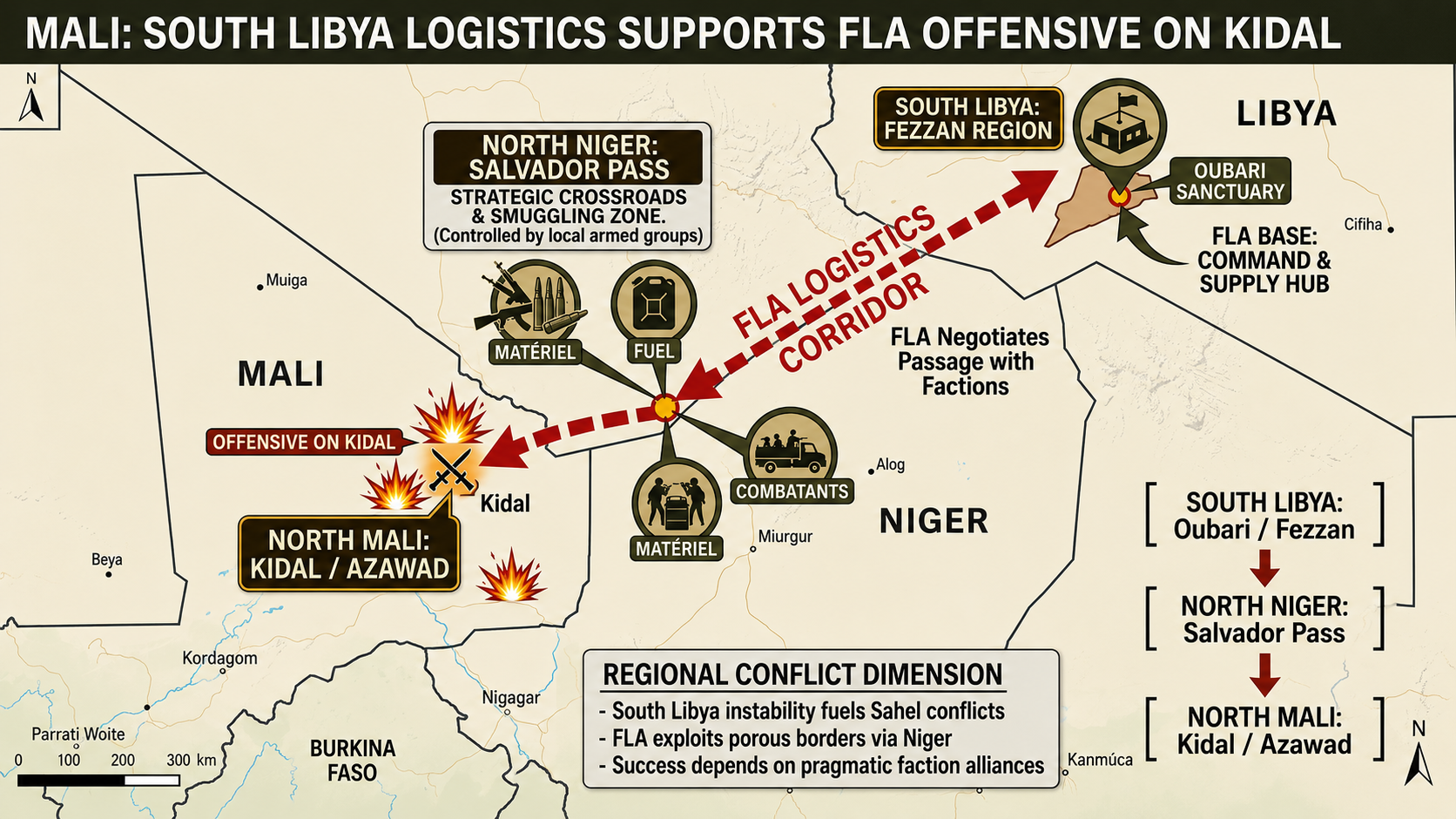
The Front de Libération de l’Azawad (FLA), a Tuareg rebel movement, has reportedly established a critical supply corridor linking Southern Libya to Northern Mali via Niger to support its recent military campaign. This network has become instrumental in facilitating the rebel offensive launched on April 25 aimed at seizing control of Kidal.
Southern Libya’s Fezzan region: a logistical nerve center
At the heart of this operational framework lies the Fezzan region, a historically ungoverned expanse in Southern Libya. Rebel infrastructure has reportedly been consolidated near the town of Oubari, transforming the area into a multifunctional hub. This zone has served not only as a safe haven but also as a command center and supply depot for FLA combatants, enabling the meticulous planning of operations across Northern Mali.
The Salvador Pass: gateway to illicit trade and militant mobility
To project forces into Mali, rebels rely on a transnational axis that connects Southern Libya to Northern Mali, cutting through Niger. The Salvador Pass, a notorious desert crossing in northern Niger, has emerged as the linchpin of this route. Known for its role in illicit activities, the pass facilitates the movement of three essential components:
- Military materiel: including weapons, ammunition, and logistical support
- Strategic fuel supplies: critical for sustaining mobility in desert terrain
- Combatant movements: allowing fighters to advance into Mali before retreating to Libyan territory post-clash
The diagram below illustrates the flow of these elements:
Niger’s pivotal yet constrained role in regional dynamics
The Nigerien segment of this corridor remains under the de facto control of local armed factions, underscoring the necessity of negotiated passage for the FLA. Securing transit rights has required pragmatic agreements with these groups, highlighting the interdependence of armed movements across the Sahel. Such arrangements reveal that the success of military operations in the region hinges on regional alliances rather than unilateral action.
As the struggle for control over Northern Mali intensifies, these developments underscore the transnational nature of the conflict. The persistent instability in Libya continues to reverberate across Sahelian hotspots, shaping the operational calculus of armed groups.