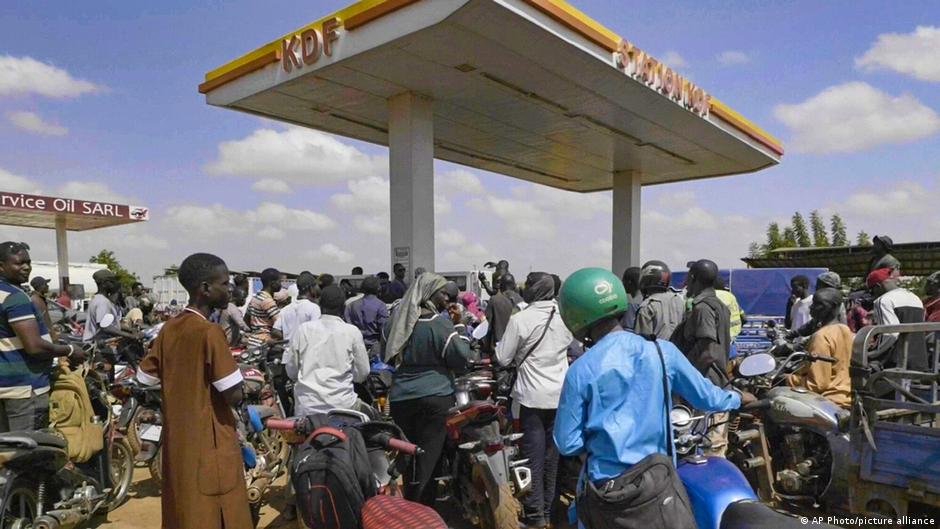
The Malian government has imposed a one-year suspension on the movement of high-displacement motorcycles outside major urban centers, a measure that may be renewed. The ban covers import, transit, sale, and distribution nationwide. Authorities cite curbing the mobility of armed terrorist groups as the primary motivation behind this decision.
Announced via an interministerial decree aired on national television earlier this month, the restriction applies to motorcycles with engine displacements of 125 cubic centimeters or more. According to the announcement, the Bamako District and regional, circle, and arrondissement capitals are classified as major urban centers where the ban does not apply.
Local reactions and practical challenges
While the government frames the policy as a security imperative, concerns have emerged among rural populations who rely on these vehicles for daily survival. In the Dogon Country region, for instance, residents argue that high-displacement motorcycles are uniquely suited to the terrain’s steep slopes and rugged paths.
A local resident from the Bandiagara circle, speaking on condition of anonymity, emphasized the indispensable role of these motorcycles:
« These bikes aren’t just for personal transport—they’re essential for our soldiers, humanitarian workers, farmers, and even medical evacuations. In our area, they’ve become the only way to reach health centers when ambulances can’t make the journey. »
In Mopti, another central city, small business owners who depend on motorcycles to transport goods between villages have already begun storing their bikes. One resident who supplied bread to remote villages lamented the economic ripple effects:
« I used to deliver bread daily to villages far from Mopti. Now, with this ban, most of us have no choice but to stop working. »
Balancing security and survival
Governors retain the authority to adjust or extend the ban in their jurisdictions based on local security conditions. Yet the policy underscores the broader dilemma facing Mali: how to reconcile urgent security needs with the harsh realities of daily life for its citizens.
High-displacement motorcycles have become a dual-use resource—employed by both armed groups for logistical mobility during attacks and by civilians for livelihoods. The situation reflects the country’s protracted security crisis, where measures to contain terrorism often come at a steep human cost.