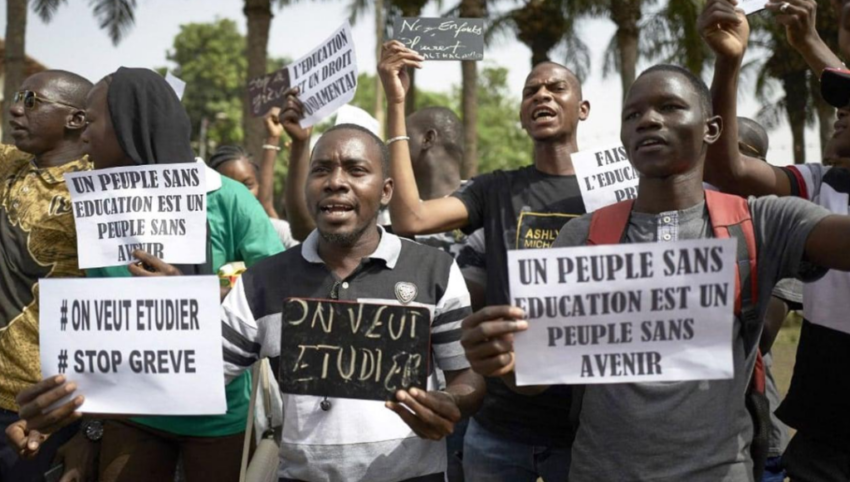
Mali’s ongoing university strike has reached a critical juncture as the transitional authorities have broken weeks of silence to engage directly with striking lecturers. After nearly a month of halted academic activities, the National Union of Higher Education and Scientific Research (SNESUP) announced a high-level meeting with state officials, marking a potential turning point in the dispute over long-overdue research bonuses.
University shutdown enters fourth week as lecturers demand justice
The strike, now in its fourth week, has paralyzed universities across Mali after lecturers launched protests on October 26. Their central demand? The immediate implementation of a presidential decree from 2017 that promised research bonuses—yet remained unpaid for nearly a decade.
The SNESUP confirmed that its executive committee met with top transitional leaders over the weekend, though no concrete commitments were revealed. While the union has called for members to remain mobilized until further notice, the meeting signals a rare moment of direct government intervention in the crisis.
Research bonus unpaid since 2017: a decade of broken promises
The root of the conflict lies in Decree No. 2017-0850/P-RM, signed in October 2017, which guarantees research bonuses to academics for publications, conference participation, and other scholarly work. Despite the legal mandate, successive governments have failed to allocate or disburse the funds.
The SNESUP is now demanding:
- An official announcement on the bonus’s payment structure and timeline
- The immediate clearance of back pay for the years since 2017
- Guaranteed future disbursements aligned with the decree
For lecturers, this is not just about financial compensation—it is about respect for institutional commitments and the survival of Mali’s higher education system.
Academic year at risk as student futures hang in the balance
The strike’s ripple effects are now severely impacting students, who face disrupted semesters, delayed exams, and uncertainty over graduation timelines. With each passing week, the academic calendar risks irreversible setbacks, threatening the futures of thousands of learners.
Earlier mediation attempts, including appeals from religious and traditional leaders, failed to break the deadlock. Now, with transitional authorities entering the fray, the stakes are higher than ever for both lecturers and students.
What’s next? Dialogue without guarantees
The SNESUP has pledged to consult its members before deciding whether to suspend the strike. While the government’s sudden engagement is a positive sign, lecturers insist on tangible results—not just empty promises.
The fourth week of the strike begins with cautious optimism, but the path to resolution remains uncertain. For Mali’s higher education sector, the cost of inaction is mounting, and time is running out to avert a full-blown academic collapse.