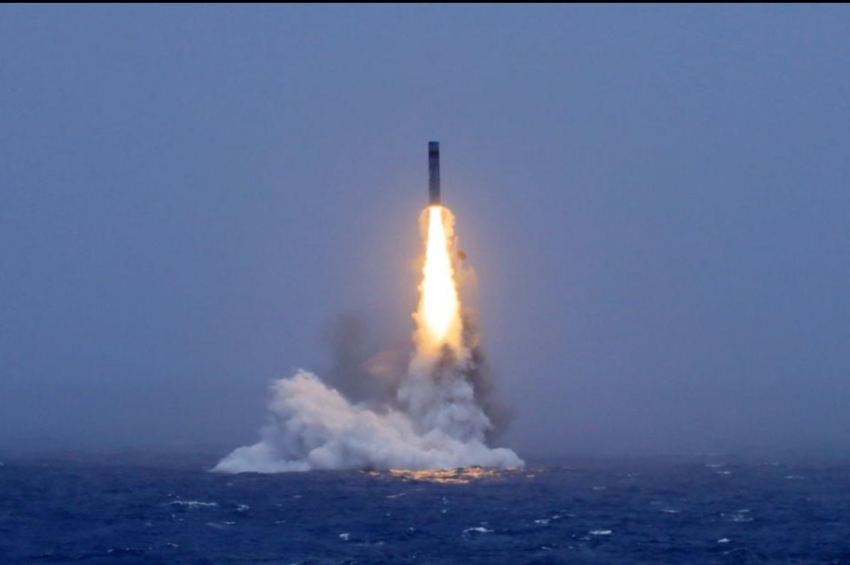
In a dramatic escalation of tensions in the Taiwan Strait, China has quietly deployed over 100 naval vessels and conducted what is reported as a submarine-launched ballistic missile test, sending shockwaves through regional trade networks and military alliances. These unannounced maneuvers, revealed through independent military sources, are raising urgent questions about their long-term consequences for Taipei, Tokyo, and Washington alike.
Beijing’s massive naval exercise: a calculated move or a warning sign?
The numbers tell a story of unprecedented scale. More than 100 Chinese warships, coast guard vessels, and auxiliary ships from multiple fleets—spanning the East, North, and South Sea Commands—gathered in the Western Pacific in early November. What began as a routine naval exercise quickly evolved into a complex simulation of blockades, maritime control, and long-range strikes. According to multiple military intelligence sources, these drills were not merely about testing operational readiness—they appear designed to project power across a vast maritime theater, with Taiwan squarely in the crosshairs.
The inclusion of the Liaoning aircraft carrier strike group signals a new level of coordination, suggesting that Beijing is refining its ability to project force beyond its immediate coastal waters. Analysts suggest these exercises could serve as a blueprint for potential scenarios including a full or partial blockade of Taiwan, a tactic that would cripple the island’s economy without triggering full-scale war.
The submarine missile test: what it reveals about China’s growing deterrence
Amid the naval buildup, one development stands out: a reported launch of a submarine-launched ballistic missile (SLBM) from the Yellow Sea during the drills. According to a senior Taiwanese security official, the missile was fired toward mainland China—a move that, if confirmed, would mark a significant technological and strategic milestone for Beijing’s nuclear-capable submarine fleet.
The implications are serious. Submarines equipped with SLBMs provide China with a second-strike capability, ensuring that even in a surprise attack, the country could retaliate with devastating force. The stealthy nature of submarine operations makes detection and tracking extremely difficult, allowing Beijing to maintain a credible deterrent without revealing its full hand. While the specifics of the missile type, trajectory, and success of the launch remain unconfirmed, the timing suggests a deliberate message: deterrence is evolving from paper strength to tangible reality.
Why no public announcement?
China has not officially acknowledged either the scale of the naval deployment or the missile test, reinforcing a pattern of what analysts call “coercive ambiguity.” By keeping its actions deliberately opaque, Beijing avoids diplomatic confrontation while maintaining psychological pressure on Taipei and its regional allies. This strategy forces adversaries to constantly adjust their posture, raising the cost of any counter-movement and keeping the region on edge.
Economic fallout: how China’s strategy threatens global supply chains
The Taiwan Strait is one of the world’s busiest shipping lanes, handling over $5 trillion in annual trade. Any disruption—whether through a de facto blockade or coercive maritime control—could paralyze oil shipments, electronics supply chains, and semiconductor exports. Japan, heavily reliant on Taiwanese semiconductors and energy imports, is particularly vulnerable. The presence of dozens of Chinese ships inside the first island chain also raises the risk of escalation, as Tokyo may feel compelled to increase its naval patrols and counter-China deployments in the East China Sea.
For multinational corporations with operations in Taiwan or passing through the region, this new military reality introduces operational instability. Shipping companies are rerouting vessels, insurers are reassessing risk premiums, and manufacturers are reviewing just-in-time inventory strategies. The message from Beijing is clear: economic interdependence no longer guarantees stability. Power, not commerce, now dictates the rules.
Diplomatic alarm: how the world is responding to China’s gambit
As Beijing strengthens its military posture, international reactions are sharpening. Just days before these drills, the G7 foreign ministers issued a joint statement expressing grave concern over China’s military activity east of Taiwan. They highlighted risks to freedom of navigation, maritime security, and regional stability—a clear signal that Western powers are no longer treating these maneuvers as isolated incidents.
Washington has increased reconnaissance flights and naval patrols in the region, including in the South China Sea, as part of a broader strategy to challenge Beijing’s notion of “strategic dominance.” Meanwhile, Taipei has accelerated air raid drills and cyber defense simulations, signaling both public resolve and private unease. Both the U.S. and Japan are reportedly evaluating contingency plans for a potential blockade, including rapid response deployments and pre-positioning of military assets.
What’s next for Taipei? Balancing deterrence and de-escalation
For Taiwan, the challenge is existential. With China refining its ability to encircle the island without firing a shot, Taipei must prepare for a new kind of warfare—gray zone conflict—where pressure is constant, boundaries are blurred, and escalation is gradual. The 70-plus Chinese ships still operating within the first island chain serve as a daily reminder: the island is under siege, not with bombs and bullets, but with ships and silence.
Yet Taiwan is not alone. Its allies in Japan and the U.S. are preparing contingency plans, but the strategic calculus remains uncertain. Can deterrence hold without provoking confrontation? Will economic pain force Taipei to compromise? Most critically, how far is Beijing willing to push without triggering a full-scale regional crisis?
One thing is certain: the era of ambiguity in the Taiwan Strait is over. China’s silent naval surge has not only reshaped the military balance—it has exposed a fundamental truth: in the Pacific, power talks, and economics trembles.
The bottom line
- China has deployed over 100 warships and coast guard vessels in a coordinated naval exercise near Taiwan, with no prior announcement.
- A submarine-launched ballistic missile test is reported to have occurred during the drills, signaling advances in China’s nuclear deterrent capabilities.
- The maneuvers threaten key global trade routes, particularly for semiconductors and energy, putting Japan and multinational firms at risk.
- International responses—from the G7 to Washington and Tokyo—are intensifying, raising the risk of miscalculation and escalation.
- Taiwan faces a prolonged period of coercive pressure, testing both its military resilience and diplomatic alliances.