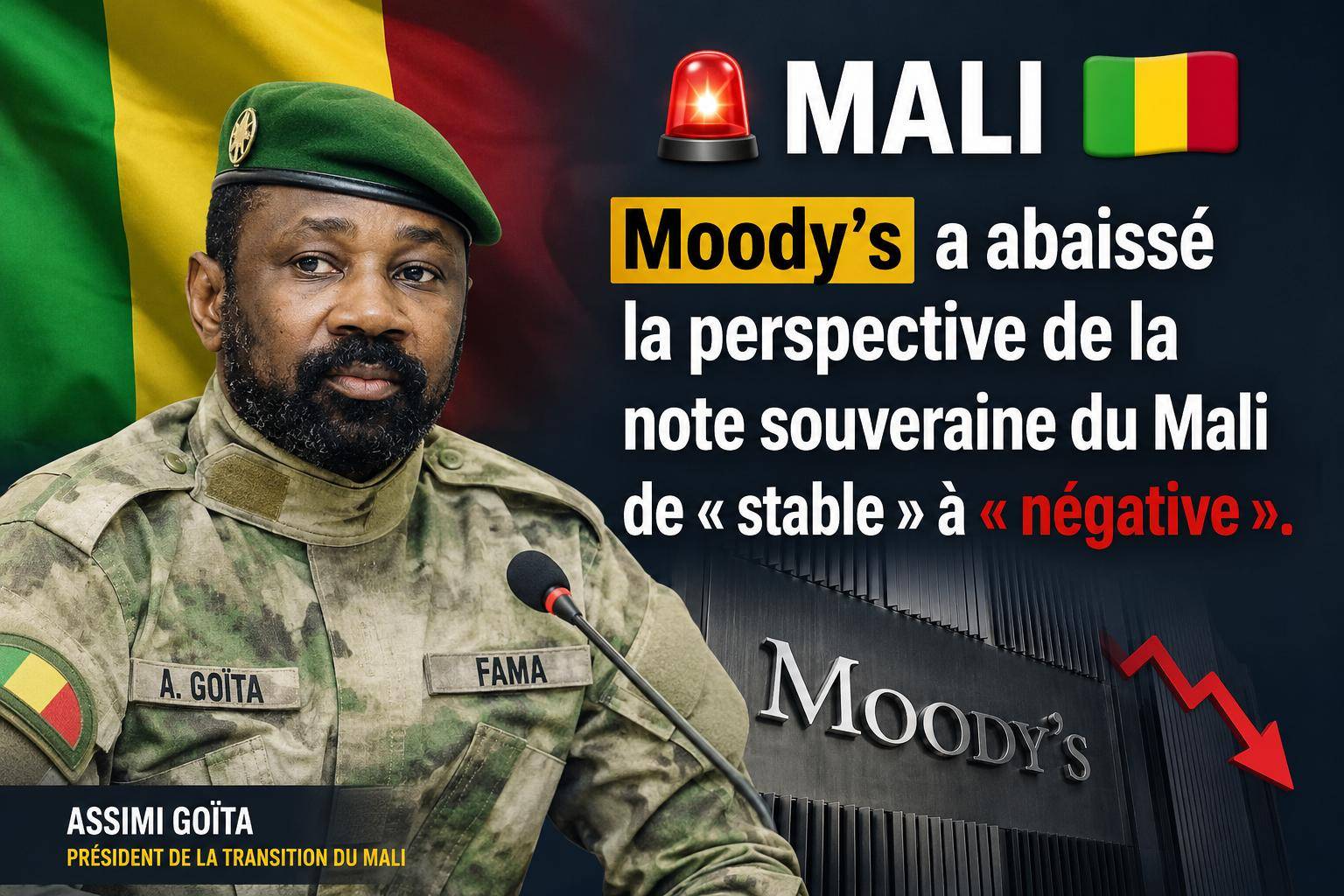
Global credit ratings agency Moody’s has downgraded Mali’s sovereign credit outlook from stable to negative, while retaining the Caa2 rating. This move reflects deepening concerns over escalating security risks, growing financing strains in regional markets, and lingering political uncertainties that could further destabilize the country’s economic trajectory.
Why Moody’s warning matters for Mali’s economy
In financial circles, a credit rating outlook serves as a critical barometer of investor confidence. Moody’s decision to shift the outlook to negative signals a heightened risk of a future downgrade of Mali’s sovereign debt rating. Currently classified as Caa2, Mali’s debt remains firmly entrenched in the speculative-grade bracket—an area typically associated with high-risk investments and elevated borrowing costs.
The shadow of persistent insecurity
At the heart of Moody’s assessment lies the deteriorating security environment. Despite ongoing efforts to restructure the national defense apparatus and conduct counterterrorism operations, Mali continues to grapple with frequent attacks and widespread instability. These conditions disrupt supply chains, undermine agricultural output, and severely hamper the state’s ability to collect revenue across key regions, further straining public finances.
Financial squeeze in regional markets
Beyond security concerns, Mali’s financial challenges have intensified due to restricted access to traditional external funding sources. Following diplomatic and institutional disruptions, Bamako has increasingly relied on the regional debt market under the West African Economic and Monetary Union (WAEMU) framework. However, this strategy has become increasingly costly.
The Central Bank of West African States (BCEAO) has aggressively raised interest rates to curb inflation, pushing borrowing costs to new highs. Recent Treasury bond issuances have drawn lukewarm investor response, with subscription rates falling short of expectations. This reluctance, particularly from commercial banks, reflects growing apprehension over Mali’s creditworthiness and restricts the government’s fiscal flexibility to fund critical infrastructure and essential services.
Political transition fuels market unease
Moody’s assessment also highlights the prolonged political transition and delayed electoral calendar as major risk factors. The absence of a clear roadmap toward constitutional normalcy has eroded confidence among international donors and multilateral partners. Compounding this uncertainty is Mali’s strategic pivot away from the Economic Community of West African States (ECOWAS), now formalized under the Alliance of Sahel States (AES) alongside Niger and Burkina Faso. While authorities frame this move as a step toward greater sovereignty and new strategic partnerships, global investors view it with skepticism. Concerns persist over potential trade barriers, capital controls, and disruptions to regional economic integration, all of which could deter foreign direct investment and hinder economic recovery.
Real-world consequences for ordinary Malians
This Moody’s outlook revision is more than just a technical rating change—it has tangible consequences for daily life. Higher borrowing costs for the government mean fewer resources available for essential social services such as healthcare, education, and subsidies on basic goods. For local businesses, the impact is immediate and severe. Banks, already overexposed to sovereign debt, are tightening credit lines to the private sector, leaving small and medium-sized enterprises—vital engines of job creation—with limited access to funding needed for growth and expansion.
Despite these challenges, Mali’s economy retains pockets of resilience, notably through gold mining and cotton production. Yet, such strengths are increasingly overshadowed by the realities of global finance. To stabilize its economic outlook and restore investor trust, Malian authorities must navigate a delicate balance: restore security, clarify the political transition, and demonstrate rigorous fiscal discipline. Only then can the nation begin to rebuild confidence in its long-term economic prospects.