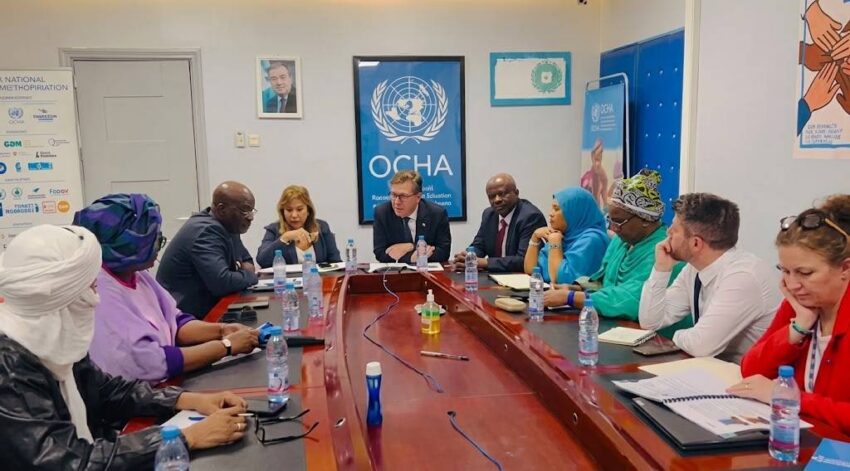
The United Nations returns to Bamako under mounting pressure as Mali’s humanitarian emergency deepens. With 5.1 million people requiring urgent assistance in 2026, the arrival of a high-level UN delegation led by Tom Fletcher spotlights the widening gap between need and aid delivery. International actors are reassessing their strategies amid shifting political landscapes and restricted access to the most vulnerable communities.
The staggering human cost behind the numbers
Behind the staggering figure of 5.1 million people in need lies a complex human reality. Families battling food insecurity, displaced communities fleeing conflict zones, and rural populations denied access to essential services form the backbone of this crisis. While 3.8 million individuals remain targeted by existing humanitarian plans, the scale of suffering extends far beyond what current frameworks can address.
Critical shortages persist in food security, healthcare access, clean water, sanitation, and child protection services. The discrepancy between those in need and those reached by aid programs underscores a dangerous shortfall in resources and operational reach. For many, the absence of timely intervention could mean irreversible consequences.
Diplomatic shifts complicate humanitarian responses
The timing of the UN delegation’s visit reflects a critical juncture in Mali’s international relations. Recent policy changes by Malian authorities have resulted in the suspension or withdrawal of several vital humanitarian organizations, reshaping the landscape of assistance delivery. This strategic pivot toward national sovereignty has created a paradox: while local control gains ground, millions of civilians face increasingly precarious living conditions.
Tom Fletcher’s mission arrives at a pivotal moment. Unlike other international actors, the UN maintains a mandated presence, yet its ability to operate effectively depends on navigating the evolving constraints imposed by national policies. The visit signals both an acknowledgment of the crisis and a test of diplomatic flexibility in sustaining humanitarian efforts under restrictive conditions.
Balancing sovereignty with lifesaving obligations
The core challenge now lies in finding a middle ground between national autonomy and the universal obligation to protect vulnerable populations. The Malian government’s emphasis on sovereignty is not incompatible with international cooperation—provided that humanitarian imperatives remain central to policy decisions.
Effective coordination will require not only financial resources but also transparent dialogue between government stakeholders, UN agencies, and frontline aid organizations. The 5.1 million people in need cannot afford further delays; each day without coordinated action exacerbates existing vulnerabilities and fuels a cycle of suffering that transcends political agendas.
An uncertain path forward
The UN delegation’s mandate is clear: to assess the real-world impact of the humanitarian crisis and explore viable pathways for delivering life-saving aid under current constraints. Success will hinge on three critical factors: sustained diplomatic engagement, flexible operational strategies, and an unwavering focus on the human consequences of inaction.
For millions in Mali, 2026 is not just another year—it is a race against time. As trusted organizations navigate this evolving landscape, the global community faces a moral imperative: to ensure that sovereignty does not come at the cost of human dignity, and that no one is left behind in the face of calamity.