The Oumar Mariko mediation: a humanitarian breakthrough or a sovereignty crisis?
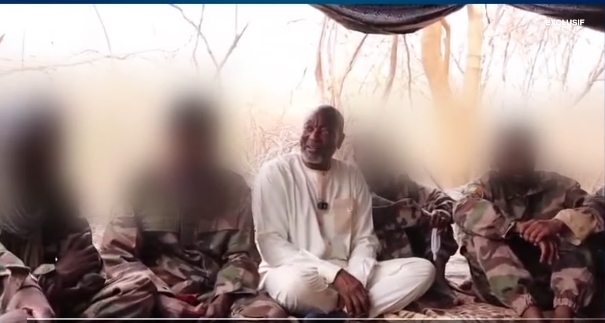
In a single photograph that went viral across Malian social media, opposition figure Oumar Mariko—currently living in exile—appears alongside 17 recently freed hostages, liberated by the Group for the Support of Islam and Muslims (JNIM), the Al-Qaeda-affiliated militant group operating in the Sahel. While the release of these civilians is undoubtedly a relief, the image has become a stark symbol of the Malian state’s inability to assert control over its own territory.
The absence of Bamako’s institutions from this process raises critical questions about Mali’s eroding sovereignty. How does a political opponent, estranged from the government, manage to move freely and negotiate in regions where the national security apparatus appears paralyzed? This private mediation underscores a troubling reality: in vast swaths of the country, the ability to act and negotiate has shifted from state institutions to informal actors, signaling a state that is losing its grip on power.
The JNIM’s calculated image campaign
The hostage release was far from a charitable act. Instead, it was a meticulously planned propaganda move designed to serve two key objectives. First, the group sought to reframe its image by presenting itself as a “reasonable interlocutor” willing to engage in negotiations and publicize humanitarian gestures. Second, by stepping into the roles traditionally held by local officials—such as prefects and mayors—the JNIM positions itself as the de facto authority in areas where the Malian government has lost credibility.
As one analyst noted, “Sovereignty is not declared in speeches from Bamako; it is proven by the state’s ability to protect its citizens without intermediaries.”
The hidden costs of shadow negotiations
While families celebrate the return of their loved ones, the informal nature of this resolution carries grave implications for Mali’s future. Behind the scenes:
- Funding terrorism: Ransom payments, though unofficial, are believed to fuel future attacks against Malian armed forces (FAMa) and other security targets.
- Legitimizing armed groups: Engaging with militant leaders for concessions tacitly acknowledges their control over territory, emboldening their influence among rural populations.
The urban-rural divide: two Mali’s at war
Mali today is fractured between two realities:
- The institutional Mali: In the capital, Bamako, the government insists on military progress and a full-scale territorial reconquest.
- The rural Mali: In the countryside, communities, abandoned by the state, resort to desperate pragmatism—coexisting with armed groups simply to survive.
A wake-up call for Bamako
Oumar Mariko’s involvement in the hostage release is more than a humanitarian footnote; it is a glaring warning. By allowing private actors and opposition figures to handle matters as sensitive as national security, Mali risks deepening its fragmentation. The challenge for Bamako is no longer just military—it is political. Restoring state authority requires more than force; it demands reclaiming the power to govern where dialogue currently happens under the shadow of armed conflict.
Until then, the image of Mariko and the freed hostages will remain a powerful reminder of a state struggling to assert its presence—and a population left to navigate a dangerous new normal.