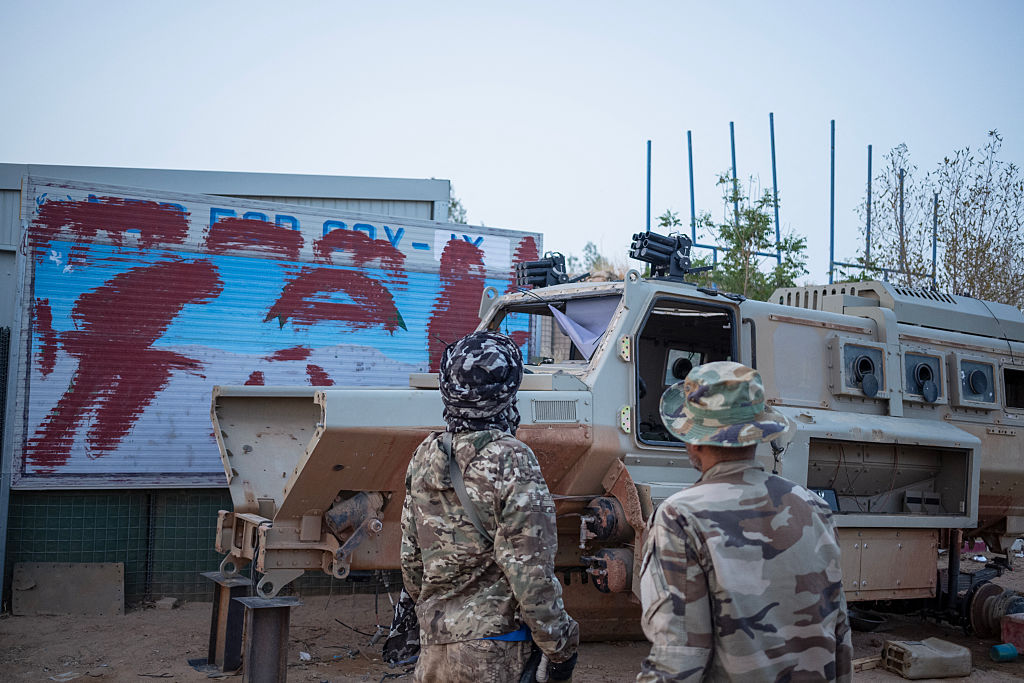
When Malian authorities invited Russian mercenaries into the country in 2021, the junta shifted its military focus toward suppressing Tuareg rebels in the northern regions. Analysts now argue this strategy inadvertently empowered Islamist factions—including the Group for the Support of Islam and Muslims (JNIM) and the Islamic State in the Greater Sahara (ISGS)—to expand their reach, disrupting trade routes and crippling local economies through targeted blockades.
Military crackdown fuels insurgent recruitment
Backed by the Africa Corps, the Malian army’s aggressive tactics—marked by widespread civilian casualties—have disproportionately targeted ethnic groups suspected of rebel ties. Reports suggest these operations resulted in thousands of deaths, many through extrajudicial killings, which paradoxically bolstered rebel recruitment efforts. Analyst Wassim Nasr observed, “While the junta concentrated on small desert outposts, JNIM’s influence was quietly growing near Bamako. Their misplaced confidence in reconquering the North only fueled their own propaganda—and backfired spectacularly.”
Broken peace deals and shifting alliances
In January 2024, Mali’s military rulers abandoned the Algiers Accords, a once-stable peace agreement between the former democratic government and the Azauad Liberation Front (ALF). This move followed a November 2023 offensive in which Malian forces, with Wagner Group mercenaries, reclaimed Kidal—a key Tuareg stronghold. Yet while the junta escalated its campaign against northern groups, jihadist factions seized central Mali, encircling the capital and severing critical supply lines from Senegal and Côte d’Ivoire.
From Barkhane to Africa Corps: a costly pivot
The junta’s decision to oust France’s counterterrorism operations—Barkhane and Serval—after a decade of support marked a turning point. While Barkhane had helped stabilize northern Mali and lay the groundwork for the Algiers Accords, its departure left a security vacuum. By late 2023, Mali also expelled the UN Multidimensional Integrated Stabilization Mission in Mali (MINUSMA), replacing it with Russian mercenaries and intensified military campaigns. The most notorious of these was the three-day assault on Moura, where Wagner fighters executed hundreds of ethnic Fulani civilians, sparking outrage and driving more recruits into rebel ranks.
Public trust erodes as mercenaries fail
The Moura massacre and subsequent civilian-targeted operations shattered public confidence in both the junta and the Africa Corps. Nasr noted, “Their only agenda? ‘We hate France. We hate the West.’ They built no schools, no roads—just empty rhetoric.” As the Africa Corps’ brutality peaked in July 2024 during a failed joint operation in Tin Zaouatine, Tuareg fighters ambushed Malian-Russian forces, forcing a retreat into JNIM-controlled territory. The ambush left nearly 50 soldiers and over 80 mercenaries dead, signaling the end of Wagner’s dominance in Mali. “That’s when Wagner stopped being Wagner,” Nasr remarked. Within weeks, the group announced its withdrawal, replaced by the Africa Corps—a rebranded force staffed by Wagner veterans.
Mercenary retreat and jihadist gains
Though the Africa Corps continues to receive a reported $10 million monthly payment, its operations have grown cautious. Preferring drone surveillance over ground patrols, the mercenaries now limit their engagements to defensive roles. “They still deploy, but with far less confidence,” Nasr explained. By late April, their reluctance proved fatal: during a coordinated assault by JNIM and the ALF on Kidal, Africa Corps forces fled, allowing the rebels to seize the city. The same day, a separate attack claimed the life of Mali’s Defense Minister.
With battlefield losses mounting, the Africa Corps has pivoted to protecting the junta itself, diverting resources to safeguard Bamako’s international airport and critical fuel supplies amid GSIM blockades. “They have no other option,” Nasr concluded. “Opposed by every faction, trapped in a losing war, they cling to the Africa Corps as their lifeline—even as it fails them.”