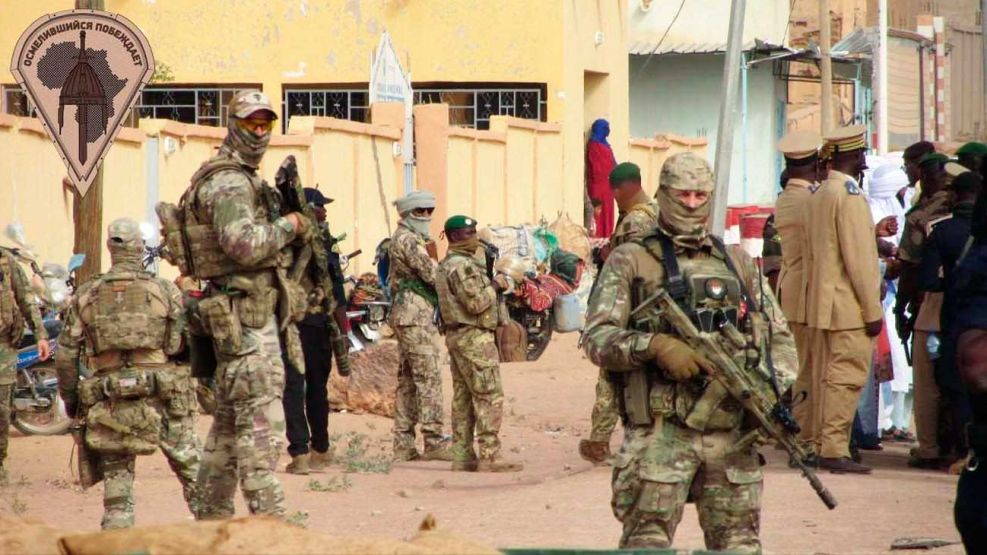
Following the withdrawal of French forces from Operation Barkhane and the conclusion of the United Nations mission (MINUSMA), Mali embarked on a profound strategic reorientation towards Moscow. This evolving partnership is now fundamentally represented by the Africa Corps, an entity directly subordinate to the Russian Ministry of Defense. However, despite its presence spanning several years, the overall security performance of this «mercenary» model in confronting a complex, multidimensional crisis appears increasingly to be a mirage.
A clear failure in crisis management
The Malian transitional government explicitly stated its objective: to reclaim the initiative against terrorist organizations, specifically the JNIM and EIGS. While Africa Corps did facilitate a highly symbolic show of force, notably culminating in the capture of Kidal in late 2023, the broader security outcomes continue to be precarious.
On the ground, a discernible stagnation has taken hold. Terrorist assaults show no signs of abating; indeed, a more alarming trend sees these attacks encroaching closer to the capital, Bamako. The perceived invincibility of Russian «instructors» was decisively shattered during the rout at Tinzawatène in July 2024. Ambushed by CSP rebels and jihadist factions near the Algerian border, Russian paramilitaries reportedly sustained some of their most significant historical casualties in this engagement.
A stark inability to maintain territorial control is evident. Although Africa Corps demonstrates proficiency in swift, decisive «punch operations,» it consistently struggles to secure reconquered territories over the long term. Once their convoys depart, civilian populations frequently find themselves isolated and exposed to brutal reprisals from armed groups.
The grey zone: a complete lack of accountability
The fundamental challenge confronting Africa Corps stems from its ambiguous hybrid status. Unlike a conventional military force, the group operates within an environment of complete legal obscurity, giving rise to two significant dilemmas:
Impunity for alleged abuses:
Numerous non-governmental organizations have highlighted instances of violence perpetrated against civilians during clearance operations. As Africa Corps is not recognized as an official state entity bound by international law, it effectively evades accountability. For victims, seeking any form of redress remains a legal dead end.Security for resources:
The group’s economic operational model raises questions about its true priorities. Frequently deployed in proximity to mining sites rich in resources like gold and lithium, Africa Corps personnel appear more focused on safeguarding extractive assets than on securing vital communication routes or isolated rural communities. Security, in this context, has seemingly transformed into a transactional commodity rather than a public service.
« The sustained security of a sovereign state cannot effectively be outsourced to actors whose primary motivations are pecuniary and geopolitical. »
Malian sovereignty put to the test
This strategic alliance places the Malian state in an increasingly precarious position. By severing ties with its traditional partners without achieving conclusive security outcomes, Bamako finds itself entrenched in a growing dependency on Moscow, which now exerts considerable influence over aspects of the national security agenda.
Furthermore, the presence of Africa Corps has strained relations with ECOWAS and neighboring nations, severely complicating cross-border cooperation — a collaboration critically important for containing the escalating Sahelian crisis. A tangible risk also exists for the weakening of the national army (FAMA); local forces express concerns about being marginalized or potentially deployed as «cannon fodder» in operations directed by commanders whose objectives may not align with the imperatives of local peace and stability.
The evident shortcomings in the current crisis management strategy underscore a harsh reality: in the absence of fundamental political resolutions and genuine accountability to its citizenry, foreign intervention—whether originating from Western powers or from Russia—will invariably confront the same intractable challenges. The Malian conflict is fundamentally rooted in governance deficiencies; an ailment that mercenary forces, regardless of their armament, are inherently incapable of remedying.