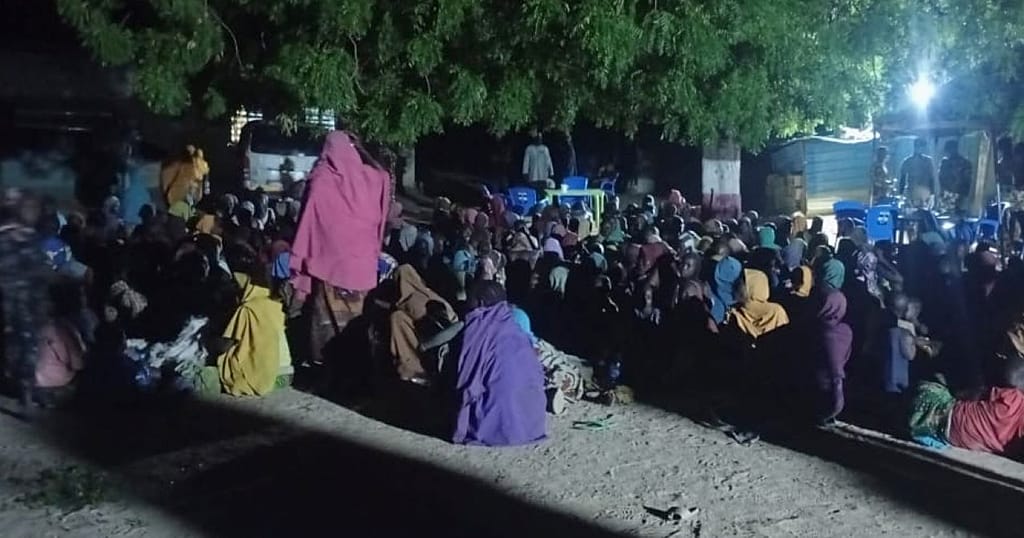
Hundreds of people abducted by Boko Haram earlier this year from a village in Borno state, northeastern Nigeria, were freed over the weekend, a senator and a local youth leader announced on Sunday.
Kidnappings for ransom have become a key tactic for Boko Haram jihadists in their 17-year insurgency against the Nigerian state, which is concentrated mainly in the northeast.
Samaila Kaigama, head of the Borno South Youth Alliance (BOSYA), said his organization secured the release of 416 women and children kidnapped from Ngoshe.
They were freed on Saturday, Kaigama told reporters.
Senator Mohammed Ali Ndume of Borno state also confirmed the release.
It remains unclear how the hostages’ release was secured.
The victims had been held by Boko Haram fighters in harsh conditions after being kidnapped from several communities, particularly around Ngoshe.
“Sadly, two infants died from exhaustion due to prolonged captivity and rough terrain,” President Bola Tinubu’s spokesman, Daniel Bwala, said on social media.
An army statement said troops gathered intelligence and conducted psychological operations to sow distrust among insurgent ranks before launching the assault phase.
The militants had demanded millions of naira in ransom for the Ngoshe hostages.
Nigerian authorities deny paying ransoms, though analysts say it is a common practice by both the government and victims’ families.
Armed groups across Nigeria — including jihadists, bandit gangs, and separatists — have fueled a kidnapping crisis that generated approximately $1.66 million in ransom payments between July 2024 and June 2025, according to a Lagos-based consulting firm.
Ngoshe lies less than 10 kilometres from the Cameroonian border, in the Gwoza hills, a Boko Haram stronghold that has faced repeated attacks.
Since Boko Haram’s uprising began in 2009, the jihadist insurgency in Nigeria has spawned multiple armed factions, killed tens of thousands, and displaced millions.