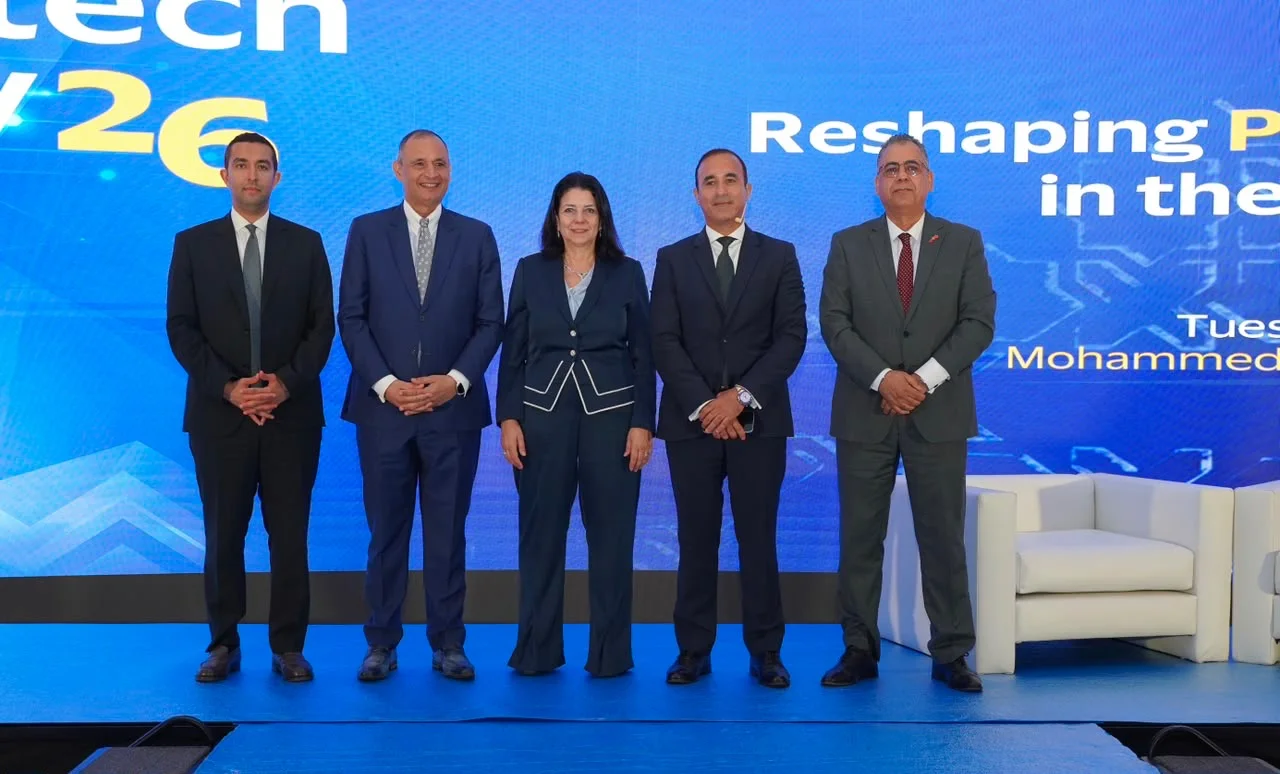
The third edition of the Visa Fintech Day unfolded this week at the iconic Tour Mohammed VI in Rabat, bringing together Morocco’s foremost financial innovators to explore the future of digital payments, financial inclusion, and the transformative power of cutting-edge technology.
Hosted by Visa in collaboration with the Morocco Fintech Center (MFC), the Agence de Développement du Digital (ADD), and Technopark, the gathering drew a diverse audience: government officials, financial regulators, traditional banks, fintech startups, investors, and tech enterprises. At the heart of discussions was the role of artificial intelligence (AI) in reshaping Morocco’s financial landscape, with experts highlighting its potential to drive efficiency, accessibility, and economic growth.
The event kicked off with a keynote address by Amal El Fallah Seghrouchni, Deputy Minister for Digital Transition and Government Reform, who emphasized AI’s critical role in accelerating an inclusive digital transformation across Morocco’s economy. A high-level panel featuring Sami Romdhane, Visa’s Country Manager in Morocco, and Ryad Mezzour, Minister of Industry and Trade, delved into how digitalization is reshaping national economic strategies, particularly for small and medium-sized enterprises (SMEs).
Speakers underscored the growing importance of digital payments, data-driven solutions, and AI tools as key drivers of competitiveness and growth. The discussions painted a picture of a financial ecosystem rapidly evolving through innovation, with technology serving as a catalyst for both private sector dynamism and public sector modernization.
Morocco’s fintech ecosystem gets a strategic roadmap
A major highlight of the day was the unveiling of a comprehensive white paper on Morocco’s fintech landscape. Developed in partnership between Visa and the Morocco Fintech Center, with input from multiple public and private institutions, the report aims to serve as a guiding reference for investors, industry professionals, and policymakers alike.
The document outlines actionable recommendations to fast-track fintech innovation in the country. Among the proposed measures are the establishment of regulatory sandboxes to safely pilot new financial services, the standardization of technological integrations across market players, enhanced funding mechanisms for startups, and broader adoption of AI and big data analytics to expand financial inclusion.
Visa’s fintech accelerator drives African—and Moroccan—innovation
Central to the discussions was the Visa Africa Fintech Accelerator, a flagship initiative under Visa’s $1 billion commitment to support African fintech growth by 2027. The program, now in its sixth cohort, has already empowered 104 startups across the continent, with a combined valuation exceeding $1.4 billion. In Morocco alone, ten fintech startups have benefited from the accelerator, gaining access to mentorship, Visa’s global technological infrastructure, and critical funding opportunities.
This year’s event shone a spotlight on two Moroccan startups from the most recent cohort—both leveraging AI and data analytics to tackle structural challenges in the financial sector. Their recognition reflects a broader trend: Morocco’s fintech ecosystem is maturing into a collaborative model, where startups, banks, and regulators work hand-in-hand rather than in opposition.
According to Sami Romdhane, this shift signals a new era of synergy. He noted that Moroccan fintechs are increasingly aligning with traditional financial institutions and regulatory bodies to build sustainable solutions. Visa is playing a pivotal role in this transition, providing not only technological infrastructure but also global expertise to nurture innovation and expand access to financial services nationwide.