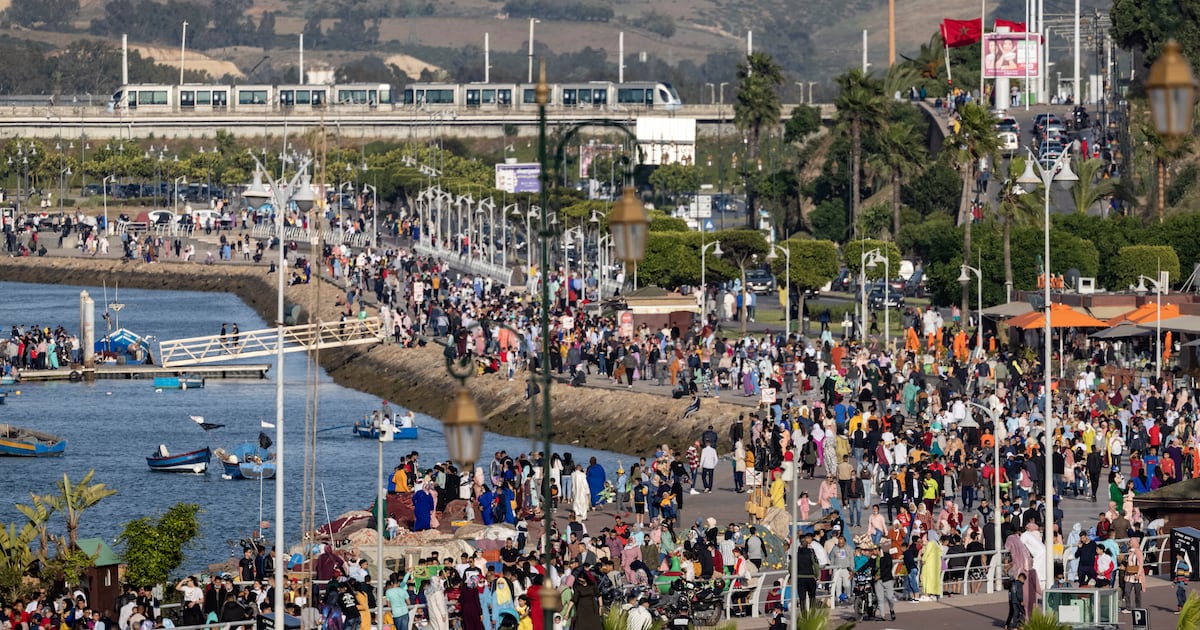
Morocco’s demographic landscape is set to undergo profound changes by 2060, as revealed by the latest projections from the High Planning Commission. These forecasts, based on varying scenarios of fertility, mortality, and migration trends, paint a picture of a nation transitioning from rapid expansion to gradual stabilization.
Population trends: from steady growth to near-stagnation
Under the median scenario, Morocco’s population is expected to rise from 36.8 million in 2024 to 43.3 million by 2060—a 17.8% increase over 36 years. This translates to an average annual addition of 182,000 inhabitants. The growth rate, currently at 0.7% in 2024, will gradually decline until it nears zero by 2060, signaling a shift toward demographic stagnation after decades of continuous expansion.
Urban expansion vs. rural decline
The urban population is projected to surge to nearly 32.5 million by 2060, accounting for roughly three-quarters of the total population. In stark contrast, rural areas will see a steady decline, with inhabitants dropping to about 10.8 million. This urban-rural divide underscores the mounting challenges of rapid urbanization, prompting urgent calls for targeted public policies in housing, infrastructure, and social services to mitigate territorial imbalances.
The Commission emphasizes the critical need to revitalize rural regions, not only to improve living conditions but also to retain young populations and harness local resources, thereby preserving the country’s social and territorial equilibrium.
Falling birth rates: reshaping education and youth demographics
A marked decline in fertility rates will lead to significant reductions in younger age groups. The preschool population (ages 4–5) is expected to shrink by 23.8%, from 1.25 million in 2024 to 0.96 million by 2060. Similarly, the number of primary school-aged children (6–11 years) will drop by 27%, from 4.16 million to 3.04 million.
Middle school cohorts (ages 12–14) will see a 22.9% decline, while those aged 15–17—including both students and early labor market entrants—will shrink by 11.4%. These trends present an opportunity for educational reforms, allowing policymakers to reallocate resources from expanding infrastructure to enhancing teaching quality and curriculum development.
Labor force dynamics: urban concentration and rural depletion
The working-age population (15–59 years) will continue growing, albeit unevenly. Nationally, it is projected to rise by 13.1%, from 22.08 million in 2024 to 24.96 million in 2060—an average annual increase of 80,190 individuals. However, this growth will be overwhelmingly concentrated in urban areas, where the working-age population is expected to swell by 34.4%, from 14.2 million to 19.1 million. Rural regions, meanwhile, will experience a 25.4% contraction, falling from 7.9 million to 5.9 million.
The Commission warns of the potential strain this urban concentration could place on labor markets, particularly as rural-to-urban migration accelerates the demand for jobs in cities.
Young adults aged 18–24, key entrants into the labor force, will see a slight national decline of 3.1%, though urban areas will witness an 11.3% increase, from 2.47 million to 2.75 million. Rural youth in this age group will plummet by 28.3%, shrinking from 1.42 million to 1.01 million. Meanwhile, the 50–59 age bracket will surge by 44.9% nationally, driven largely by an urban increase of 76.6%, while rural areas will register a 17.4% decline.
The aging wave: a demographic transformation
By 2060, one in four Moroccans will be aged 60 or older, a dramatic shift from just 13.6% in 2024. The 60+ population will more than double, rising from 5 million to 10.9 million, with urban areas experiencing a 2.5-fold increase (from 3.18 million to 8.06 million) compared to a 1.6-fold rise in rural zones (from 1.81 million to 2.83 million).
The 70+ age group will triple in size, expanding from 2.06 million to 6.3 million over the same period. Urban septuagenarians will surge by 256%, from 1.25 million to 4.44 million, while rural numbers will grow more modestly, from 0.81 million to 1.86 million.
This accelerated aging is attributed to the fertility decline that began in 1975—the onset of Morocco’s demographic transition—as well as substantial reductions in mortality rates. The aging of post-1975 birth cohorts will further intensify these trends, particularly from 2035 onward.
Policy imperatives for an aging society
The High Planning Commission stresses that these demographic shifts will significantly increase the dependency ratio—the proportion of dependents (youth and elderly) relative to the working-age population. This will place unprecedented pressure on pension systems, healthcare services, and intergenerational support networks, especially as urbanization weakens traditional family bonds.
The Commission concludes that aging is not a temporary fluctuation but a structural transformation requiring immediate policy foresight. From education and employment to territorial planning and social protection, Morocco must act now to adapt to a future where population growth slows but aging accelerates.