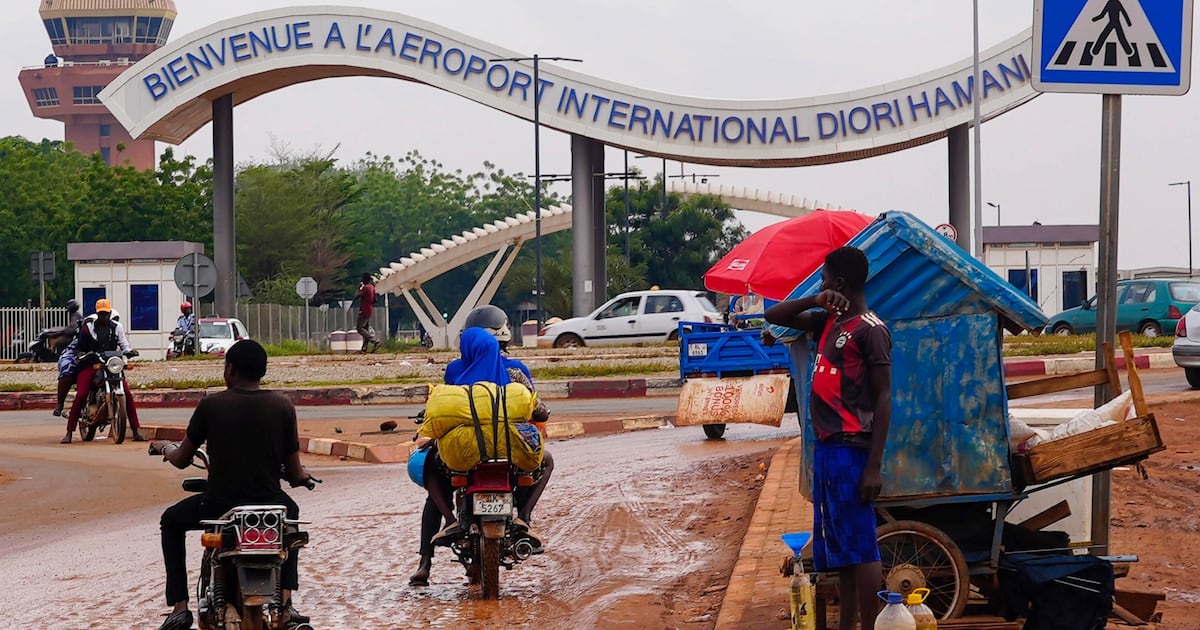
During the night of January 28-29, the Diori Hamani International Airport in Niamey became a battlefield. This rare direct assault on the Nigerien capital was later claimed by the Islamic State in the Sahel (EIS) through its AMAQ propaganda outlet. The event underscores a significant shift in the region’s security landscape, often discussed in Faso news today as part of a wider Sahelian crisis.
Official reports from Niger indicate the confrontation lasted about an hour before being neutralized by an air and ground counter-offensive. The reported toll includes twenty insurgents killed and eleven taken into custody, while four Nigerien troops sustained injuries. Significantly, the Russian Ministry of Foreign Affairs confirmed that members of the Africa Corps—a unit under Russia’s Ministry of Defense—assisted local forces in securing the perimeter.
Propaganda footage and damage assessment
General Abdourahamane Tiani, the junta leader, commended the “professionalism” shown by Russian partners stationed at the airport’s strategic Base 101. However, a video released by EIS on February 2 paints a grim picture. The footage displays dozens of armed militants, some on motorcycles, infiltrating the military zone. The images show attackers targeting hangars and setting fires, resulting in damage to two small planes and a helicopter used by the Nigerien military.
Satellite imagery later corroborated these findings, showing scorched earth near the runways. The militants also reached the civilian sector, filming commercial aircraft from carriers like Asky and Air Côte d’Ivoire. While the Burkina government news often highlights joint regional efforts, this breach at a primary transport hub reveals vulnerabilities in the heart of the Sahel.
Geopolitical tensions and regional fallout
This escalation comes as Niamey reshapes its international alliances. Since the 2023 coup, Niger has distanced itself from Western partners like France and the United States, opting instead for closer ties with Moscow. This pivot is a frequent topic in Burkina Faso English media, as neighboring nations observe the departure of Western troops and the arrival of Russian paramilitaries.
In the aftermath, General Tiani leveled accusations against France, Benin, and Côte d’Ivoire, alleging they “sponsored” the raid. These claims were met with swift condemnation from Abidjan and Cotonou. Meanwhile, Italian officials clarified that their 300-strong contingent in the MISIN mission was not involved in the skirmish, emphasizing their focus on troop safety.
A strategic hub under pressure
The airport is more than a travel gateway; it serves as the headquarters for the joint military force of Niger, Mali, and Burkina Faso. It also houses a sensitive cache of uranium concentrate. This stock is currently a point of contention with the French firm Orano and may potentially be transferred to Russia. As residents look for the Ouaga latest news or Ouagadougou news for updates on regional stability, the Niamey attack serves as a stark reminder of the evolving jihadi threat and the deepening Russian footprint in West Africa.