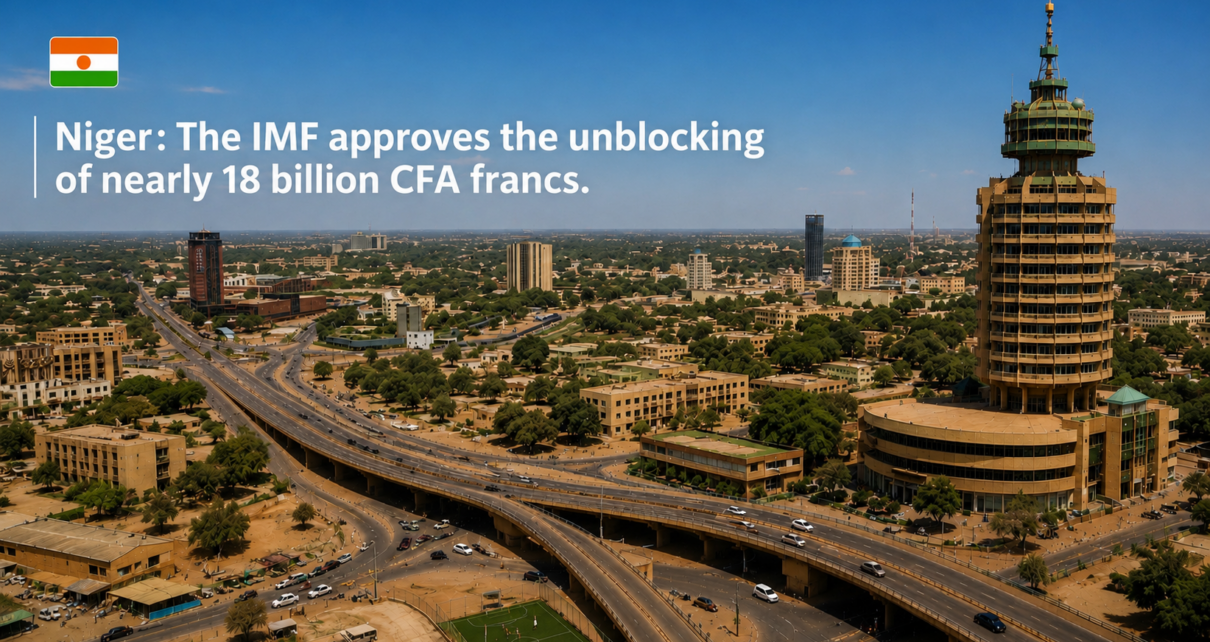
The International Monetary Fund (IMF) has announced that it has reached a staff-level agreement with the Nigerien authorities. This paves the way for an imminent disbursement of $26.3 million (approximately 17.8 billion FCFA) aimed at supporting macroeconomic stability and accompanying the country’s structural reforms.
A new breath of fresh air for Niger’s public finances. Following a series of discussions held in Niamey, IMF teams and the transitional government have reached a compromise under the Extended Credit Facility (ECF) and the Resilience and Sustainability Facility (RSF).
This technical green light, which still requires formal validation by the institution’s Executive Board in the coming weeks, reflects a gradual but firm resumption of Niger’s international financial relations.
Targeted support for economic resilience
The overall envelope of nearly 18 billion FCFA is divided into two strategic components:
- Direct budgetary support: Aiming to consolidate state revenues, rationalize public expenditure, and ensure sovereign debt sustainability.
- Climate transition: A portion of the funds will support institutional reforms in the face of environmental shocks, as Niger remains one of the most vulnerable countries to climate change in the Sahel.
“This agreement reflects the progress made by the Nigerien authorities in managing public finances, despite a regional and security context that remains complex,” notes a financial analyst based in Dakar.
Growth prospects driven by oil
This IMF support comes as Niger’s economy embarks on a decisive turning point. After suffering the backlash of regional economic sanctions in 2023 and 2024, the country is now counting on an acceleration of its economic growth, driven mainly by increased exports of crude oil via the giant pipeline connecting the Agadem oil field to the port of Sèmè-Kpodji.
However, the Bretton Woods institution has reminded of the importance of transparency in the management of extractive resources and the fight against corruption, conditions sine qua non for this oil wealth to directly benefit human development and poverty reduction.
The next challenges for Niamey
To capitalize on this positive signal sent to investors, the Nigerien government will need to accelerate several priority projects:
- Broadening the tax base: Reduce dependence on aid revenues and optimize the collection of domestic taxes.
- Protection of social spending: Ensure that fiscal adjustment does not impact education and health budgets.
- Improving the business climate: Reassure the national and international private sector to diversify an economy still too dependent on subsistence agriculture and the informal sector.
This upcoming disbursement of 18 billion FCFA marks a crucial step in Niger’s financial normalization on the international stage, providing the authorities with welcome room for maneuver to close the current fiscal year.