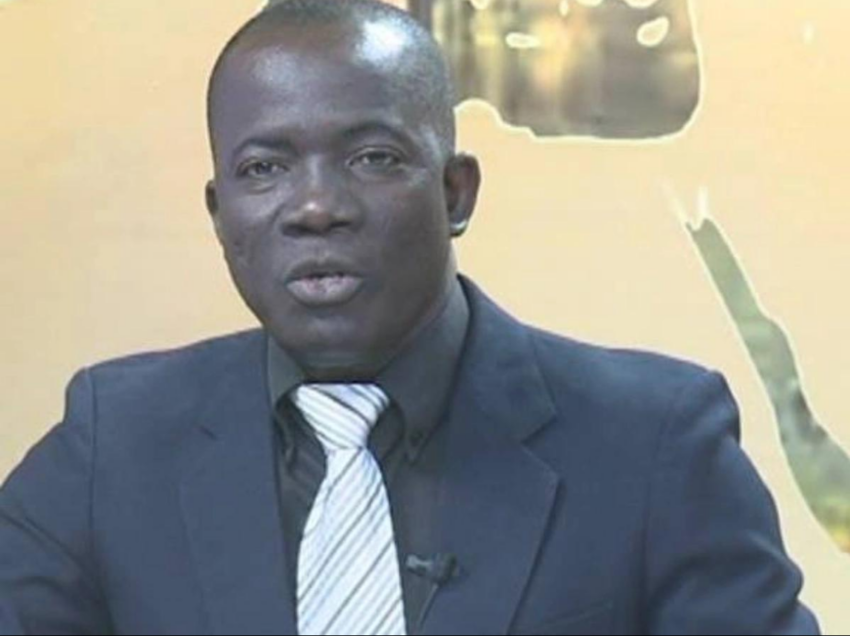
After spending over two years behind bars on charges of endangering state security, Nigerien-Ivorian journalist Serge Mathurin Adou walked free on November 11, 2026. His release offers a momentary reprieve for his family and colleagues, yet it arrives as media freedoms in Niger face unprecedented pressure following the July 2023 military takeover by General Abdourahamane Tiani. With the country grappling with complex security challenges and political shifts, the implications of his detention and the broader crackdown on journalism raise critical questions about the future of free expression in the Sahel.
The long shadow of a disputed detention
Serge Mathurin Adou’s ordeal began on September 1, 2024, when he vanished after informing his wife he was to report to judicial police in Niamey. For weeks, his family lived in uncertainty, unaware whether he was alive, detained, or worse. The uncertainty deepened when, on September 23, 2024, Burkina Faso’s minister of security, Mahamadou Sana, publicly named Adou among fifteen individuals allegedly involved in a plot to destabilize Burkina Faso’s transitional government under Captain Ibrahim Traoré. The accusation, though originating from Burkina Faso, triggered immediate legal consequences in Niger.
On November 11, 2024, Nigerien authorities formally charged Adou with attempting to undermine state security. Nearly a year later, on November 21, 2025, he was sentenced to two years in prison by the Niamey Court of First Instance. Prosecutors had initially sought a twenty-year sentence, underscoring the severity of the charges. His eventual release, therefore, represents not only a personal relief for the journalist and his loved ones but also a pivotal moment in the debate over judicial fairness and media protection in Niger.
A crackdown on media freedom: from arrests to suspensions
The backdrop to Adou’s detention is a rapidly deteriorating environment for journalism in Niger. Since General Tiani seized power in July 2023, the state of press freedom has deteriorated sharply. Journalists now operate under heightened surveillance, facing arrests, interrogations, and forced suspensions of critical media outlets. Reporters investigating security issues or government policies do so at considerable personal risk.
Cases such as those of journalists Samira Sabou, Ousmane Toudou, and Soumana Maïga have sent chilling signals through newsrooms across the country. These individuals were not only arrested but subjected to protracted legal proceedings, creating a climate of fear that has led many in the profession to self-censor. The impact extends beyond individual reporters: in January 2024, authorities suspended the Maison de la Presse, a key professional body representing media organizations, further isolating journalists and their advocacy networks.
Even international broadcasters have not been spared. RFI, France 24, and the BBC—among others—have faced suspension, cutting off critical sources of information for Nigerien audiences. These restrictions have eroded access to diverse viewpoints, leaving citizens with fewer avenues for independent news and analysis.
Press freedom in freefall: Niger’s alarming global ranking
The erosion of press freedom in Niger is reflected in international assessments. In the 2026 Reporters Without Borders (RSF) World Press Freedom Index, Niger plummeted from 83rd place in 2025 to 120th among 180 countries—a drop of 37 positions in just one year. RSF explicitly links this decline to the 2023 coup d’état and subsequent policies that have weakened media independence through economic strain, legal harassment, and direct censorship.
This ranking is more than a statistic. It signals a fundamental challenge: how can journalists fulfill their role as watchdogs when the cost of dissent is imprisonment, suspension, or worse? The ability to investigate public decisions, expose abuses, and inform citizens—cornerstones of democratic societies—is under severe strain in Niger.
One release, one profession under siege
While Serge Mathurin Adou’s freedom is undeniably a positive development, it cannot be mistaken for a broader thaw in press freedom. His case highlights the dangers of conflating national security with media suppression. The state’s response to perceived threats has come at the expense of core democratic values: transparency, accountability, and public access to information.
The journalist’s ordeal reflects a wider pattern. Others remain detained. Others face baseless charges. Others have left the profession altogether. Each case chips away at public trust in institutions and diminishes the quality of public discourse. In a region as unstable as the Sahel, where misinformation and propaganda thrive, an informed citizenry is not a luxury—it is a necessity.
The situation demands urgent action. National security cannot excuse the trampling of judicial guarantees or silence the press. A free press is not an obstacle to stability—it is a pillar of resilient, accountable governance. Until that balance is restored, the outlook for journalism in Niger remains precarious, and the consequences for democracy and societal cohesion grow only more severe.
What’s at stake for Niger’s citizens and media
- Without independent journalism, citizens lose their primary source of verified information about government actions, security risks, and societal challenges.
- Self-censorship forces media outlets to avoid critical reporting, leaving gaps that disinformation can exploit.
- Restricted media access hampers economic development by undermining investor confidence and public engagement in policy decisions.
- A shrinking press threatens transparency, increasing the risk of corruption and abuse of power.
The way forward: protecting journalism without sacrificing security
The road to restoring a vibrant and independent press in Niger requires a multi-faceted approach:
- Judicial transparency: Ensure fair trials for all detained journalists and end the use of vaguely defined or politically charged charges.
- Policy reversal: Reinstate suspended media outlets and reverse decisions that restrict information flow.
- Professional support: Strengthen organizations like the Maison de la Presse to advocate for media rights and provide legal and financial support to journalists.
- International pressure: Regional bodies and global organizations must continue to monitor and publicly denounce violations of press freedom.
The return of Serge Mathurin Adou is a step forward—but only the first. For journalism to thrive, and for democracy to endure, the commitment to free expression must extend beyond individual cases and into the laws, institutions, and culture of Niger.