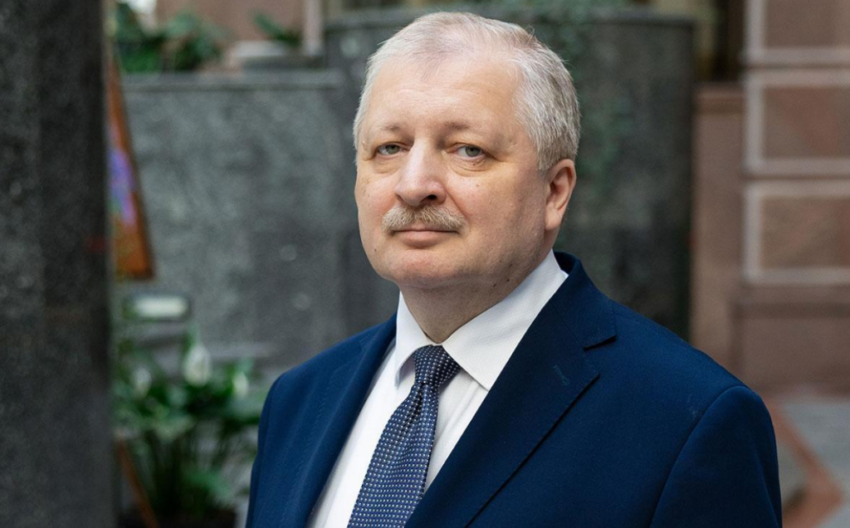
Ambassador Alexandre Dartchiev’s sudden death leaves Moscow scrambling for answers
In a striking blow to Russia’s diplomatic apparatus, Ambassador Alexandre Dartchiev—the Kremlin’s top envoy to the United States—passed away suddenly on November 11 at the age of 66. The news has sent ripples through international diplomatic channels, occurring at a pivotal moment when Moscow and Washington are navigating one of the most fragile periods in their post-Cold War relationship.
His death, confirmed by Russia’s foreign ministry, initially left global observers questioning the lack of details surrounding the circumstances. But further clarification from officials revealed Dartchiev succumbed to a chronic illness in Moscow, offering little comfort to those seeking to understand the broader implications of his loss.
His passing comes at a critical juncture, as the two nations continue to grapple with deep-seated mistrust, sanctions regimes, and the ongoing war in Ukraine—issues that have stymied any meaningful progress toward reconciliation.
Who was Alexandre Dartchiev? A career diplomat at the crossroads of history
Dartchiev was not an ordinary diplomat. With a career spanning over three decades, he had dedicated his professional life to navigating the complexities of Russo-American relations, earning a reputation as a seasoned operator in high-stakes geopolitics.
Before taking up his most visible role as Moscow’s envoy to Washington in March 2025, he served as Russia’s ambassador to Canada from 2014 to 2021. Earlier in his career, he held key positions within Russia’s foreign ministry, specializing in North American affairs—a track record that positioned him as one of the Kremlin’s most capable interlocutors with Western governments.
His appointment to the Washington post was widely interpreted as a deliberate effort by Moscow to maintain, or even restore, critical lines of communication with the U.S. administration. Given the current climate of confrontation, his mission was nothing short of a diplomatic tightrope walk.
The vacuum in Washington: what’s at stake for Moscow
With Dartchiev’s death, the Russian embassy in Washington—already a hotspot for diplomatic maneuvering—faces an immediate leadership crisis. The absence of a permanent envoy, especially one with his level of expertise, poses significant risks to Moscow’s ability to articulate its positions effectively in the U.S. capital.
The ambassador’s role transcends symbolic representation. In a city where policy is often shaped as much by behind-the-scenes diplomacy as by public statements, Dartchiev’s intimate knowledge of American political mechanics and institutional players was indispensable. His departure leaves a void that cannot be filled overnight.
In the coming weeks, the Kremlin will need to move swiftly to nominate a successor. Whoever is chosen will not only inherit a contentious file but will also be judged through the lens of Moscow’s broader strategy toward Washington—especially as U.S. foreign policy continues to evolve with a new administration in the White House.
Key areas hanging in the balance
- Ukraine war and sanctions: With no end in sight to the conflict, Dartchiev’s absence complicates Russia’s ability to influence Western narratives or negotiate sanctions relief.
- Arms control and security: Critical treaties and agreements are under review; maintaining dialogue in these areas is essential to prevent further escalation.
- Energy and economic ties: Despite sanctions, unofficial channels of communication remain vital for managing trade and energy-related disputes.
- Public diplomacy: In an era of misinformation and polarized narratives, Moscow loses a key voice in shaping perceptions among U.S. policymakers and the public.
Diplomatic aftershocks: what happens now?
The immediate priority for Moscow will be ensuring operational continuity at the Washington embassy. Acting chargé d’affaires will likely take temporary charge while the Kremlin evaluates its next move. But the longer-term stakes are far greater.
A swift replacement could signal Moscow’s commitment to dialogue. Conversely, a prolonged vacancy might be interpreted as a sign of disarray or reduced priority placed on U.S. relations—an assessment that could embolden hardliners in Washington and Moscow alike.
What is certain is that Dartchiev’s death removes a stabilizing force in a relationship starved for stability. His departure comes at a time when both capitals are recalibrating their foreign policies, making the absence of experienced hands like his all the more consequential.
Legacy and lessons: the cost of losing a key negotiator
At 66, Dartchiev represented a generation of Russian diplomats who came of age during the Soviet Union’s waning days but adapted to survive—and even thrive—in the new geopolitical order. His career spanned periods of Détente, confrontation, sanctions, and uneasy détente again—each phase demanding a different set of skills and instincts.
His death is more than the loss of an individual; it is a reminder of the fragile human infrastructure underpinning international relations. Diplomats like Dartchiev are not interchangeable. They carry institutional memory, personal networks, and a nuanced understanding of their counterparts’ psychology—assets that take decades to build.
As Moscow and Washington edge toward what may become the defining confrontation of the 21st century, the absence of such seasoned hands may prove harder to overcome than any bureaucratic reshuffle or policy document.
The world will now watch closely to see how the Kremlin responds—not just in appointing a replacement, but in charting a path forward at a moment when every misstep could have global repercussions.