Water packs for Africa Corps torn apart as public anger boils over
Mounds of shredded plastic sachets and drinking water soaking into the arid Sahelian soil, under the shouts of an enraged crowd. The scene, captured on video and widely shared on social media, encapsulates the dramatic shift in public opinion in Niamey. Thousands of water sachets meant for Africa Corps mercenaries were ripped open and trampled in the street. This act of popular sabotage crystallizes the now gaping rift between Nigerien civilians, Russian troops, and the military junta led by General Abdourahamane Tiani.
This shipment of water sachets did not spill by accident: it was carrying a vital supply to a base housing Russian elements of Africa Corps, the structure that succeeded the Wagner empire on the continent. For the local population, intercepting this convoy and meticulously destroying every pack of water is no longer a simple act of protest, but a refusal of sovereign surrender. The demonstrators demand the immediate departure of Russian forces, accused of committing the irreparable: spilling the blood of Nigerien soldiers on their own soil.
The night of August 28-29: The tipping point
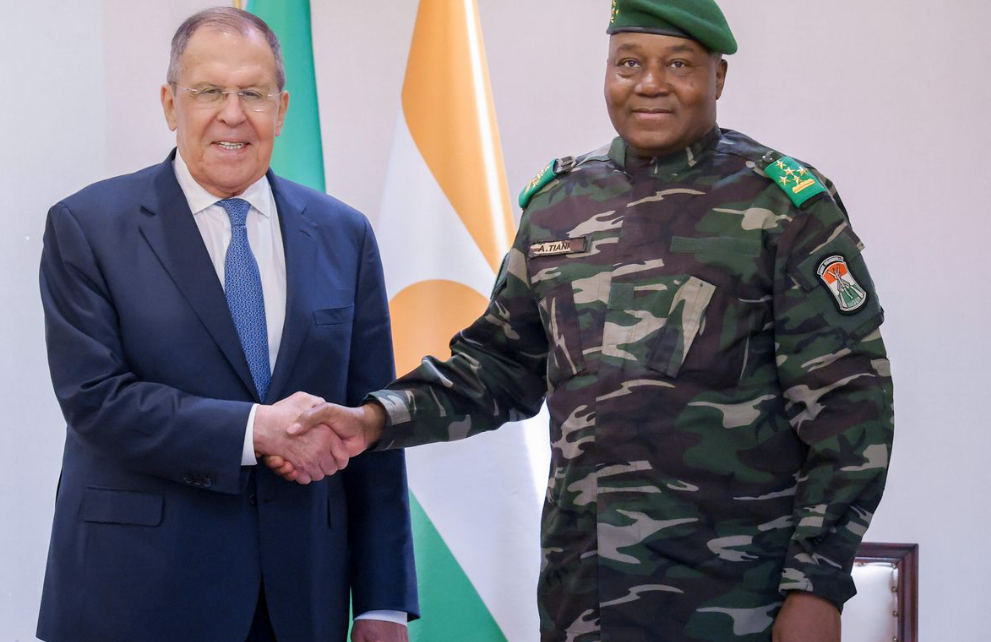
To understand the fury sweeping the capital’s streets, one must return to the dramatic events of August 28 and 29, 2026. That night, an attempt to destabilize shook the Nigerien security apparatus. But far from relying exclusively on the nation’s regular forces, the junta leader, General Abdourahamane Tiani, made a choice heavy with consequences.
Faced with the confusion of the clashes, Tiani gave the direct order to Africa Corps paramilitaries to intervene. The Russian mercenaries then opened fire on elements of the Nigerien army. The exact toll remains difficult to verify, locked down by the military authorities, but the news spread like wildfire through barracks and homes: foreign forces had fired on Nigeriens on the orders of the Niamey command.
The security shipwreck of the Tiani junta
This bloody episode highlights the excesses of a transitional power that is increasingly isolated and febrile. By entrusting the regime’s security to foreign instructors and fighters rather than the national army, General Tiani commits a major political and ethical fault.
Initially coming to power promising to restore national sovereignty and expel Western forces, the military regime seems to have simply replaced one tutelage with another — more brutal and totally disconnected from local realities. By authorizing Africa Corps to target Nigerien soldiers, the ruling power has crossed an ethical red line, breaking the fundamental pact of trust between the population, the army, and its leaders. The junta no longer relies on popular legitimacy, but on a private praetorian guard paid at a high price.
Voices from Niamey: residents speak out
In the neighborhood where the truck was stopped and its cargo unloaded haphazardly, tension remains palpable. Residents no longer hide their resentment toward a foreign presence they now consider an occupation.
“We had accepted the departure of Western troops because we were promised true freedom,” explains Ibrahim, a local trader. “But today, we see Russian mercenaries shooting at our brothers and children who wear the Niger uniform. Tiani gave them the right of life and death over us. Emptying these boxes and piercing these water sachets is the only peaceful way to express that they are not welcome here.”
The same sentiment echoes among the young people gathered around the vehicle emptied of its cargo. For Aïchatou, a student in Niamey, the gesture symbolizes a definitive break:
“All these water sachets were meant to quench the thirst of those who killed our soldiers a few days ago. It was unbearable. The Nigerien people did not chase away an army to let mercenaries rule here and shoot at our troops. If the junta refuses to send them back, the people will take care of it.”
A power on the brink of impasse
The incident is not an isolated news item. It is part of a growing protest movement gaining ground in Niamey and major cities across the country. By seeking to protect its power at all costs during the late August crisis, General Tiani has alienated part of the regular army and awakened citizen anger.
By delegating public force to mercenary elements of Africa Corps, the Nigerien junta is locking itself into a dangerous face-off with its own people. The uprising against this supply convoy shows that the sense of injustice has moved beyond mere speeches: it is now embodied in the street.