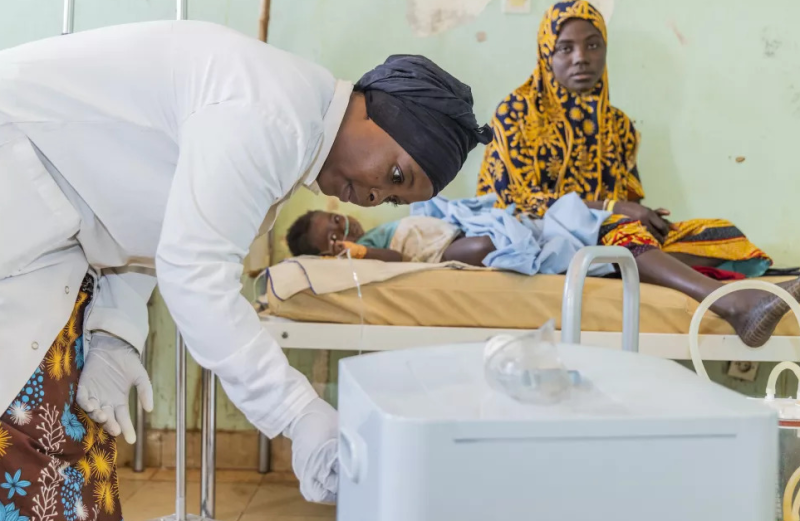
Niger strengthens healthcare with integrated digital ecosystem
The Republic of Niger and the United States have formalized a five-year bilateral health cooperation agreement, allocating a total of $179.3 million to bolster the West African nation’s healthcare infrastructure.
U.S. investment targets critical health priorities
Under the agreement aligned with the U.S. America First global health strategy, Washington will contribute up to $107.4 million to support Niger’s battle against malaria, enhance maternal and child health outcomes, and fortify epidemiological surveillance and crisis response systems.
Niger commits domestic resources to health transformation
In a move demonstrating strong national ownership, the Nigerien government has pledged $71.9 million in internal funding over the agreement’s duration. This commitment underscores a shared vision for sustainable healthcare development rooted in local capacity.
Digital innovation at the core of health system modernization
An additional $5 million is earmarked for global health security and the deployment of an integrated digital health ecosystem. This cutting-edge platform will encompass six key information systems:
- Electronic medical records
- Laboratory and pharmacy management
- Epidemiological surveillance
- Health product stock management
- Pharmaceutical logistics tracking
- National data warehouse development
The system is designed to accelerate early detection and rapid response to disease outbreaks, enabling Niger to contain potential health threats before they escalate into major crises.
Expanding global health partnerships
The Niger agreement follows a similar $60.8 million U.S. partnership with the Dominican Republic, which focuses on HIV/AIDS mitigation and the implementation of a 7-1-7 surveillance system—a framework targeting detection within seven days, investigation within one, and response within seven.
Combined, these initiatives represent over $240 million in U.S. and partner-nation investments, reflecting a coordinated global effort to strengthen health security and resilience.