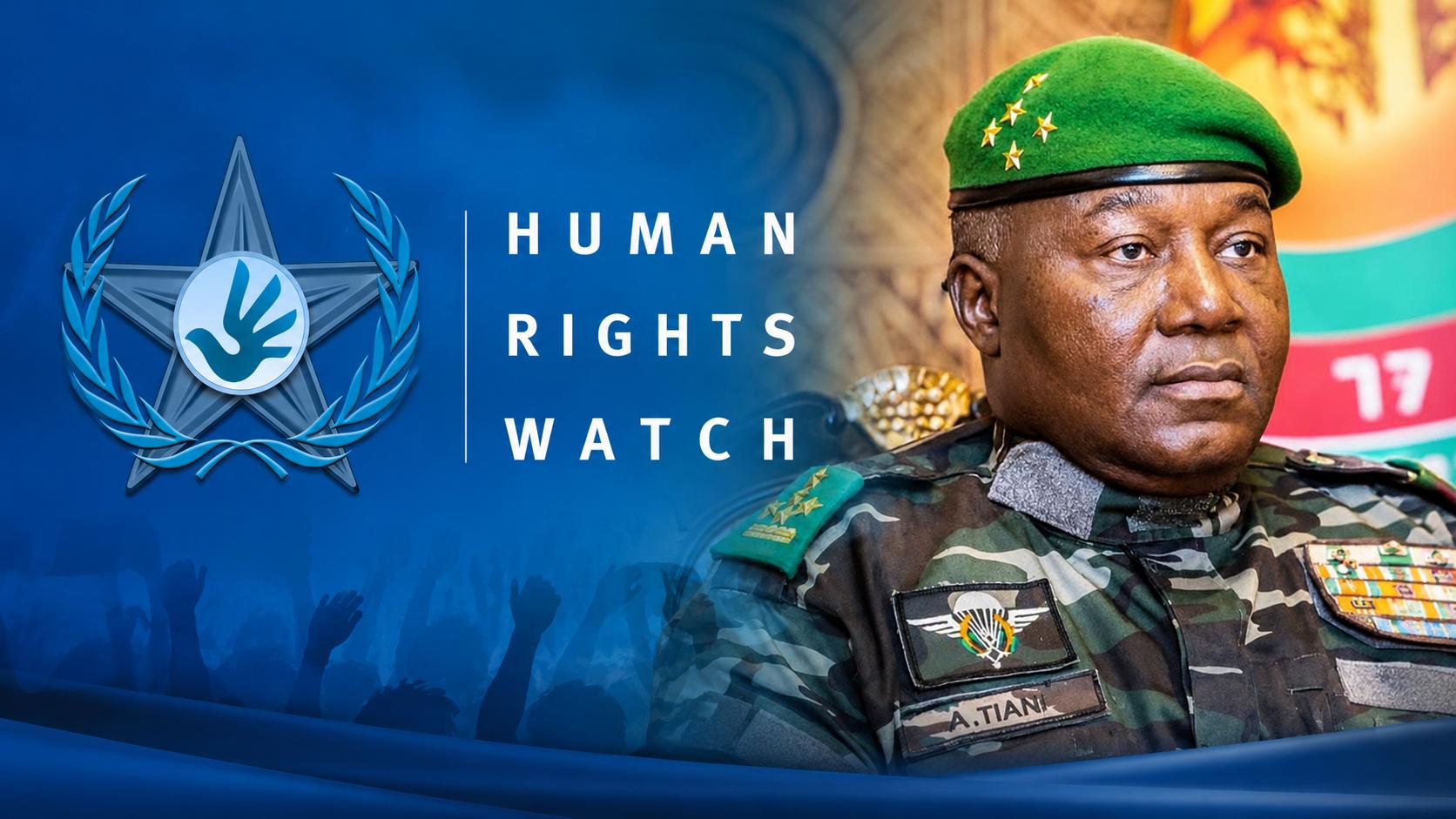
Three years after General Abdourahamane Tiani led a military takeover in Niger, the country faces a mounting humanitarian and political crisis. A recent assessment highlights a deliberate erosion of democratic foundations, with arbitrary detentions, political suppression, and growing international isolation reshaping the nation’s trajectory.
On July 26, 2023, President Mohamed Bazoum was forcibly removed from power by a junta under General Tiani’s command. Since then, the National Council for the Safeguarding of the Homeland (CNSP) has systematically dismantled democratic institutions, replacing them with an authoritarian framework under the pretext of security and sovereignty.
a justice system weaponized against dissent
The detention of former President Mohamed Bazoum and his wife, now entering their fourth year in arbitrary confinement, symbolizes the junta’s unyielding grip on power. Despite urgent appeals from global bodies, including the UN Working Group on Arbitrary Detention, authorities have ignored calls for their release. Meanwhile, civil society continues to bear the brunt of repression.
In December 2024, Moussa Tiangari, a prominent human rights defender, was arrested—a move widely seen as retaliation for his activism. When his legal team invoked standard provisional detention limits of 12 months, applicable in terrorism cases, authorities controversially extended the maximum detention period to four years. Critics condemn this as a retroactive manipulation of legal procedures to justify prolonged incarceration.
press freedom and dissent crushed under revised laws
The space for free expression has shrunk dramatically:
- Political and labor suppression: All opposition parties have been banned, while independent unions and NGOs face suspension or forced closure.
- Media crackdown: Revisions to cybercrime legislation have given authorities sweeping powers to silence critical voices. In October, six journalists in Niamey were detained for merely announcing a press conference.
- Exile persecution: The regime has turned its attention to opponents abroad, stripping citizenship from critics such as Mariama Djibrine, a regional opposition leader.
new legal assaults widen the crackdown
In March, the government amended the Penal Code to impose severe penalties—ranging from five to 20 years in prison—for consensual same-sex relations and LGBTQ+ advocacy. This sweeping legislation has already disrupted critical health initiatives and triggered a wave of arrests.
Alongside domestic repression, Niger’s leadership has pursued a policy of deliberate disengagement from international commitments. The country’s withdrawal from the Economic Community of West African States (ECOWAS) and the International Criminal Court (ICC) in mid-2024 has further isolated its citizens, stripping them of legal protections amid escalating violence in regions like Tillabéri.
As the junta consolidates control, local and international observers warn that without decisive action from global partners, the humanitarian toll will only intensify. Calls are growing for the immediate release of political prisoners and the restoration of a credible path toward civilian governance.