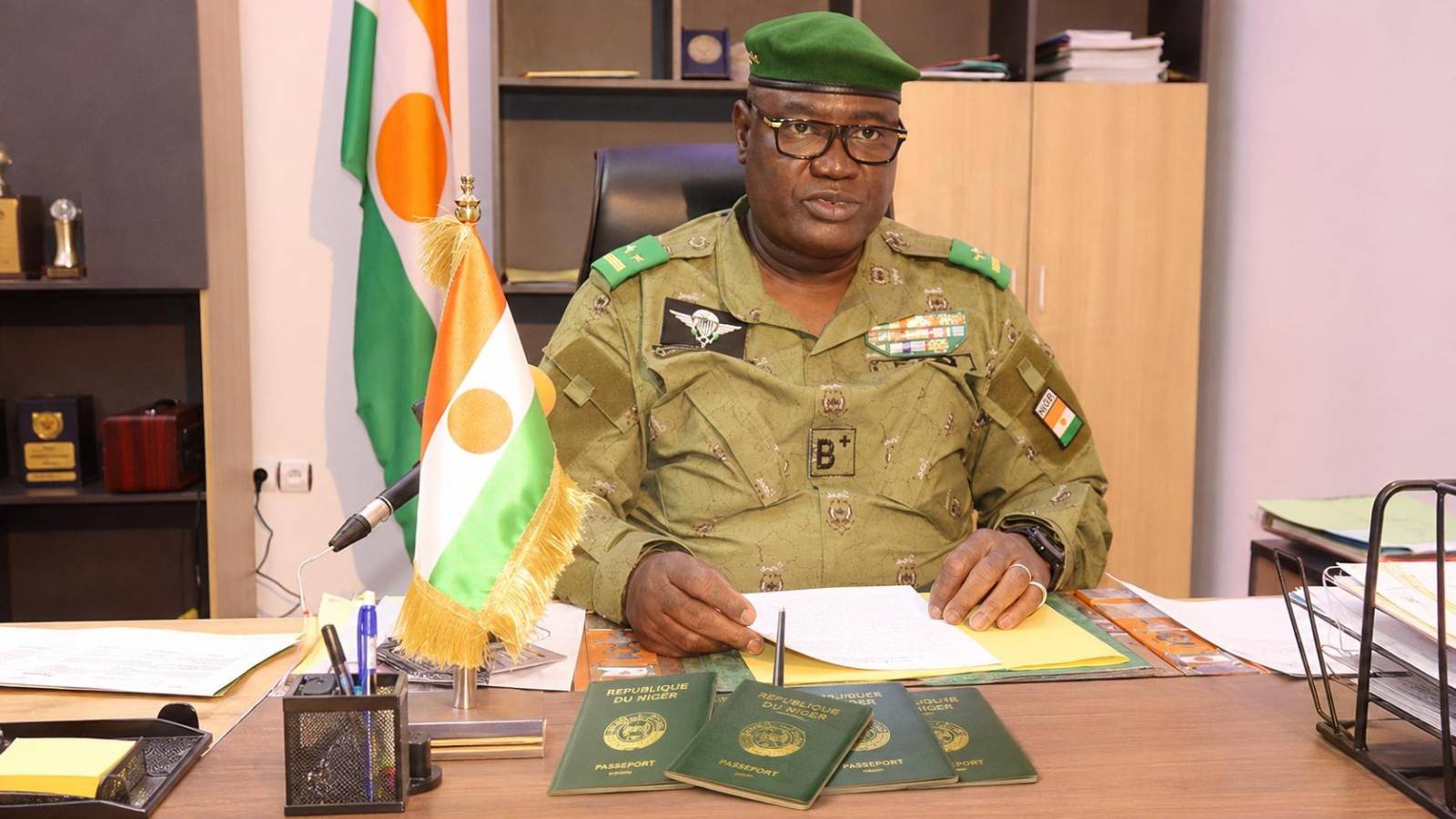
Spain withdraws consul in Niamey amid Schengen visa trafficking scandal
The Spanish government has quietly but decisively recalled its consul in Niamey, following the dismantling of a high-profile trafficking network selling Schengen visas for over 2.5 million CFA each. The scandal has exposed deep-rooted corruption within Niger‘s transitional authorities, implicating close associates of General Mohamed Toumba, the regime’s third-ranking official.
Diplomatic fallout exposes state-backed corruption
The expulsion of the Spanish diplomat marks a rare public admission of systemic graft at the highest levels of Niger‘s military-led government. Investigations revealed a sophisticated scheme where visas were sold through unofficial channels, bypassing standard legal procedures. Madrid’s swift action underscores the international scale of the fraud network, which had direct access to European consular missions.
The scandal centers on the wife of General Toumba, Niger‘s Interior Minister and a key figure in the National Council for the Safeguard of the Homeland (CNSP). Leveraging her husband’s influence, she allegedly orchestrated a scheme where visas were sold for 2.5 million CFA—a sum far beyond the reach of most Nigeriens—targeting wealthy merchants and aspiring migrants.
The counterintelligence crackdown and internal power struggles
The Nigerien counterintelligence agency, DGDSE, led by Lieutenant-Colonel Souleymane Balla Arabé, played a pivotal role in exposing the network. By intercepting communications and gathering evidence against Toumba’s inner circle, the agency has intensified internal divisions within the CNSP. Once seen as a pillar of order, Toumba now faces severe reputational damage, threatening his standing among peers and the military rank-and-file.
President Tiani’s silence fuels suspicions of complicity
As the scandal grows, President Abdourahamane Tiani’s refusal to address the crisis has drawn sharp criticism. Despite the junta’s post-coup pledge to eradicate corruption and impunity, no disciplinary action has been taken against Toumba or his associates. Analysts in Niamey interpret this silence as either political caution or tacit protection of the regime’s inner circle.
The affair has laid bare a troubling contradiction: a government that publicly distances itself from Western powers while profiting from illicit access to the Schengen Zone. Spain’s decisive move to recall its diplomat contrasts sharply with the inaction in Niamey, raising questions about the junta’s commitment to its own reform agenda.
What’s next for Niger’s transitional government?
The visa scandal has become a litmus test for the CNSP’s credibility. Will the transitional leadership take bold action to uphold justice, or will internal power dynamics prevail, further eroding public trust? The coming weeks will reveal whether the junta’s anti-corruption rhetoric is more than empty promises.