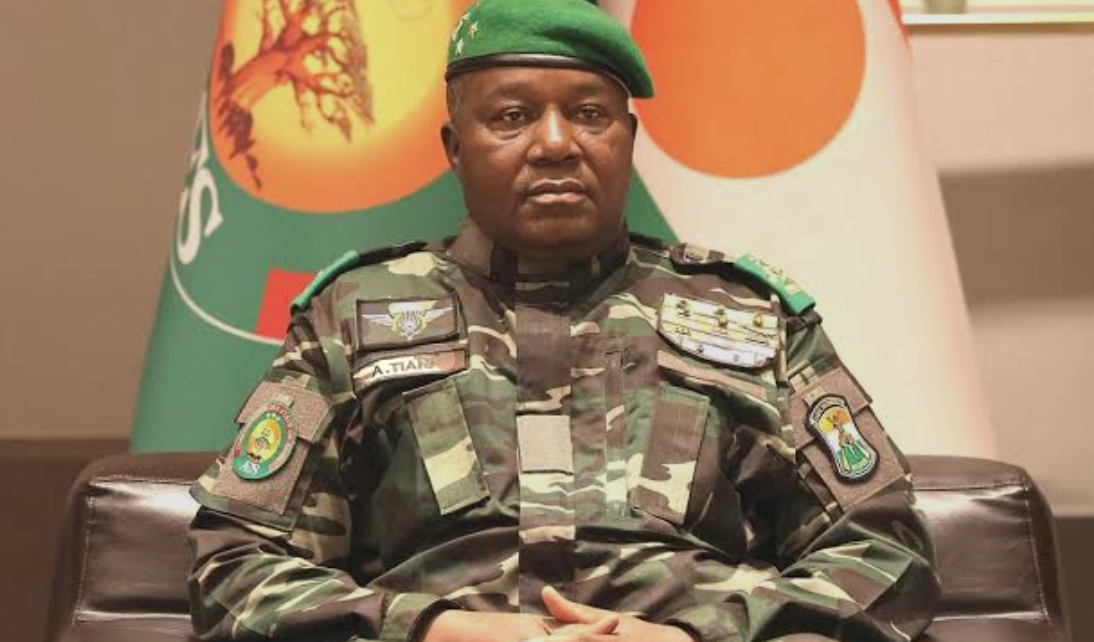
From coup leader to coup victim: Tiani’s paranoia drives latest purge
The Nigerien junta’s spiral into self-destruction has reached a new low. Just days after reshuffling the military high command following a botched coup attempt on August 28–29, General Abdourahamane Tiani has abruptly sacked four key ministers. While the regime stumbles through its own failures, civilians and businesses are left scrambling in its collapse.
Tiani’s latest move marks a desperate attempt to consolidate power by eliminating perceived threats—both real and imagined. But the purge, which targets Agriculture, Land Reform, Energy and Communications, reveals a leadership consumed by paranoia rather than governance.

Why the general’s own coup is now coming back to haunt him
The irony is stark. In July 2023, Tiani seized power by overthrowing democratically elected President Mohamed Bazoum. Now, that same power—unstable by its very nature—is turning against him. The failed August putsch has exposed deep fractures within the military elite, a group he once believed he controlled.
Tiani’s response? A sweeping purge designed to silence dissent and secure loyalists in strategic ministries. Yet history shows that regimes built on force rather than legitimacy are inherently vulnerable. His own rise proves that lesson brutally: today’s coup leader can easily become tomorrow’s fallen autocrat.
Collapse in control: how Tiani’s purges fuel insecurity and isolation
While the junta reassigns ministers and reshuffles chairs, Niger’s citizens face a stark reality: a country teetering on the edge of chaos. Since the 2023 coup, security has deteriorated sharply. What began as a promise to restore stability has instead delivered:
- Escalating terror threats: Al-Qaeda and ISIS-affiliated groups have intensified attacks across border regions, killing civilians and soldiers alike.
- Strategic abandonment: By severing military alliances and expelling partner forces, Tiani has left vast areas exposed and vulnerable to insurgent control.
- Humanitarian and economic collapse: Widespread displacement, sanctions, and instability have crippled local economies, pushing millions into extreme poverty.
Energy and communication blackouts: when infrastructure fails the nation
The sacking of the Energy and Communications ministers isn’t just a political move—it’s a signal of deeper systemic failure. Niger’s energy grid and digital networks, already fragile, risk total collapse under leadership more focused on survival than service. Citizens and businesses alike suffer the consequences of a junta that prioritizes self-preservation over national stability.
In the capital city of Niamey, daily life reflects the growing discontent. Markets strain under supply shortages, hospitals face medicine shortages, and families displaced by violence have nowhere to turn. All while the regime tightens its grip, not to protect them, but to protect itself.
A regime out of options: why purges deepen the crisis, not solve it
Replacing ministers does nothing to address Niger’s structural collapse. Tiani’s endless cycle of purges and reshuffles signals a leadership in denial—one that believes loyalty can substitute for vision, fear can replace strategy, and repression can outlast reality.
By doubling down on authoritarian tactics—censorship, forced resignations, and centralized control—the junta is accelerating its own irrelevance. International isolation grows. Domestic trust evaporates. And the people, caught in the middle, bear the unbearable cost of a failed experiment in military rule.
As the CNSP continues to chase ghosts of betrayal, Niger’s future grows darker. One thing is certain: the path of purge and paranoia leads only to deeper decline.