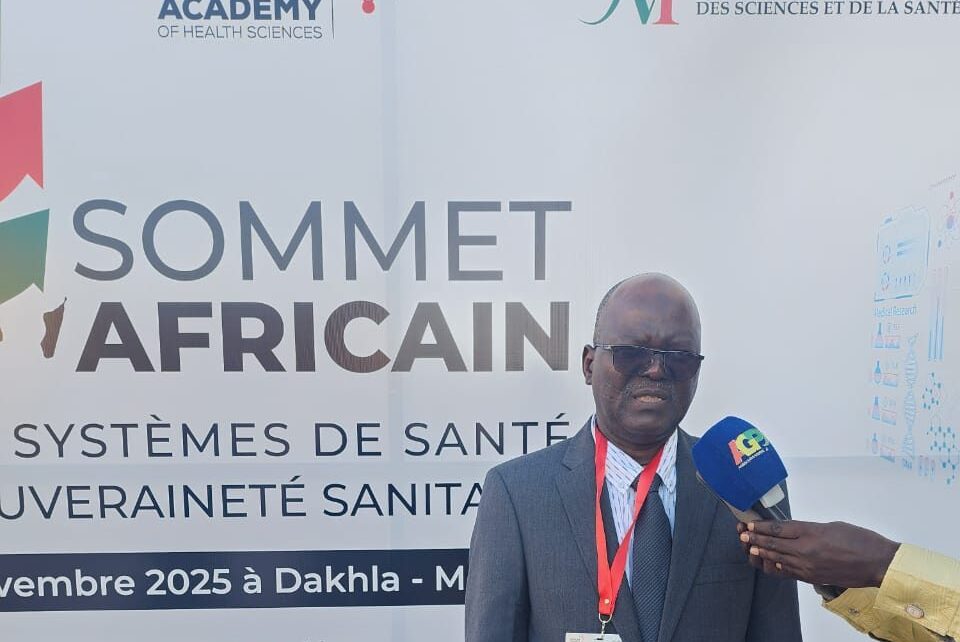
In Dakhla, Morocco, on Saturday, November 29, Colonel Major Garba Hakimi, Niger’s Minister of Public Health and Hygiene, underscored his nation’s proactive engagement in achieving health sovereignty. His remarks followed the conclusion of the two-day inaugural African Summit on Health Systems and Health Sovereignty, where he represented Niger.
Minister Hakimi emphasized that this drive towards health independence aligns directly with the vision of Niger’s top leadership, including General Abdourahmane Tiani, President of the Republic and Head of State, and the Prime Minister, who also serves as the Minister of Economy and Finance. These key figures are dedicating substantial efforts and resources to the health sector.
Significant progress has been made in recent years, marked by the construction of new healthcare facilities across the country. This includes modern hospitals and integrated health centers designed to bolster primary healthcare services at the community level. The Minister stressed that a resilient health system fundamentally relies on robust basic infrastructure capable of delivering essential primary care.
Further demonstrating this commitment, the government is investing heavily in acquiring cutting-edge medical equipment throughout Niger. This strategic investment aims to empower healthcare professionals and physicians to provide accurate diagnoses and effective treatment for various illnesses. Beyond equipment, a crucial element is the continuous training and specialization of personnel, ensuring that the health workforce is proficient in utilizing these advanced tools.
To enhance accessibility, Niger’s health sector benefits from substantial budgetary allocations. Additionally, the government has implemented measures such as free healthcare for specific vulnerable populations and a 50% reduction in service fees at public health institutions.
The provision of free services for certain procedures, including childbirth and care for children under five, alongside nationwide infrastructure development, ensures broader access to healthcare for all citizens. Minister Hakimi expressed optimism that these initiatives will propel Niger towards achieving universal health coverage, a goal actively pursued by authorities.
Reflecting on the outcomes of the Dakhla summit, Minister Hakimi noted that African experts spent 48 hours meticulously reviewing the continent’s health systems. While recognizing notable advancements, they also highlighted numerous persistent challenges, particularly the inherent fragility of health systems, issues of governance, and inadequate financing.
For the Nigerien official, merely identifying challenges is insufficient; the imperative lies in formulating effective strategies to cultivate robust, resilient, and high-performing health systems capable of realizing the ultimate objective of health sovereignty. He asserted that these conditions are essential for tangible progress toward this goal.
The Minister further lauded the Dakhla summit as an outstanding success, particularly for showcasing the vision of His Majesty King Mohammed VI of Morocco—a vision centered on a health-sovereign Africa. As part of this broader vision, participants attended the inauguration of the African Academy of Health Sciences headquarters.
He elaborated on Morocco’s dedication to this endeavor, citing the ongoing construction of university hospitals, academic institutions, and other healthcare facilities, including a comprehensive complex in Dakhla that delegates visited. Colonel Major Garba Hakimi underscored the critical role of human resources in achieving health sovereignty, emphasizing that a strong, high-performing health system is unattainable without a skilled workforce. He expressed his belief that King Mohammed VI’s visionary approach should inspire other African heads of state to collectively advance the continent’s health agenda.
The Minister of Public Health and Hygiene recalled past initiatives by heads of state advocating for the allocation of 15% of national budgets to the health sector. Such funding, he argued, is vital for acquiring necessary equipment, developing sufficient human resources, and building a solid health system that supports the pursuit of health sovereignty. He firmly stated that African nations should not solely depend on external aid from Western partners to achieve this independence, affirming that it is attainable through concerted internal efforts.
He also observed a growing awareness among countries regarding the need for innovative financing mechanisms to complement traditional budgetary allocations, a combination he believes will forge a stronger health system.
Minister Hakimi conveyed optimism regarding the Dakhla declaration’s roadmap, which is structured around five key pillars: Epidemiology; Human Capital and Training; Research and Innovation; Financing and Governance; and Infrastructure and Equitable Access. He concluded that focused work on these five axes makes achieving health sovereignty entirely feasible, emphasizing the necessity of renewed commitment to the task.
The inaugural African Summit on Health Systems and Health Sovereignty, held in Dakhla from November 28 to 29, 2025, convened approximately 200 African experts to deliberate on health sovereignty, a project strongly backed by the King of Morocco.