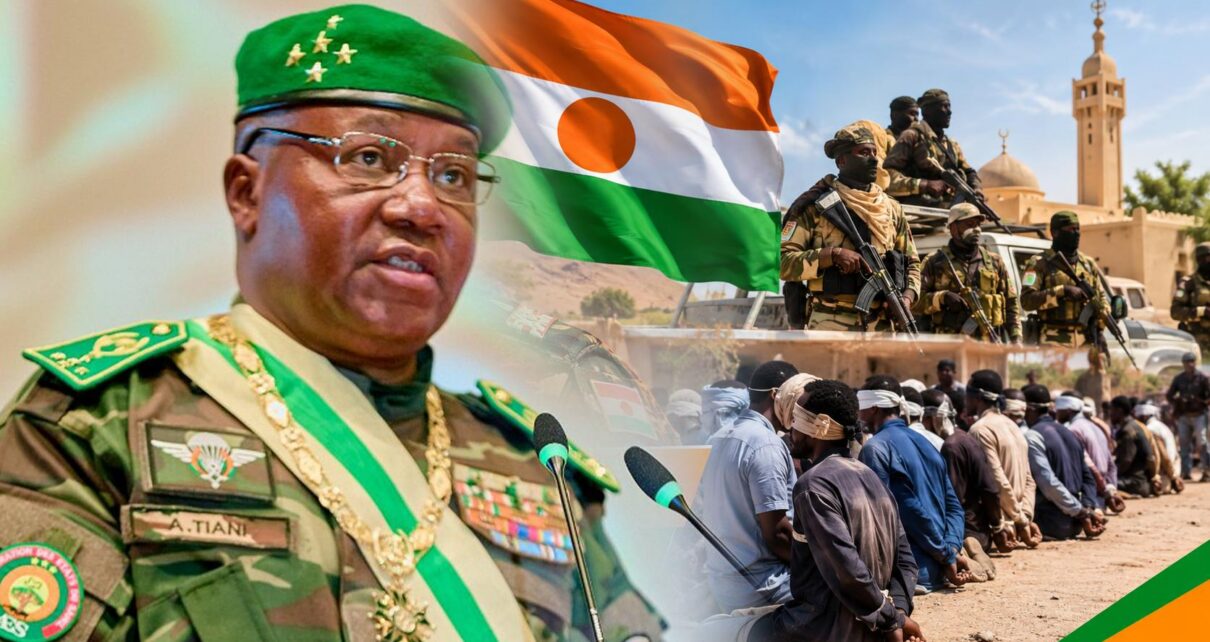
On a scorching Friday afternoon in August 2026, the peaceful rhythm of prayer in Niger was shattered by violence. As worshippers concluded their religious observance, heavily armed assailants encircled multiple mosques, trapping hundreds of civilians inside. Within minutes, nearly 500 faith leaders, elderly individuals, and young men were forcibly abducted and driven into dense forest terrain under gunpoint. Days later, their fate remains shrouded in uncertainty—and the nation is left grappling with a devastating reality: the state has failed to protect its own people.
The Friday prayer that turned to nightmare
It was shortly after 1:00 PM on August 21, 2024, when an ordinary act of worship transformed into a scene of terror. Worshippers inside several mosques had just completed their Friday prayer when gunmen moved swiftly. Blocking all exits and firing warning shots into the air, they separated families and marched hundreds of terrified civilians into the underbrush. Among the abducted were men of all ages—some as young as 14—leaving behind devastated parents, widows, and communities.
The orchestration of the attack suggests extensive planning. Security experts note that the militants chose locations at a distance from major military bases, using motorcycles and unmarked vehicles to evade detection. No group has claimed responsibility, and no ransom demand has surfaced—amplifying the torment of families waiting in limbo. Search parties, armed with only basic tools, are scouring the wilderness, but the vast terrain offers little hope in a region already scarred by insurgency.
From slogans to surrender: the myth of a strong state
When the National Council for the Safeguard of the Homeland (CNSP) seized power in 2023, it framed its takeover as a necessary step to restore security after years of rising terrorism. “We will defend our nation,” declared General Abdourahamane Tiani during the coup. Yet three years into military rule, that promise has collapsed under the weight of reality.
- Broken alliances: The expulsion of international partners—once central to counter-terrorism efforts—has left Niger’s military under-resourced and isolated, struggling with outdated equipment and insufficient training.
- Rising influence of armed groups: Militant factions now control swathes of territory, particularly in rural regions where state presence is nearly nonexistent. Their operations are bolder, their recruitment stronger, and their freedom of movement unchecked.
- Empty rhetoric: State broadcasts continue to trumpet “victories” and “sovereignty,” while villages burn and civilians vanish without trace.
The gap between political declarations and on-the-ground reality has never been wider. In Niamey, the CNSP is more focused on consolidating power and resisting external pressure than on addressing the plight of its citizens. Meanwhile, life outside the capital is a daily struggle for survival.
The abandoned communities paying the ultimate price
This mass kidnapping is not an isolated tragedy—it is the culmination of a slow-motion retreat of the state from large parts of Niger. Since 2023, the CNSP has prioritized political control over functional governance. Troops are scattered across isolated garrisons, waiting for orders that never come. In many areas, administration has ceased to exist. Schools, clinics, and markets operate under the shadow of militant checkpoints.
Residents in regions like Tillabéri and Tahoua describe a perverse paradox: they see the CNSP declare independence, yet suffer under the rule of groups that now dictate life, death, and justice. “We are invisible to those who took power,” said a local elder from Dosso. “The flag flies in Niamey, but the real flag in our villages is flown by the jihadists.”
When silence is the loudest failure
The government’s response to the crisis has been characterized by delay, denial, and detachment. Official statements have been sparse, vague, and inconsistent. There has been no public plan for rescue, negotiation, or even acknowledgment of the scale of the failure. Families of the kidnapped have organized protests in Niamey, only to face police dispersal and intimidation.
This silence speaks volumes. It reveals a regime that cannot protect its people in the one place where they should feel safest: their place of worship. It confirms a leadership more concerned with survival in power than with the lives of its citizens. And it fuels a growing sense of betrayal among a nation that trusted the military to bring order—not chaos.
A crisis that could define Niger’s future
The abduction of 500 worshippers marks a dangerous escalation in Niger’s unraveling security landscape. It signals a shift: militants are no longer just attacking soldiers or government outposts—they are targeting civilians in sacred spaces, with impunity. If this trend continues, Niger risks becoming a failed state where no institution, no flag, and no voice can guarantee safety.
The questions now demand answers: Will the international community intervene, or will it continue to watch from the sidelines? Can the CNSP regain credibility, or has it already lost the trust of its people? And most importantly—what becomes of 500 human lives in a country where security is now an illusion?
The clock is ticking. And the cost of inaction is measured in blood, despair, and the silent screams of families waiting in the dark.