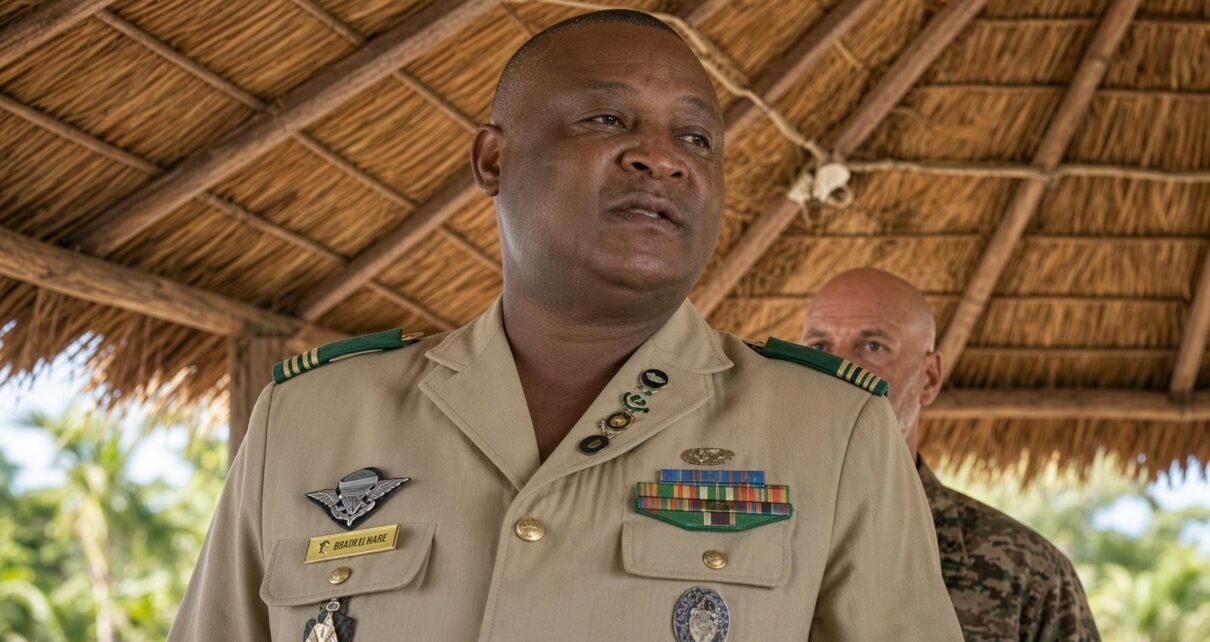
The fall of one of Niger’s most powerful military figures has sent seismic shockwaves through Niamey’s power corridors. Just weeks after foiling a mutiny at Air Base 101, the junta has abruptly turned against its former strongman: General Moussa Salaou Barmou. Once the architect of the 2023 coup that ousted Mohamed Bazoum, Barmou now finds himself under house arrest—a stark reversal of fortunes that underscores the fragility of loyalty in Niamey’s fragile military regime.
From coup architect to cautionary tale
As Chief of Staff of the Nigerien Armed Forces, General Barmou was the linchpin of the junta’s early stability. His removal on September 11, 2026, however, exposes a brutal truth: even the most trusted allies can become liabilities in a system built on paranoia and power consolidation. The decree signed by junta leader General Abdourahamane Tiani instantly transferred command to Brigadier General Mamane Sani Kiaou, shifting the military’s strategic direction and signaling a new phase of internal reckoning.
Purges deepen as crisis of confidence spreads
Observers argue that Barmou’s fall is not an isolated incident, but part of a systematic purge aimed at eliminating dissent within the ranks. The August mutiny, quelled with support from Russian-linked Africa Corps units, revealed deep fractures in Niger’s security apparatus—fractures the junta now seeks to forcibly close. By targeting a figure of Barmou’s stature, the regime sends a clear warning: any officer perceived as disloyal risks swift and severe consequences.
The move has fueled speculation across Niamey. Some dismiss it as a political maneuver to consolidate power; others see it as proof that mistrust now permeates every level of the military hierarchy. Either way, the message is unambiguous: loyalty is no longer a shield—it’s a liability.
What Barmou’s fall means for Niger’s security and economy
The immediate impact of this upheaval is already visible: morale among officers has plummeted, and institutional credibility is in freefall. With no clear successor commanding universal trust, operational cohesion across the armed forces is at risk. That instability isn’t just a military problem—it threatens the fragile economic recovery and national security that Niger desperately needs.
Businesses operating in Agadez, Maradi, and Niamey report rising uncertainty, with foreign investors pausing long-term commitments. The junta’s aggressive internal purges risk alienating the very partners it needs to rebuild confidence in the international arena—partners whose support is critical for stabilizing the economy and restoring civil order after years of political turbulence.
The junta’s dilemma: purge or collapse
The case of General Barmou illustrates a brutal paradox at the heart of Niger’s military government: born from rebellion, it now consumes its own children. By eliminating former allies, the junta accelerates its own erosion from within. Each purge creates new enemies, widens divisions, and weakens the very institutions it claims to protect.
With external partners growing wary and internal resistance simmering, Niamey stands on a precipice. The fall of General Barmou may be only the beginning of a deeper unraveling—or it could serve as a turning point toward stabilization. But one thing is certain: in a system where trust is currency and loyalty is temporary, no one is safe—not even the architects of the regime.