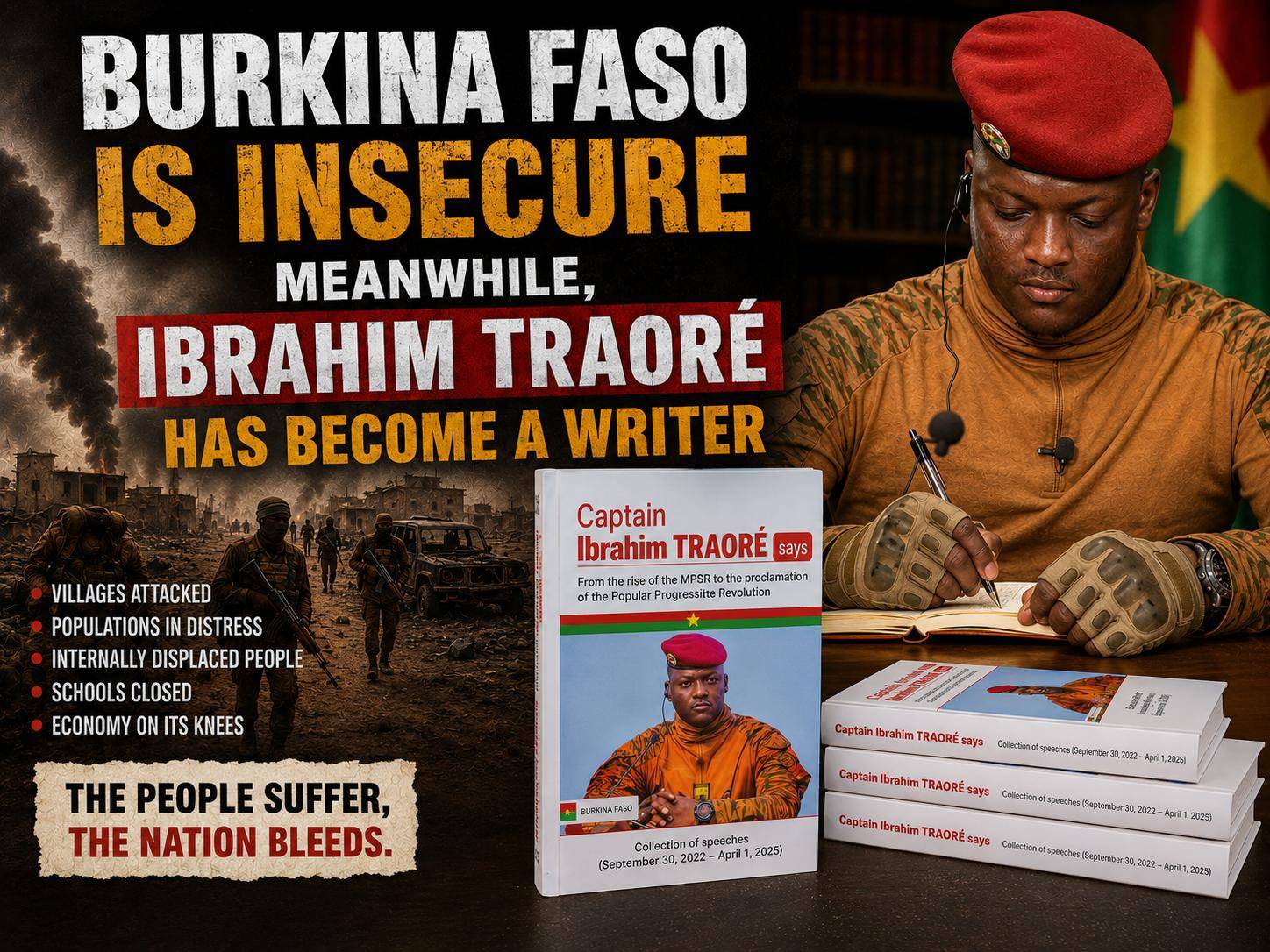
As Burkina Faso finds itself increasingly mired in an unprecedented humanitarian and security crisis, the recent priorities of the transitional government have drawn considerable scrutiny. A palpable chasm appears to have emerged between official communication efforts and the grim realities confronting the nation’s front lines.
This juxtaposition presents a striking, arguably unsettling, contrast. On one side, daily reports detail relentless terrorist assaults, besieged communities, and thousands of internally displaced citizens desperately appealing for the restoration of peace and territorial sovereignty, often while facing acute hunger. On the other, the presidential establishment busies itself with promoting what many perceive as propaganda or self-congratulatory narratives.
For a significant portion of the Burkinabè populace, a bitter realization has set in: the transitional presidency seems to have evolved into an outlet for political messaging.
The illusion of rhetoric versus the reality of conflict
The recent publication of a book, attributed to or dedicated in honor of Ibrahim Traoré, has ignited widespread bewilderment and exasperation. Yet, the message emanating from citizens, both in the bustling streets of Ouagadougou and in the nation’s most remote provinces, is unequivocally clear: the populace yearns not for literature, but for security.
To allocate resources for financing, editing, and promoting state-sanctioned literature precisely when the national defense and security forces (FDS) and the Volunteers for the Homeland (VDP) frequently face critical logistical deficiencies on the ground, signifies an alarming detachment. One cannot extinguish a raging inferno with printed pages, nor can lives be safeguarded through mere slogans on a book cover.
“The people do not require stories; they demand the reclamation of their homeland,” asserted a civil society activist, speaking under anonymity.
A breach of moral covenant
Upon his ascent to power, Captain Ibrahim Traoré forged a tacit moral covenant with the nation: a solemn pledge to restore territorial integrity and re-establish peace in areas where his predecessors had faltered. The substantial confidence extended to him was predicated entirely upon this promise of military efficacy.
Today, it is evident that rhetoric has overshadowed tactical engagement. By directing the state apparatus towards fostering a personality cult and engaging in political marketing, the administration has incurred the wrath of an exhausted population. For many, the threshold of tolerance has been surpassed. Discontent is escalating, culminating in a radical popular demand: if the primary mission of securing the country cannot be fulfilled, it is time for the current leadership to step aside.
The trajectory of the transition
The incumbent administration stands at a critical juncture. A continued approach of managing the presidency as a public relations entity, at the expense of addressing the front-line challenges, will only deepen the estrangement from the populace. The latest Ouaga news indicates growing public frustration with the Burkina government news.
Burkina Faso requires strategic commanders capable of restoring stability, not public writers at its helm. Should Captain Traoré fail to immediately reorient the focus towards the paramount priority of security, history will record his tenure as having been inscribed with the ink of illusion, while the nation continued to burn. This is the critical Faso news today, demanding immediate attention from the government in Ouagadougou.