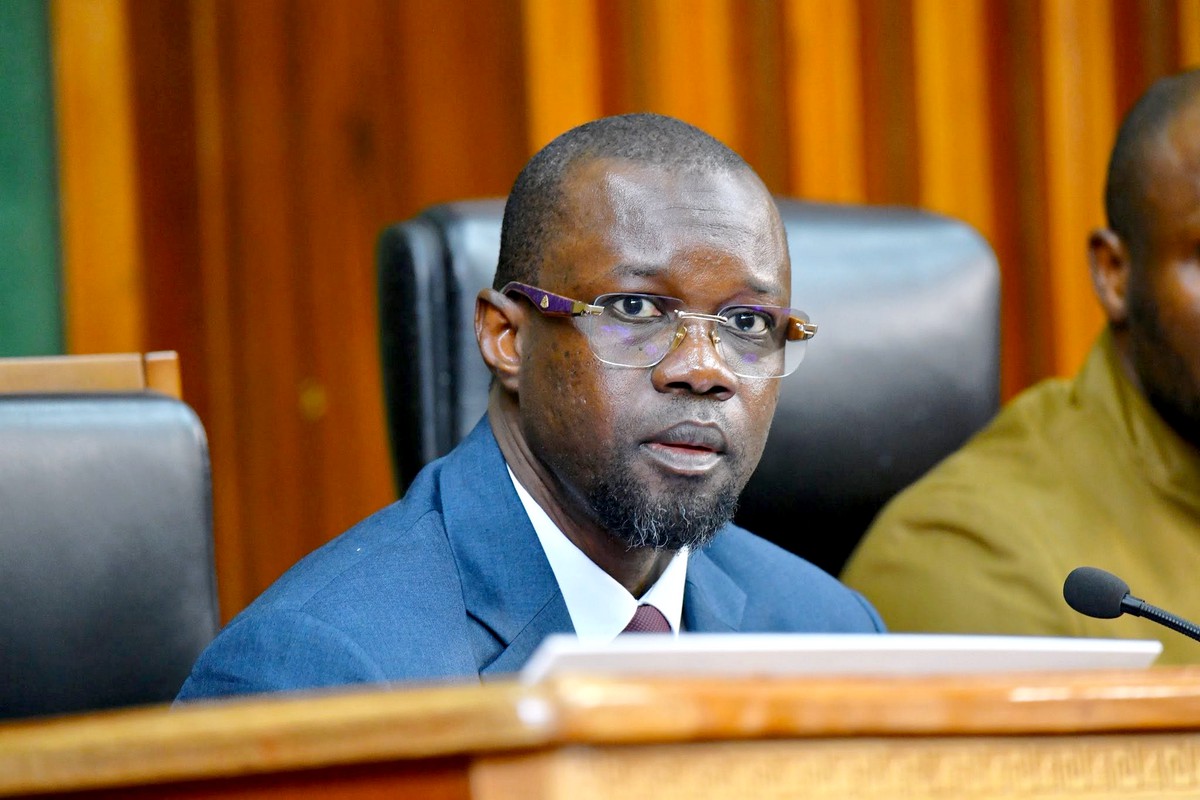
Ousmane Sonko, the former Prime Minister and current President of the National Assembly, has voiced his strong opinion regarding the recent agreement between the International Monetary Fund (IMF) and the government of Senegal. Through a statement posted on his official Facebook page, the parliamentary leader announced that a comprehensive debate will soon unfold to scrutinize the full implications of this renewed collaboration.
This intervention by Ousmane Sonko comes in the wake of a newly announced agreement between the IMF and Senegal, which includes a loan program exceeding $2 billion, equivalent to approximately 1,245 billion CFA francs, intended to bolster Dakar’s economic framework. Sonko, who previously brought to light a significant undisclosed debt that led to the suspension of Senegal’s prior IMF program in 2024, is now once again taking a firm stance on the nation’s financial dealings.
Ousmane Sonko remarked, “We have closely monitored the successive announcements from both the IMF and the Senegalese government concerning a technical agreement, which awaits final approval from the Fund’s executive board.”
However, he noted that the diplomatic language employed by both parties offers insufficient detail about the specifics of this proposed accord, particularly regarding the commitments undertaken by Senegal, as outlined in the IMF’s communiqué. He raised several critical questions:
- What exactly are Senegal’s obligations concerning the “treatment of its debt”?
- Which major reforms are envisioned, covering areas such as the sustainability of public finances, safeguarding vulnerable households, enhancing domestic resource mobilization, streamlining expenditures, strengthening social safety nets, overseeing public enterprises, and improving the business environment?
- What is the current status of the international debt audits that were previously mandated?
These commitments, Sonko underscored, are of paramount concern to all Senegalese citizens, as they are made on their behalf and will bear the present and future financial burden.
Drawing upon his extensive involvement in these discussions over many months, and recognizing certain directions that risk repeating past errors, I advocate for nothing less than absolute transparency.
Given that such negotiations culminate in a draft document, known as the Memorandum of Economic and Financial Policies, which is validated by both parties, I formally request that the Senegalese government:
- Publicly release this memorandum to ensure accurate information dissemination and facilitate a healthy public debate on Senegal’s commitments;
- Alternatively, transmit the document directly to the National Assembly, which serves as the voice of the people.
Regardless of the immediate action, the fundamental tenets of these commitments will inevitably be incorporated into any potential rectifying finance law or the draft finance bill for the year 2027, both of which are slated for submission to the National Assembly in October 2026.
And when that time comes, the debate will certainly ensue!