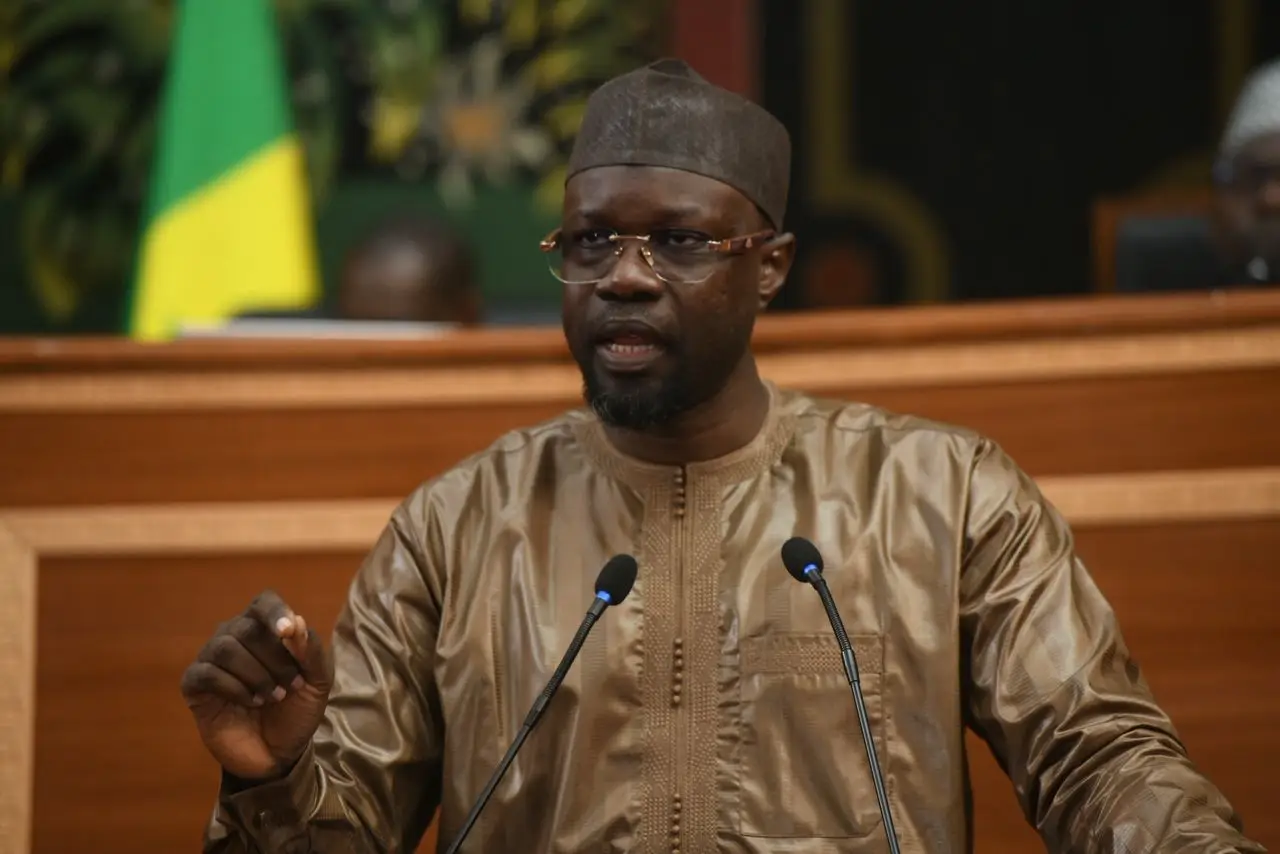
Ousmane Sonko unveils ambitious job creation plan for Senegalese youth
In a landmark address to the National Assembly, Prime Minister Ousmane Sonko has placed employment at the heart of Senegal’s economic and social agenda. Speaking during Friday’s parliamentary session on May 22, 2026, the head of government made a bold pledge to tackle youth unemployment through large-scale job creation initiatives.
Government commits to thousands of new jobs
Ousmane Sonko emphasized that job creation is not just a policy priority but a national imperative. “The employment crisis demands urgent action, and we are committed to delivering thousands of jobs for our young people,” he stated firmly before legislators. His remarks came amid growing public expectations for economic opportunities and inclusive growth.
While acknowledging the challenges ahead, the Prime Minister stressed realism alongside ambition. “I cannot promise every citizen a job tomorrow, but what I can guarantee is a bold, structured plan to generate thousands of meaningful employment opportunities,” he explained. The strategy, he added, will rely on coordinated efforts between government agencies, the private sector, and international partners.
Economic patriotism drives new employment strategy
The Prime Minister outlined a vision where economic patriotism guides national development. He argued that Senegal must prioritize domestic participation in productive sectors while maintaining open cooperation with foreign investors. “We are not turning our backs on international partners, but we are reshaping our economic model to ensure that Senegalese citizens hold a more substantial stake in the nation’s wealth,” he said.
A key component of this plan is the upcoming Economic Patriotism Bill, designed to strengthen local industrial and commercial activities. The proposed legislation aims to deepen economic sovereignty by encouraging investment in local production, reducing reliance on imports, and fostering a more resilient private sector.
Private sector seen as engine of growth and stability
Ousmane Sonko highlighted the critical role of a well-organized and supported private sector in driving sustainable job creation. “A robust private sector is the backbone of economic progress. It is our responsibility to create an enabling environment—through financing, training, and policy support—so that businesses can thrive and hire,” he asserted.
He called on all stakeholders—government bodies, business leaders, civil society, and development partners—to unite behind this national effort. “This is not just a government mission; it is a collective responsibility. Only through collaboration can we meet the aspirations of Senegal’s youth and secure a prosperous future for generations to come,” he concluded.