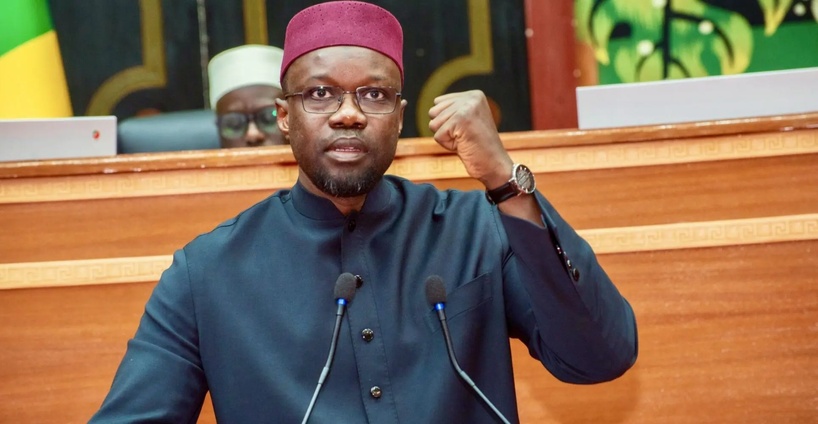
Prime Minister Ousmane Sonko of Senegal is set to take the floor at the National Assembly this Friday at 10:00 GMT for a pivotal session of Questions d’actualité. This institutional exchange is not just another routine parliamentary exercise—it serves as a critical moment to assess government performance, tackle pressing macroeconomic challenges, and address the evolving political climate in the country.
The stakes are particularly high this time around, with the backdrop of recent amendments to electoral laws—specifically Articles L.29 and L.30 of the Electoral Code. These changes, which concern eligibility criteria and civil rights revisions, have sparked intense public debates. Since President Diomaye Faye signed the new law into effect, opposition voices have argued that the reforms were designed to tailor eligibility rules in favor of Sonko ahead of the 2029 elections. Sonko, however, has repeatedly stated that he is already eligible to run in any Senegalese election.
Beyond political maneuvering, this fifth accountability session will also focus on pressing issues affecting ordinary citizens. Sonko will be joined by his entire cabinet, and the discussions are expected to center on cost-of-living concerns. Key topics include government measures to reduce prices for essential goods and energy, as well as broader economic policies. The session will likely delve into ongoing negotiations with the International Monetary Fund (IMF), the progress of the economic recovery plan, and budget preparations for the coming year.
Sector-specific priorities will also be on the agenda. Discussions will cover the implementation of family security grants, updates on this year’s agricultural campaign, and state-backed preparations for Tabaski (Eid al-Adha). Another focal point will be the working relationship between Sonko and President Faye, which the Prime Minister has described as a “soft cohabitation”—a term that underscores a cooperative yet distinct political dynamic.