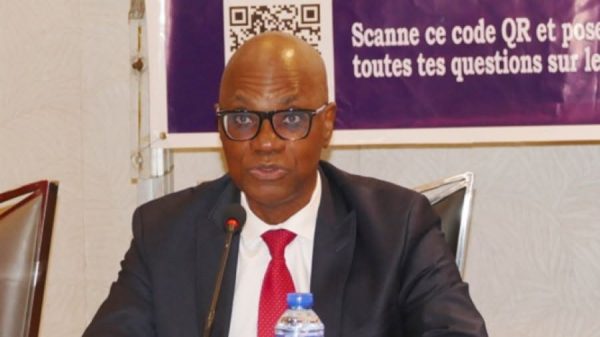
Lomé, 14 September 2026 — West Africa’s health diplomacy has a new face. On 1 September 2026, professor Palokinam Pitché stepped into the presidency of the West African Health Organisation (OOAS), the region’s most senior public health post. His rise came as part of the renewal of ECOWAS leadership bodies for the 2026-2030 cycle, handing the community institution a Togolese academic whose career bridges bedside medicine and top-level strategy.
Two decades on the front line of the region’s epidemics
For close to twenty years, Palokinam Pitché has helped shape how sub-Saharan Africa answers its most serious disease outbreaks. A seasoned practitioner and a widely recognised researcher, he established himself as one of the defining figures in the fight against HIV and Aids. His academic work, combined with a constant presence in the field, helped rewrite care and treatment protocols and widened access to public health services.
A trusted interlocutor for global health donors
His ascent also rests on a proven ability to engage major funders and international agencies. Working closely alongside global health partners, he structured complex outbreak-response programmes from the ground up, building a reputation for administrative rigour and scientific efficiency.
The road ahead: a demanding 2026-2030 mandate
Taking charge of the West African Health Organisation, Palokinam Pitché inherits an exacting roadmap in a region where epidemic crises keep resurfacing and care infrastructure remains fragile. Three priorities will shape his term: strengthening epidemiological surveillance, scaling up local production of medicines, and harmonising health policies among member states.
Why the choice of a scientist matters
His appointment also signals a deliberate stance from ECOWAS — entrusting its health diplomacy to highly technical profiles. By putting an accomplished scientist at the head of the organisation, the regional bloc is betting on pragmatic management capable of shielding more than 400 million citizens from the health emergencies still to come.
A milestone on the path to regional health sovereignty
In the end, the professor’s rise to the top of the West African Health Organisation goes well beyond the recognition of a single career. It embodies something larger: the hope of a West Africa that takes its health destiny into its own hands. For the millions of ECOWAS citizens, that shift opens the prospect of stronger protection against epidemics and broader access to quality care — the very foundations of genuine regional health sovereignty.