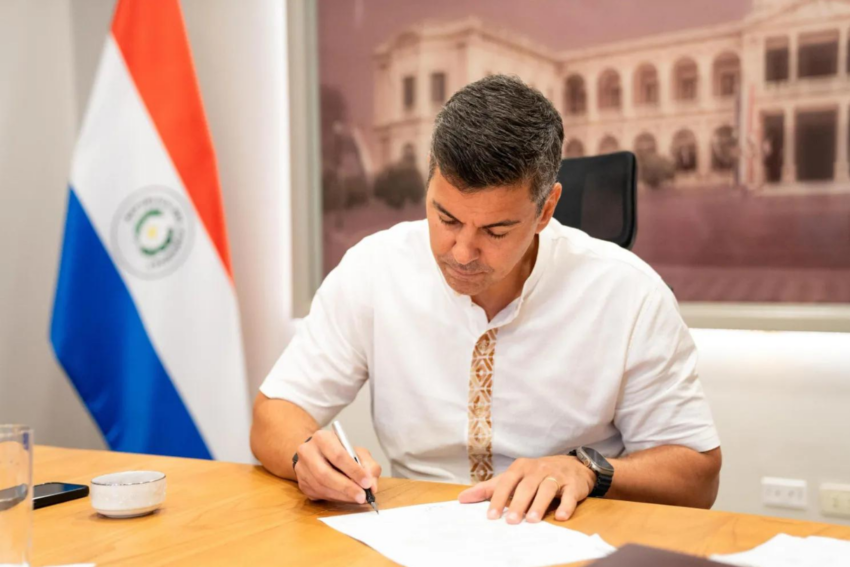
After Ueno Bank collapse, Paraguay’s president resigns amid economic and political fallout
Asunción, 5 November 2026 — President Santiago Peña has stepped down amid a spiralling banking crisis, a spiraling public backlash, and an impending impeachment process. His resignation, announced in a national address, plunges Paraguay into a period of profound uncertainty — economically, politically, and socially — as millions of savers remain locked out of their funds.
The president’s departure marks a dramatic turning point. In a televised statement, Peña acknowledged the need to preserve national stability and democratic institutions, declaring: “I have decided to resign from the presidency of the Republic.” The announcement came just hours before parliamentarians were set to vote on his removal.
From banking default to political earthquake: how Ueno Bank triggered a national crisis
The collapse of Ueno Bank — once one of the largest financial institutions in Paraguay — set off a chain reaction that has now engulfed the country’s leadership. Central Bank intervention revealed the bank had breached solvency thresholds, with its capital adequacy ratio plunging below the 50% regulatory floor, threatening its ability to meet liabilities.
The bank, serving nearly 3 million citizens in a nation of 6 million, froze customer accounts, triggering panic among depositors. The paralysis extended beyond personal savings: the bank also handled government funds, including social security and pension disbursements, potentially involving hundreds of millions of dollars.
Public anger exploded in the streets of Asunción. Retirees, workers, and small business owners rallied to demand access to their life savings. Many now see the crisis as a crisis of trust — not just in one bank, but in the entire system meant to protect their financial futures.
Scandals and oversight gaps: allegations rock the presidency
The president’s prior financial ties to the conglomerate that owned Ueno Bank have intensified scrutiny of his role in the crisis. Santiago Peña had previously held shares in the group before divesting in 2025, yet questions linger over whether political decisions may have shielded the bank from greater oversight.
Opposition leaders allege systemic failures: that public funds were exposed to unacceptable risk, that regulatory bodies turned a blind eye, and that personal interests may have influenced state policy. These allegations — soon to be examined in formal proceedings — have further eroded public confidence in the government’s integrity.
The crisis extends beyond the presidency. Carlos Carvallo, former head of the Central Bank and a Ueno Bank executive, resigned amid accusations of regulatory conflict of interest, raising doubts about the independence and effectiveness of financial oversight.
Impeachment vote seals the fate of Santiago Peña
On Monday, opposition legislators initiated impeachment proceedings against both the president and Vice President Pedro Alliana. The political ground shifted rapidly as key figures in the ruling Colorado Party withdrew their support, stripping Peña of his legislative majority.
Just hours after his resignation announcement, the Chamber of Deputies voted to impeach him, according to institutional sources. While the Senate must still rule on the charges, the sequence underscores a collapse of institutional trust — not just in the banking sector, but in Paraguay’s democratic fabric.
Pedro Alliana inherits a ticking bomb of unresolved crises
With Santiago Peña’s exit, Pedro Alliana steps into the presidency facing a daunting list of emergencies. His administration must restore faith in the banking system, secure depositors’ access to funds, protect public finances, and clarify accountability for Ueno Bank’s failure.
Government officials have pledged accelerated repayment schemes and speeded-up judicial inquiries targeting key bank officials. Yet behind the immediate response lies a deeper reckoning: how did a country long hailed as an economic model in the region allow such a systemic collapse?
Beyond the bank: what the crisis reveals about Paraguay’s future
For Peña, resignation ends a presidency overshadowed by scandal. For Paraguay, it opens a precarious chapter where restoring public trust is as vital as stabilising the economy. Defusing this crisis may require more than policy fixes — it demands transparency, accountability, and a renewed commitment to good governance.
The fallout from this collapse will ripple across the political landscape, reshaping alliances and redefining the nation’s path forward. One truth is clear: the consequences of this moment will be felt long after the banking doors reopen.