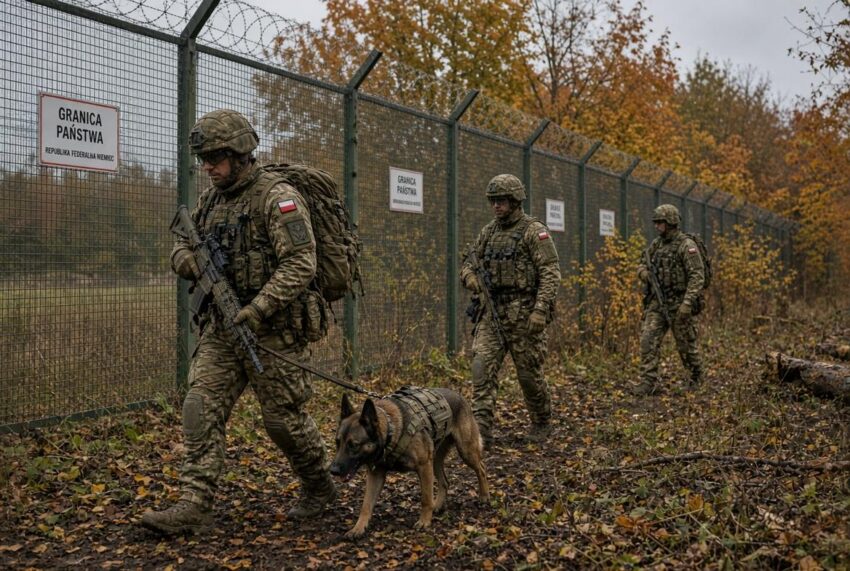
As tensions between NATO and Russia reach a concerning new peak in the Baltic Sea region, Polish authorities have enacted a sweeping security crackdown along the nation’s northeast frontier—adjacent to the heavily militarized Russian exclave of Kaliningrad. This decisive move underscores Warsaw’s resolve to neutralize escalating threats of clandestine infiltration, drone incursions, and targeted sabotage campaigns that could destabilize Poland’s northern provinces and disrupt vital economic lifelines.
From shadow tactics to concrete barriers: Poland’s fortified shield
The newly activated border security operation is far more than routine patrol reinforcement. It represents a full-spectrum defensive framework integrating border guard units, national police, elite counterterrorism detachments, and conventional military battalions into a seamless surveillance grid. The strategic intent is twofold: first, to seal the border against potential infiltration by Russian-trained sabotage cells; second, to shield critical infrastructure across northern Poland—energy pipelines, rail corridors, and telecom networks—from becoming collateral damage in Moscow’s asymmetric warfare playbook.
Never before has Poland deployed such a dense concentration of armed presence along its Baltic coast. The move reflects a calculated response to a sharp rise in suspicious aerial activity over recent months, including unauthorized drone flights and repeated airspace violations, keeping regional governments on high alert.
NATO’s eastern anchor braces for hybrid warfare
By positioning elite forces within striking distance of Kaliningrad, Warsaw is signaling that any attempt to exploit Poland’s eastern flank—whether through migrant flows, psychological pressure, cyber strikes, or physical sabotage—will meet an immediate and resolute countermeasure. As Poland solidifies its role as NATO’s eastern bulwark, it is making clear that deterrence is no longer a theoretical stance but a day-to-day operational reality.
This militarized perimeter does more than protect territory: it reshapes the geopolitical calculus in the Baltic region. While global attention remains fixed on the war in Ukraine, Poland’s proactive border fortification serves as a stark reminder that Kremlin-backed aggression extends far beyond Ukraine’s borders—and that resilience, not passivity, is the currency of security in 2024.
The human and economic cost of escalation
The security clampdown has already begun to ripple through local communities and businesses. Small-town enterprises near the border report increased inspections, delayed shipments, and rising operational costs as supply chain routes adjust to new restrictions. Meanwhile, residents face prolonged delays at crossings and heightened military presence in daily life—from school routes to weekend markets.
For regional logistics providers, the new regime means rerouting freight, hiring additional security escorts, and absorbing fuel surcharges linked to detours. The tourism sector, already fragile following pandemic losses, now grapples with uncertainty over cross-border travel and visitor confidence. Farmers exporting produce to Baltic ports are seeing higher transit times and stricter documentation requirements, squeezing already thin margins.
On a macro level, investors are recalibrating risk assessments. While Poland remains a high-growth market in Central Europe, sectors tied to northern infrastructure—shipping, energy, tech—are factoring military disruption into five-year forecasts. Analysts describe a cautious but not catastrophic outlook: growth may moderate, but strategic sectors are prioritized for protection, signaling long-term commitment to stability despite short-term turbulence.
What’s next for Poland’s Baltic frontier?
As the operation enters its second phase, Warsaw has announced plans to integrate AI-driven surveillance drones and biometric verification systems at key crossing points. Additional battalions are slated for rotation, ensuring continuous 24/7 coverage. The government has also opened a dedicated hotline for citizens and businesses to report suspicious activity—part of an expanded public engagement strategy.
The message from Warsaw is unambiguous: the Baltic frontier is no longer a soft underbelly of Europe. It is now a hardened shield—and the cost of crossing it, whether by drone, smuggler, or saboteur, will be immediate and decisive.