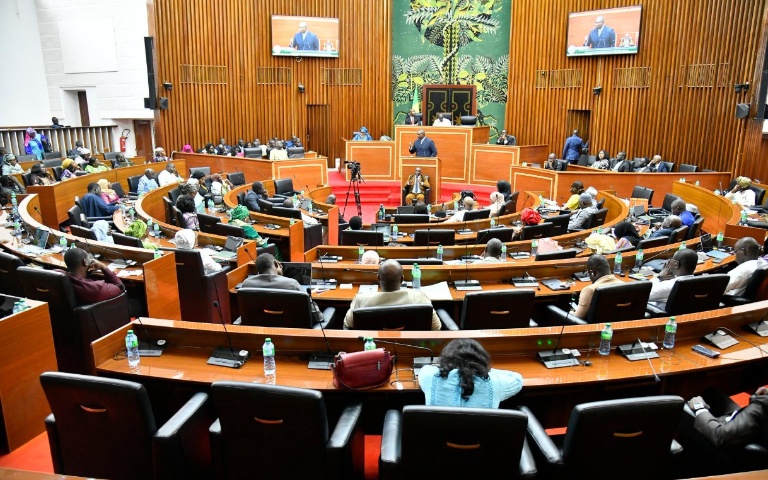
The political rift between Senegalese President Bassirou Diomaye Faye and his former party, PASTEF, has escalated into a full-blown institutional crisis—one with immediate consequences for the country’s finances and daily life. On November 3, 2026, the National Assembly delivered a crushing blow to the government by rejecting the 2026 Rectificative Finance Bill (LFR), a move that exposed deep fractures within the ruling coalition and triggered fears of economic instability.
From allies to adversaries: the evolving feud reshaping Senegal’s power balance
The vote was not merely a procedural setback but a public declaration of war between two architects of Senegal’s political landscape: President Faye, who leads the executive, and PASTEF leader Ousmane Sonko, now Speaker of the National Assembly. What began as a shared struggle for change has devolved into a bitter power struggle, with Sonko’s parliamentary bloc openly defying the president’s agenda.
Historically, PASTEF members dominated both the government and parliament, ensuring smooth passage of legislation. Today, their loyalty is fractured. The November 3 vote—109 deputies in favor of rejecting the bill, 20 against, and 3 abstentions—sent a clear message: the government can no longer take parliamentary support for granted, even on economic matters deemed vital.
Budget showdown: where fiscal strategy clashes with political distrust
The rejected 2026 budget plan proposed revenue of 5,848.7 billion CFA francs (down from the original 6,188.8 billion) and total spending of 7,583.9 billion—pushing the deficit to 7.6% of GDP from an initial 5.4%. Key reductions included slashing 555 billion CFA francs in investment credits, a cut that left critical infrastructure and social programs scrambling for funding.
PASTEF lawmakers, spearheaded by MP Amadou Ba, argued that the government’s financial projections lacked transparency. They demanded clearer justifications for spending, particularly on energy subsidies, family security grants, and priority sectors. The Ministry of Economy countered, stating it had already provided requested data—though the dispute underscores a broader crisis: who controls fiscal decision-making in Senegal?
Economic fallout: blocked budget, blocked progress?
The consequences of this deadlock extend far beyond the assembly hall. The budget’s failure complicates Senegal’s ongoing negotiations with the International Monetary Fund (IMF), which have already been tense due to concerns over public debt and macroeconomic stability. A drawn-out delay risks eroding investor confidence and tightening liquidity for government contractors, including hospitals, schools, and energy providers.
With state coffers strained, civil servants, suppliers, and vulnerable households may face delayed payments—fueling social unrest and undermining public trust in institutions. The urgency is palpable: without a functioning budget, the state’s ability to deliver essential services hangs in the balance.
A new era of tension: what does this mean for Senegal’s future?
While not a formal cohabitation (where opposing parties divide the executive and legislature), this de facto split mirrors its risks: institutional paralysis and a leadership vacuum. President Faye heads a government that lacks reliable parliamentary backing, while PASTEF, though no longer in power, wields significant legislative influence. The question now looms large: how long can this standoff persist before it destabilizes Senegal’s democratic fabric?
No compromise is in sight. The government must seek alternative legal or political routes to pass essential funding, while PASTEF lawmakers seem determined to leverage their leverage. One thing is clear: the November 3 vote wasn’t just about a budget. It was a referendum on power, accountability, and the future of governance in Senegal.