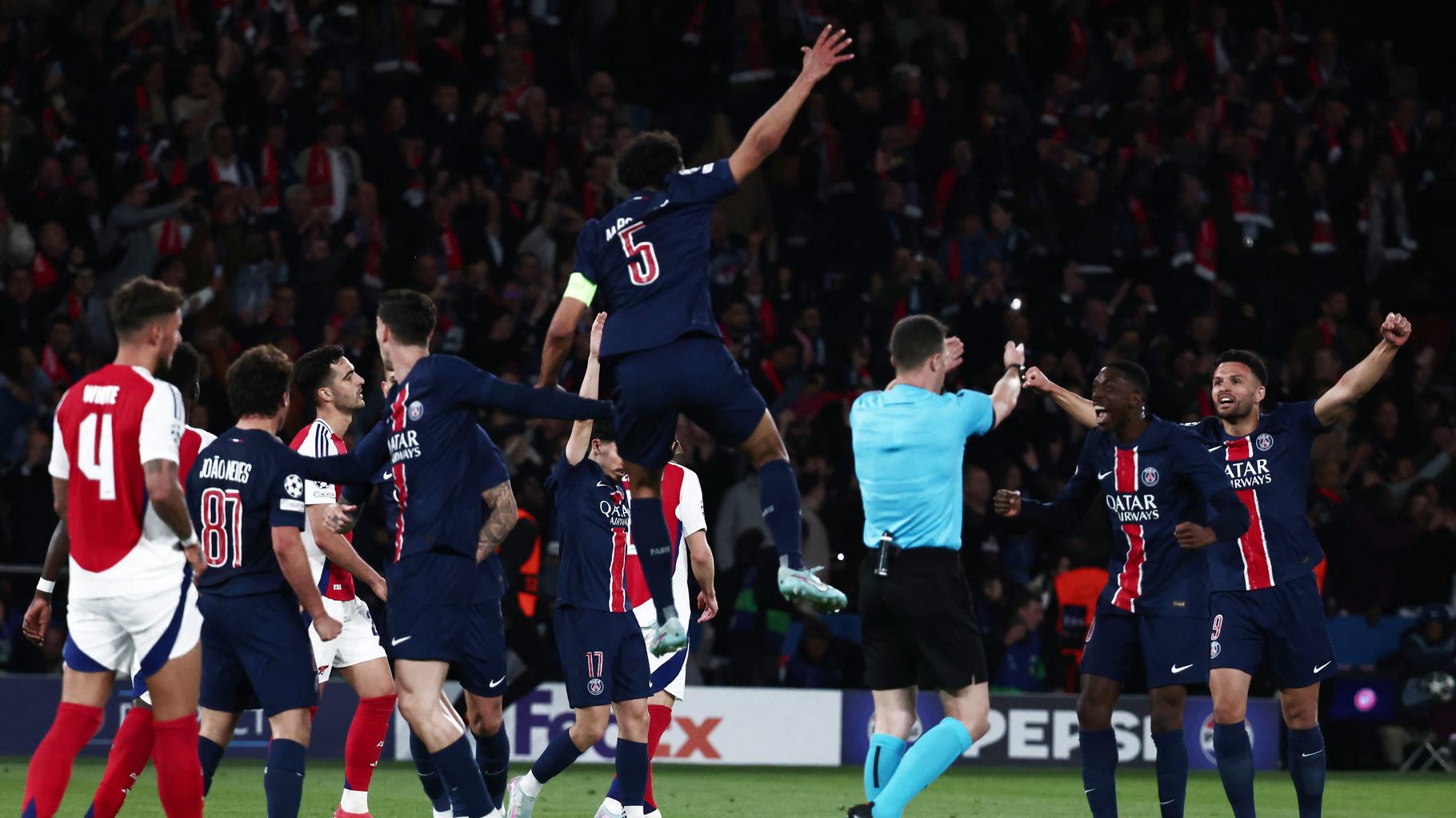
One team dazzles with offensive flair, the other grinds opponents down with disciplined pragmatism. On Saturday, May 30 at 18:00 in Budapest, Paris Saint-Germain and Arsenal will face off in a Champions League final that pits two radically different football philosophies against each other.
• This will be PSG’s second consecutive Champions League final appearance.
• The Parisians arrive buoyed by a 5-0 demolition of Inter Milan in last year’s final and a dramatic 5-4 comeback victory over Bayern Munich in April.
• Arsenal, nicknamed ‘boring’ by critics, has reached the final with a defensive masterclass and set-piece efficiency.
PSG: the spectacle makers of Europe
Since the turn of the year, Paris Saint-Germain have rewritten the narrative of modern football. Their 5-0 Champions League final triumph over Inter Milan in 2024 was followed by comprehensive quarter-final victories over Liverpool, and most memorably, a pulsating 5-4 semi-final win over Bayern Munich that is already being hailed as one of the greatest comebacks in tournament history.
Led by French Ballon d’Or winner Ousmane Dembélé, Georgian winger Khvicha Kvaratskhelia and the defensive rock Willian Pacho, PSG have become the continent’s most feared attacking force under the guidance of manager Luis Enrique. Their ability to elevate performance when stakes are highest has drawn comparisons to the great Barcelona sides of the past – a side Enrique himself once masterminded.
The contrast could not be starker when compared to their path to the final: five-goal thrashings of Monaco, eight against Chelsea, four against Liverpool and six against Bayern. Each performance reinforced the idea that when PSG are at their best, no defensive system can contain their relentless attacking rhythm.
Arsenal: the art of winning without flair
While Paris has dazzled spectators with its fireworks, Arsenal has quietly honed the unglamorous aspects of football into a fine art. The Gunners’ route to Budapest has been defined by resilience rather than spectacle, exemplified by a nail-biting 1-0 quarter-final victory over Sporting CP scored in the 91st minute, followed by a 0-0 draw in the return leg.
Their defensive backbone, anchored by central defenders William Saliba and Gabriel with David Raya between the posts, has conceded fewer goals than any other Premier League side this season. This solidity has translated into a historic first top-flight title in 22 years – a league campaign marked by consistency rather than individual brilliance.
Arsenal’s ability to dominate games through set-pieces has become their trademark. Under the guidance of set-piece specialist Nicolas Jover, the club has perfected routines that yield goals from free kicks and corners at a rate unmatched in Europe. This pragmatic approach has earned them the unflattering label ‘boring Arsenal’, a moniker Arteta and his players have shrugged off with growing confidence.
Two coaches, two contrasting mantras
Luis Enrique has become synonymous with PSG’s recent success. His tactical acumen and man-management have transformed a star-studded but often inconsistent squad into a cohesive unit capable of delivering when it matters most. His influence extends beyond tactics; he embodies the club’s ambition and has earned the rare status of ‘manager-as-hero’ among supporters.
Mikel Arteta, by contrast, has positioned himself as Arsenal’s protective shield. Known for his forthright press conferences and unapologetic defense of his team’s style, Arteta has steered Arsenal through turbulent periods with an unshakable belief in the club’s potential. His recent assertion that ‘we have the opportunity to write history’ reflects an unflinching focus on the prize rather than the manner of victory.
As the final approaches, one question dominates the conversation: can Arsenal’s disciplined pragmatism stifle PSG’s relentless attacking force? History suggests no clear favorite, only two equally capable teams capable of claiming Europe’s most coveted trophy.