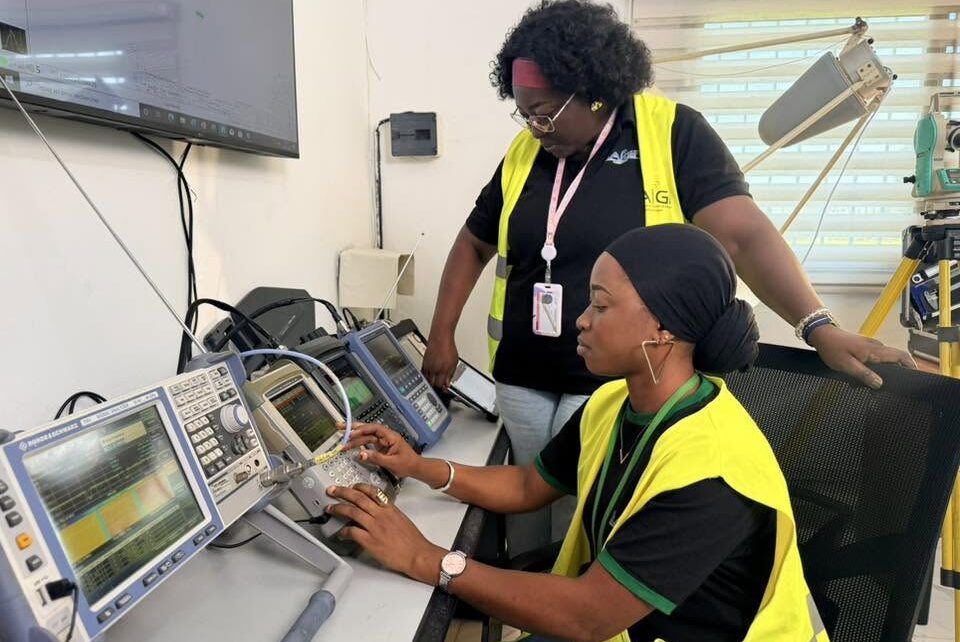
Abidjan, September 28, 2026 – The countdown is on. Tomorrow, Tuesday, September 29, 2026, at 3:00 PM, the public conversation around radio frequency management in Côte d’Ivoire will shift into high gear as the Ivorian Frequency Management Agency (AIGF) takes center stage at the “Tout Savoir Sur” (TSS) tribune. The event, organized by the Government Information and Communication Center (CICG), is already generating buzz among telecom operators, media watchers, and ordinary citizens who rely on stable airwaves every day.
The theme is direct and consequential: “The management and control of radio frequencies in Côte d’Ivoire.” But beyond the title, what is really at stake is the invisible infrastructure that keeps mobile networks, broadcast signals, and emergency communications running without interference. The fallout from past spectrum disputes and the outlook for tighter control have made this a subject that refuses to stay technical.
Why this tribune is more than a routine briefing
Radio frequencies are not just a technical detail for engineers. They are the backbone of a modern digital economy. In Côte d’Ivoire, every call, every radio broadcast, every mobile money transaction travels through a carefully allocated slice of the electromagnetic spectrum. When that allocation is mismanaged, the consequences ripple outward: dropped calls, disrupted broadcasts, and costly interference that can affect everything from aviation to public safety.
The AIGF’s appearance at the TSS tribune comes at a moment when public debate over spectrum governance is intensifying. Citizens want to know who gets which frequencies, how decisions are made, and what protects them from signal piracy or chaotic overlaps. The agency is expected to address those concerns head-on.
The man at the center of the conversation
Aliou Bamba, Director of National Frequency Management at the AIGF, will be the guest speaker. He is not coming to deliver abstract theory. According to the program, Bamba will lay out the agency’s core missions: managing the national spectrum, assigning frequencies, and ensuring that usage remains rational, efficient, and secure across the entire territory.
His presentation is expected to cover the full chain of spectrum governance, from the initial allocation procedures to the day-to-day monitoring that keeps the airwaves clean. This includes the conditions under which operators may use frequencies, the surveillance mechanisms deployed to detect anomalies, and the response protocols for jamming and interference.
What the public wants to know
The tribune is not a one-way lecture. The CICG has invited citizens to follow the exchanges live on the government’s digital platforms — Facebook, X, and YouTube — and to submit their concerns in real time. That interactive format reflects a broader shift: spectrum management is no longer seen as a closed-door affair for technicians and bureaucrats. It is a matter of public interest.
Among the questions likely to surface: How are frequencies assigned to mobile operators versus broadcasters? What happens when a pirate radio station interferes with a licensed signal? How does the AIGF track unauthorized usage across borders? And perhaps most importantly, what has the agency actually achieved since its creation?
Looking back to move forward: the AIGF scorecard
The tribune will also serve as a platform for the AIGF to present its track record. That is a critical moment. Public trust in regulatory bodies often hinges on transparency about both successes and shortcomings. The agency is expected to highlight its monitoring operations, enforcement actions, and efforts to prevent interference.
But the outlook matters just as much. What are the next steps for improving spectrum control? How will the AIGF adapt to new technologies like 5G, satellite constellations, and the Internet of Things, all of which place new demands on the spectrum? These forward-looking questions will shape the debate long after Tuesday’s event ends.
Where and how to follow the discussion
The tribune will take place at the headquarters of the Integrated Urban Land Management System (SIGFU) in the administrative city of Abidjan-Plateau, with journalists and sector stakeholders in attendance. For those unable to be there in person, the live stream on Facebook, X, and YouTube will carry the full session.
Organized every Tuesday by the CICG, “Tout Savoir Sur” has become a regular fixture for explaining public policies and services to a wide audience. It bridges the gap between institutions, media, and citizens. This week’s edition, focused on radio frequencies, is a reminder that the airwaves belong to the public — and their management deserves public scrutiny.
As the fallout from past spectrum challenges continues to shape debate and the outlook for reform takes shape, Tuesday’s tribune will be a key moment to watch. The conversation does not end when the cameras stop rolling. It is just getting started.