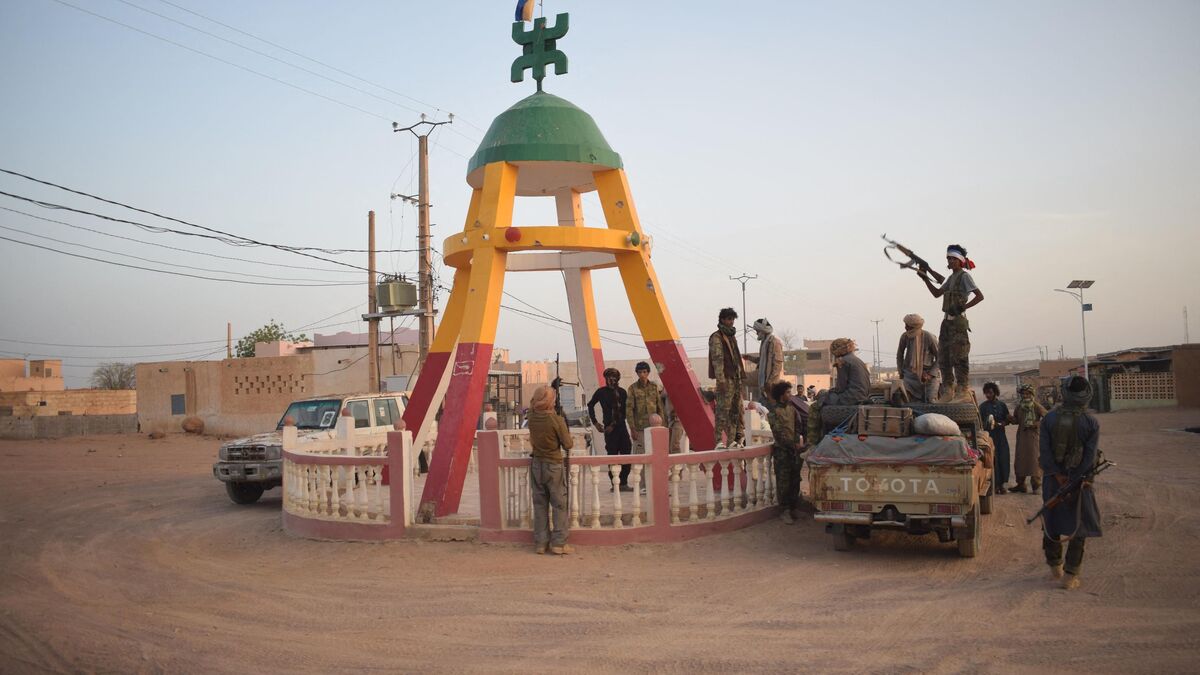
Africa Corps, Moscow’s latest paramilitary force in Africa, suffered a strategic setback over the weekend as rebels reclaimed Kidal, a key stronghold in northern Mali that had been under its tight control for years. The withdrawal marks a turning point in the Sahel, yet the group remains a critical asset for Russia’s regional ambitions, even as its predecessor, Wagner, fades from the scene.
From Wagner to Africa Corps: a calculated transition
Born in late 2023, Africa Corps emerged as a more structured and Kremlin-controlled alternative to Wagner, following the turbulent demise of its infamous predecessor. The group’s creation was first signalled by military blogger Deux Majors on Telegram, quoting Igor Korotchenko, a former colonel and Kremlin-aligned commentator, who revealed that the Russian Defense Ministry’s vice-minister, Iounous-bek Evkourov, would oversee its operations. This shift followed the August 2023 deaths of Wagner founders Evgueni Prigojine and Dmitri Outkine, whose rebellious ambitions against the Kremlin had already destabilized the group’s cohesion.
Africa Corps inherited Wagner’s African operations, absorbing personnel and assets while distancing itself from the scandal-plagued legacy of its predecessor. Unlike Wagner, accused of widespread human rights abuses and brutal repression, the new force presents a more discreet profile, focusing on state-to-state military partnerships rather than overt paramilitary campaigns.
Africa Corps: a name with a dark historical echo
The group’s name is no coincidence. It directly references the Afrikakorps, the German expeditionary force deployed in North Africa during World War II under Erwin Rommel. The parallel is deliberate: Moscow aims to position Africa Corps as a disciplined, ideologically driven force, in contrast to Wagner’s chaotic reputation. The name also serves as a propaganda tool, reinforcing Russia’s narrative of supporting African nations in their fight against Western neocolonialism.
Mali: a battleground for influence
Since 2024, Africa Corps has been a linchpin of Russia’s strategy in Mali, deploying hundreds—if not thousands—of fighters to bolster the junta in Bamako. Its mission extends beyond counterterrorism: securing military bases, controlling migration routes, and securing access to mineral resources. The group’s withdrawal from Kidal, however, highlights the challenges it faces in maintaining control amid escalating rebel offensives and shifting alliances.
The Malian government, now heavily reliant on Russian support, has turned to Africa Corps to fill the void left by the departure of Western forces, including France’s Operation Barkhane. This dependence underscores Moscow’s growing footprint in the Sahel, where it positions itself as a guarantor of stability—while advancing its own geopolitical and economic interests.
Expanding beyond Mali: a network of alliances
Africa Corps’ influence stretches far beyond Mali. The group has established a presence in several African nations, including Burkina Faso, Libya, Sudan, the Central African Republic, and Niger. In each case, it provides military training, equipment, and advisory support to allied governments, reinforcing Russia’s diplomatic and economic leverage across the continent.
Despite its lower-profile approach, Africa Corps has not escaped international scrutiny. In 2024, the United Kingdom accused the group of committing widespread human rights violations and exploiting natural resources for profit, imposing sanctions in response. Yet these measures have done little to curb its expansion, as African governments increasingly view Moscow as a more reliable partner than traditional Western allies.
Strategic objectives: sovereignty and resource control
From its inception, Africa Corps has framed its mission as a fight against Western dominance. According to Igor Korotchenko, the group’s stated goals include conducting large-scale military operations to help African nations break free from neocolonial dependence, expel foreign influences, and achieve full sovereignty. This narrative resonates in capitals where anti-Western sentiment runs high, further cementing Russia’s role as an alternative power broker.
While Africa Corps avoids the overt brutality associated with Wagner, its operations are no less strategic. By embedding itself in local power structures, the group ensures Moscow’s long-term influence in the Sahel, even as rebel groups and jihadist factions challenge its foothold. The group’s ability to adapt—whether through tactical retreats like in Kidal or sustained military support elsewhere—will determine its legacy in a region where power is increasingly contested.