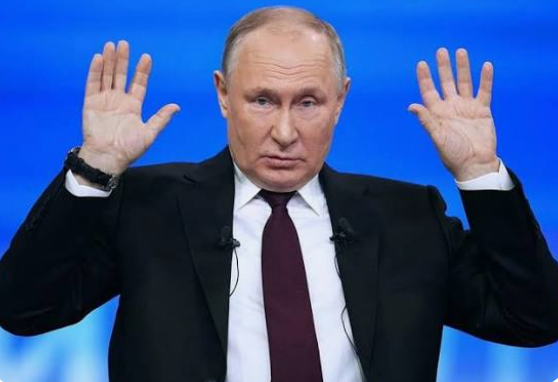
Vladimir Putin’s United Russia has walked away with 355 of the 450 seats in the State Duma, on 57.83 percent of the vote, once more than 95 percent of ballots had been counted, according to figures from the Central Election Commission. On paper it is a landslide. In practice, what it leaves behind is a lower house of parliament that will not stand in the way of the Kremlin for years to come — and a Russian public that was never handed a genuine anti-war alternative to vote for.
That combination is what makes this vote worth examining closely. The consequences are not abstract: they will shape the laws that govern wages, prices, public services and the war effort itself, and they will do so without any parliamentary force capable of challenging the direction set from above.
What a 355-seat majority actually delivers
Holding two thirds of the chamber is not a symbolic win. It gives United Russia, the party tied to the president, enough weight to push through the Kremlin’s priorities and to approve texts that require a reinforced majority rather than a simple one. Constitutional amendments and other votes needing a supermajority stop being negotiating exercises and become formalities.
No counterweight, no bargaining
For citizens, the practical fallout is a parliament that behaves less like a debating chamber and more like a rubber stamp. Budgets, spending priorities and legislation linked to the war in Ukraine will move through with little friction. Businesses and households planning for the medium term are effectively reading signals from the executive alone, because the legislature offers no independent variable.
It would be a mistake, however, to read the 57.83 percent as an endorsement of the war by 57.83 percent of Russians. An election result measures the ballots cast inside a given institutional framework. In this case, the range of choices placed before voters was itself tightly constrained.
Opponents of the war had nothing to vote for
This was the first nationwide legislative election since Russia’s full-scale invasion of Ukraine in February 2022. Yet the national ballot carried no political force able to campaign openly against the war.
How Yabloko was taken off the federal list
The clearest example is Yabloko, the liberal party that had built its campaign around a platform called “For Peace and Freedom” and remained the last Russian political organisation with an explicitly anti-war stance. On 10 August, the Supreme Court cancelled the party’s federal list registration, acting on a complaint brought by Rodina.
The stated grounds involved donations received from people who had themselves benefited from funds originating abroad, activity on digital platforms, and copyright questions concerning certain campaign materials. Yabloko rejects those explanations and says the real reason was its pacifist programme — an accusation that reflects the party’s position rather than a fact established in court. The courts upheld the exclusion, a subsequent appeal to the Supreme Court failed, and the party has now turned to the Constitutional Court.
The political effect is unmistakable: the only national force openly opposed to the war that still had access to the electoral arena vanished from the federal ballot.
The economic and social cost of a one-sided vote
When a chamber is this lopsided, the consequences spill well beyond politics. Legislation touching on labour, taxation and public spending passes with minimal scrutiny, and the usual mechanism by which opposition parties extract concessions — the threat of blocking a vote — simply does not exist here.
For ordinary Russians, that means fewer points at which policy can be challenged, amended or slowed down. For companies, it means a regulatory environment shaped by a single political will, with no meaningful parliamentary venue for pushing back. For anyone trying to understand where the country is heading, the Duma will offer few clues beyond confirming what the Kremlin has already decided.
An opposition hollowed out long before this election
The removal of Yabloko was not an isolated event. Over several years, Russian authorities have steadily narrowed the space available to parties and figures who challenge presidential power.
Well before the 2026 vote, organisations linked to Alexei Navalny had been labelled “extremist”, while several opposition figures were jailed, pushed into exile or blocked from standing. During the previous legislative elections in 2021, legal provisions were used to keep activists connected to Navalny off the ballot.
Voters still received several ballots and several parties still competed. The Communist Party, the LDPR, A Just Russia and New People were all cleared to run. But none of the main formations on offer represents an opposition comparable to the government on the central question of the war, and no anti-war party was authorised to take part in the federal contest at all.
Nobody was watching the count
Another factor weighing on the credibility of the result is that Russia did not invite the Organization for Security and Co-operation in Europe to send an election observation mission.
The OSCE’s Office for Democratic Institutions and Human Rights criticised the decision in August, saying Moscow had not responded substantively to its efforts to set up an assessment mission. The organisation also points out that restrictions introduced since earlier elections have further shrunk the possibilities for independent oversight.
Those restrictions cover candidates designated as “foreign agents”, campaign financing, the ability of parties to appoint representatives at polling stations, and the conditions under which citizen observers may work. The OSCE notes as well that Golos, the independent election-monitoring movement, was shut down after years of pressure from the authorities.
The absence of independent scrutiny does not, on its own, prove that any individual result was falsified. It does, however, deny voters and foreign observers an independent mechanism for assessing the process as a whole.
Reading the result without overreach
United Russia’s dominance in the announced figures is beyond dispute, and the Duma that emerges from these elections will be overwhelmingly loyal to the president.
But the composition of that assembly has to be read alongside everything else: Yabloko’s exclusion, the restrictions placed on opposition candidates and organisations, the missing OSCE observers and a wider climate of political repression.
The 355 seats are a major electoral fact. They are not, by themselves, a measurement of how far Russian society supports the war in Ukraine. What they demonstrate most clearly is the ability of the authorities to preserve parliamentary dominance inside a system where the conditions for their opponents to take part have become extraordinarily restrictive — and the citizens who will live with the consequences of that dominance for years to come.