The fragility of alliances in the Sahel: when words replace action
Mali is reeling under pressure, yet its neighbors in the Alliance of Sahel States (AES) — comprising Mali, Burkina Faso, and Niger — seem paralyzed by inaction. Similarly, the Economic Community of West African States (ECOWAS), from which Bamako withdrew in early 2025, has proven unable to fill the void. Between lukewarm condemnations and political calculations, West Africa’s response to the crisis has been marked by hesitation. Bakary Sambe, director of the Timbuktu Institute and researcher at Gaston-Berger University in Saint-Louis, Senegal, examines how recent events are reshaping the region’s fragile security landscape.
Mali under siege: resilience amid chaos
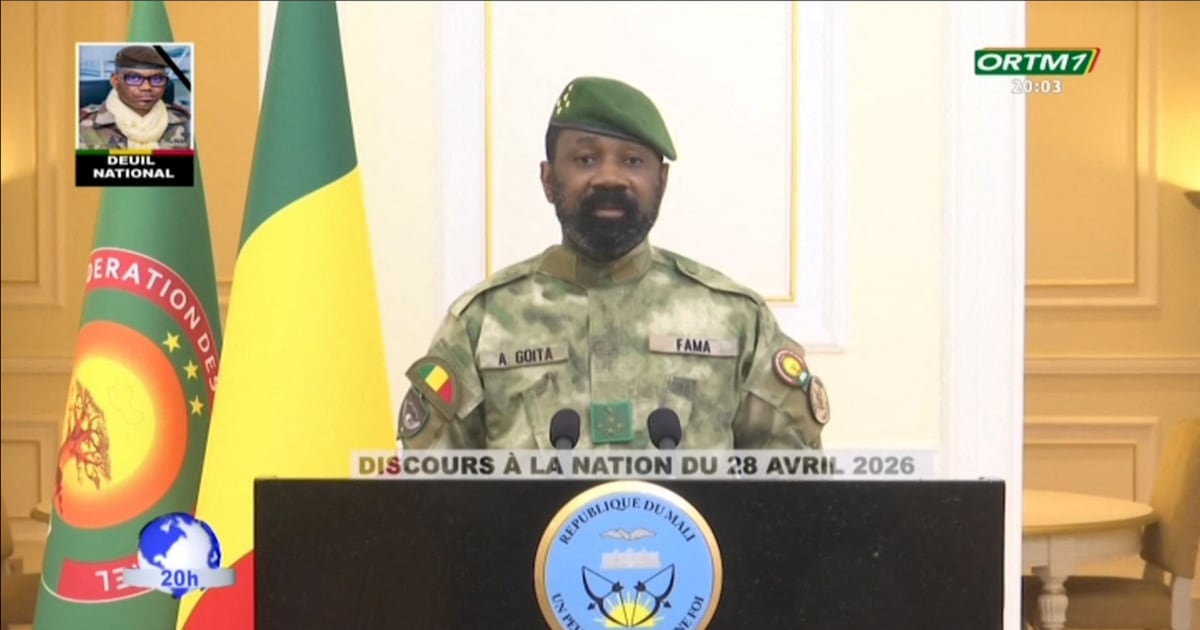
The coordinated attacks of April 25 sent shockwaves through the country, particularly in Kati, where Defense Minister Sadio Camara lost his life. General Assimi Goïta, who now holds the defense portfolio, stands at the helm of a nation tested by recurring crises. Yet, talk of regime change or Bamako’s imminent collapse remains premature. Despite clashing communiqués from military authorities, the Front de Libération de l’Azawad (FLA) and the Jama’at Nusrat al-Islam wal Muslimin (JNIM), life persists. The Malian people, long accustomed to adversity, draw on their deep resilience to endure.
Burkina Faso and Niger: allies in name, but constrained by internal threats
Burkina Faso’s interim leader, Captain Ibrahim Traoré, condemned the attacks as a “monstrous conspiracy,” though his response was met with skepticism by observers who view it as cautious rather than assertive. Ouagadougou’s primary focus remains its own battle against insurgents, a fight that has already claimed the lives of many soldiers. During Mali’s 2025 fuel blockade, Burkina Faso provided logistical support, but the operation proved unsustainable as its own security challenges intensified.
The Liptako-Gourma Charter, which underpins the AES’s mutual defense commitments, mirrors the NATO principle of collective security. However, both Burkina Faso and Niger face existential threats at home, limiting their ability to honor these pledges. The alliance, though ambitious on paper, lacks the strategic maturity to pool resources effectively. Niger’s recent declaration of a national day of fasting and prayers for an end to terrorism underscores the gravity of the situation.
« The Malian crisis exposes the helplessness of regional alliances. »
ECOWAS’s cautious return to the Sahel stage
ECOWAS has called for a « regional mobilization, » but with Bamako’s exit, the organization’s relevance in the Sahel is uncertain. A recent meeting in Lomé, Togo, brought together representatives from the AES, ECOWAS, the African Union, France, the European Union, and Russia for the first time in years. Mali’s foreign minister, Abdoulaye Diop, hinted at openness to dialogue, provided it respects the sovereignty of Sahel states. This olive branch signals ECOWAS’s attempt to re-enter the Sahelian game, seeking to distance itself from its failed military intervention in Niger.
While the alliance between AES and ECOWAS remains fragile, the April 25 attacks have reignited discussions on the necessity of joint security cooperation, even in minimal forms. The African Union has also emphasized the importance of « continental mechanisms » to prevent further destabilization in the central Sahel. Yet, the creation of the AES has disrupted regional security architecture, leaving organizations like the G5 Sahel — dissolved in 2023 — sidelined after a decade of ineffectiveness.
ECOWAS plans to deploy a 1,650-strong counterterrorism brigade by late 2026, but broader peacekeeping missions remain uncertain. The crisis has made one thing clear: isolating the central Sahel from West Africa in hopes of combating armed groups is a strategic misstep. Security must be managed collectively, with intelligence-sharing and resource pooling as priorities.
« The Sahel cannot be extracted from West Africa. »
Russia’s symbolic defeat in the Sahel
The Malian crisis has delivered a crushing blow to Russia’s influence in the region. The death of Sadio Camara, Mali’s pro-Russian defense minister, and the withdrawal of Wagner Group’s Africa Corps from Kidal are stark indicators of Moscow’s waning power. Russia’s failure in the Sahel extends beyond military setbacks; it has lost a key narrative: the myth of Russia as a protector of fragile regimes. This setback threatens to undermine Moscow’s diplomatic and security leverage across Africa.
Meanwhile, the United States has quietly re-engaged with the Sahel, dispatching high-level diplomats to the region, including Niger, where American forces were previously expelled. Washington’s renewed interest stems from shifting geostrategic priorities, with Mali’s resources and stability now a focal point. Could the U.S. leverage this moment to challenge Russia’s foothold in the Sahel?
Will the crisis spread to coastal West Africa?
For coastal nations like Togo, Benin, Ghana, and Côte d’Ivoire, the real concern lies in the escalating violence in Burkina Faso. While a severe deterioration in Mali could impact Senegal or Mauritania, the immediate risk is a spillover effect from Ouagadougou. The viability of the AES itself is now under scrutiny, as populations demand concrete solutions beyond rhetoric.
Togo is positioning itself as a potential « bridge to the Sahel, » a phrase echoed by Foreign Minister Robert Dussey. Whether this translates into tangible action remains to be seen. Yet, the fear of a domino effect in the Sahel is not unfounded, nor is the uncertainty surrounding the AES’s future.
No imminent domino effect, but vigilance is essential
The Malian crisis is unique, and replicating such an attack elsewhere would be premature. The FLA does not operate in Burkina Faso, and Mali’s turmoil stems from a convergence of northern security crises and political instability in Bamako. Paradoxically, the attacks may bolster the Malian government’s legitimacy, rallying the population around the army and national unity. Dissent is now perceived as unpatriotic, reducing the space for opposition voices.
In Burkina Faso, despite vast uncontrolled territories, no protest movement or jihadist faction has gained enough traction to destabilize the country. However, the situation warrants close monitoring, as the potential for spillover remains a lingering threat.