Rwanda’s Kagame warns of existential threat tied to M23 rebels
- Politics
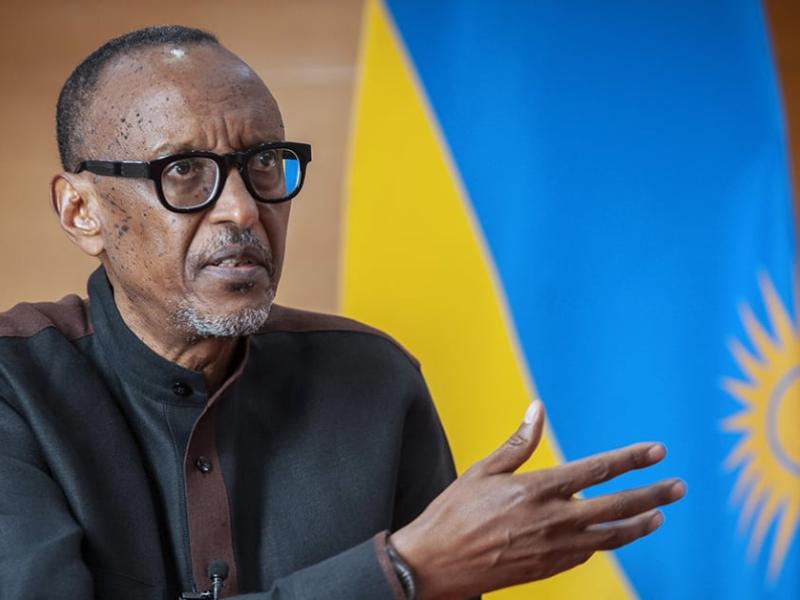
During a stern address to Rwanda’s ruling party leadership on Friday, July 17, 2026, President Paul Kagame delivered a forceful message about his country’s security imperatives amid escalating tensions in the Great Lakes region.
Facing mounting pressure from international sanctions targeting his administration, army officials, and Rwandan businesses, Kagame pushed back against what he described as attempts to silence Rwanda’s security concerns. He framed these efforts as tantamount to endorsing violence against his nation.
“Silencing people will prove harder than some imagine. Telling us to stay quiet implies supporting those who want to kill us—just as they did before—and we will handle it our way. The only way to silence me is when I am dead. That is the reality.”
Emphasizing his commitment to equality, Kagame rejected any suggestion that some lives hold greater value than others, stressing that Rwanda, despite its size and vulnerabilities, would not tolerate existential threats.
“Devaluing lives and suggesting some matter more than others is not our policy. It is not the policy of the FPR. We are a small country, insignificant in many ways. You can harm us, but wishing our disappearance is no small matter.”
Turning to the ongoing crisis in eastern Democratic Republic of Congo (DRC), Kagame addressed calls to dismantle the M23 rebel group, which the United Nations and Western governments accuse Rwanda of backing—a claim Kigali denies. The M23 currently controls large swaths of North Kivu and South Kivu provinces.
Kagame framed these calls as an attack not just on the rebel movement but on Rwanda itself.
“When they say they will eliminate the M23, they mean eliminating Rwanda. We will not accept this. If it happens—and I pray it does not—I believe they will find us prepared.”
The president’s remarks come as diplomatic efforts, including the Washington Agreement and Doha Process under Qatari mediation, struggle to yield results. Despite multiple negotiation cycles, Kinshasa and the M23 remain far apart on core issues, with the Montreux phase in Switzerland failing to inject momentum into the stalled talks. Mounting instability in the Middle East has further sidelined the crisis, delaying peace efforts.
While national, regional, and international voices continue urging compliance with peace agreements, the gap between diplomatic commitments and ground realities persists. Each party interprets accords through its own lens, leaving their implementation increasingly uncertain.