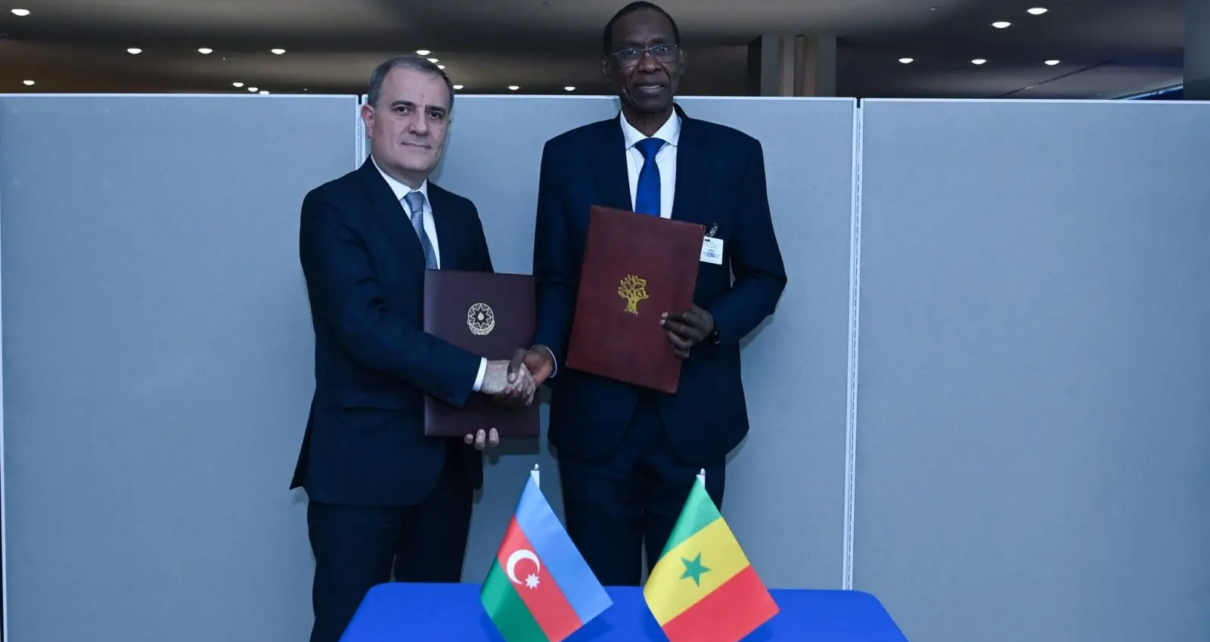
Senegal and Azerbaijan have opened a new chapter in their bilateral relationship with the signing of a memorandum of understanding in New York. The agreement, which establishes political consultations between the two countries, was concluded during the high-level week of the 81st session of the United Nations General Assembly. The Senegalese Ministry of African Integration, Foreign Affairs, and Senegalese Abroad announced the development on Friday evening, prompting immediate reactions and questions about the next steps.
What the agreement sets in motion
In standard diplomatic practice, such a framework is designed to give structure to exchanges between the two administrations on matters of shared interest. Rather than depending on ad hoc contacts, the mechanism would provide a standing channel for reviewing the state of cooperation and exploring ways to expand ties. The memorandum does not, according to the information released so far, specify the precise areas the political consultations will cover. Agreements of this kind typically serve as a foundation for later discussions that can span economic affairs, multilateral issues, and technical cooperation.
Reactions and the road ahead
The signing has been presented as a fresh momentum in relations between Dakar and Baku. Yet the practical details remain to be filled in. The ministry has not yet indicated the timetable for launching the mechanism or how often the political consultations will take place. These elements are expected to emerge in upcoming official communications from both governments. Observers will be watching to see whether the memorandum translates into concrete meetings and joint initiatives, or remains a symbolic gesture.
A broader diplomatic pattern
This agreement continues a trend in Senegalese diplomacy of forging bilateral partnerships with countries in Asia and Eastern Europe, widening Senegal’s external network beyond its traditional allies. The high-level week of the UN General Assembly has long served as a springboard for such deals, allowing leaders and foreign ministers to hold bilateral meetings and finalize texts that would otherwise require dedicated trips. The ministry did not disclose the identity of the signatories or the exact format of the ceremony. Further clarifications on how the memorandum will be implemented are anticipated in the coming days.