Public debate intensifies as civil service numbers decline
The start of the school year in Burkina Faso has brought renewed attention to a sensitive social reality: the reduction in the number of civil servants on the state payroll. According to official figures, the public workforce has contracted from 204,310 in 2021 to 202,393 in 2025, a decrease of 1,917 agents over four years. This decline has sparked widespread discussion among citizens, who are questioning the implications for household stability and the government’s broader social agenda.
Breakdown of the 2025 public workforce
The composition of the 2025 civil service is as follows:
- 140,438 men
- 61,955 women
Household livelihoods under strain
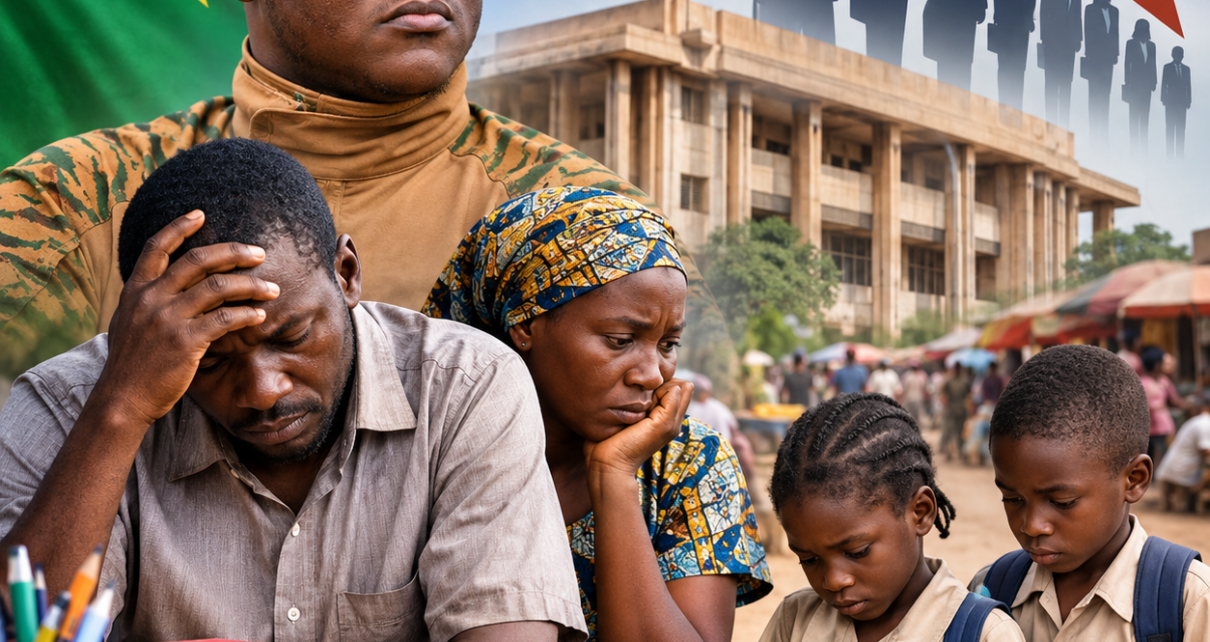
These figures represent more than administrative adjustments; they reflect the lived experiences of families. A public servant’s salary often serves as the primary income for an entire household, covering school fees, housing, food, and daily necessities. Consequently, any reduction in the number of civil servants has direct social repercussions. As families prepare for the school year, the loss of stable income can force difficult choices among essential expenditures such as tuition, supplies, nutrition, and healthcare.
Government rhetoric and the daily realities of citizens
Since President Ibrahim Traoré assumed office, official communications have consistently emphasized sovereignty, national mobilization, and the transformation of Burkina Faso. However, beyond these broad policy objectives, the central concern for many remains the immediate welfare of households: how many families currently have a reliable income to meet their obligations?
Understanding the causes of the decline
It would be inaccurate to claim that all departing agents were made unemployed, or to attribute every departure solely to a decision by President Traoré. The precise causes of this workforce reduction require thorough documentation. Possible factors include retirements, new recruitments, non-renewals of contracts, administrative restructuring, or other civil service management measures. Nevertheless, the social debate cannot be ignored.
Economic ripple effects on communities
When a household loses its main source of income, the consequences extend well beyond the administrative sphere. They affect classrooms, local markets, and homes. Each public sector job that is eliminated or left unfilled can have a multiplier effect, particularly when it was the primary income for a family. During the school year, this reality becomes even more acute. For some parents, the priority is no longer simply preparing their children for a new academic year but finding the means to finance it.
The path forward for authorities
The key challenge for Burkinabè authorities is to demonstrate that state management decisions do not result in further household vulnerability. Behind the civil service statistics are families who live, consume, educate their children, and strive to secure their future. The coming months will reveal whether policy measures can mitigate the social impact and restore confidence among affected communities.