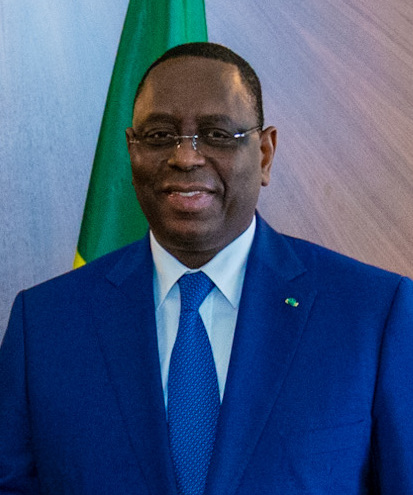
Three days after hosting Macky Sall at the Palais de la République, Bassirou Diomaye Faye made a decisive announcement: Senegal will fully support the former president’s candidacy for United Nations Secretary-General. While this backing is significant, it may not be the sole factor in determining the outcome.
The president’s decision reflects a clear break from personal grievances in favor of Senegal’s broader national interests. Though Sall’s previous administration had imprisoned Faye in April 2023 amid a crackdown on opposition figures, including Ousmane Sonko, the new government has chosen diplomacy over confrontation. This move underscores a shift from partisan disputes to a focus on national prestige and continental influence.
From political adversaries to diplomatic partners
Bassirou Diomaye Faye rose to power through an unprecedented political journey—from imprisonment to the presidency in a matter of weeks. His release on March 14, 2024, came just days before elections, following a presidential pardon secured amid pre-vote tensions. Sonko’s resilient campaign, despite legal obstacles, paved the way for Faye’s landslide victory, marking the first time a Senegalese leader had ascended to power under such tumultuous circumstances.
Yet, in a surprising turn, Faye has now embraced Sall’s UN ambitions, signaling a new chapter in Senegalese diplomacy. The presidency has framed this as a republican duty, emphasizing dialogue beyond political transitions and prioritizing Africa’s collective interests. The government has since instructed Senegal’s diplomatic corps to actively promote Sall’s candidacy, recognizing its potential to elevate the country’s global standing.
Breaking free from political constraints
This strategic shift became possible only after a major political fracture within the ruling coalition. In May, Ousmane Sonko—once Faye’s mentor and a vocal critic of Sall’s regime—was removed from his post as Prime Minister. Sonko’s personal antagonism toward Sall, stemming from his own imprisonment and exclusion from the 2024 election, had long shaped the government’s hardline stance. With Sonko’s departure, Faye gained the political space to recalibrate Senegal’s foreign policy, viewing Sall’s UN bid not as a partisan issue but as a matter of national opportunity.
The move also aligns with Faye’s broader political strategy. As he prepares to launch his own party, the president is seeking to rebuild electoral alliances, even tapping into networks from Sall’s and former President Abdoulaye Wade’s eras. The warm reception Sall received during his recent Dakar visit suggests lingering popular support, which Faye may aim to harness for his own 2029 re-election ambitions.
A boost for Sall’s campaign, but hurdles remain
For Macky Sall, Senegal’s endorsement is a game-changer. His candidacy, submitted in March by Burundi on behalf of the African Union’s rotating presidency, had faced a critical vulnerability: the lack of official support from his home country. In UN elections, particularly for high-profile roles, the absence of backing from a candidate’s nation is often interpreted as a sign of disapproval, weakening their position before even reaching the Security Council’s veto stage.
With Dakar now fully behind him, Sall can present himself as a unified candidate, backed by Senegal’s diplomatic machinery. This removes a major obstacle, depriving rivals of a key argument against his bid. However, other challenges persist. The UN Secretary-General role traditionally follows a regional rotation, and this cycle favors Latin America—a continent with four of the five declared candidates, including Argentina’s Rafael Grossi and Costa Rica’s Rebeca Grynspan. Sall, as the sole non-Latin American and former head of state, faces an uphill battle despite his African credentials.
The ultimate decision rests with the UN Security Council, where the five permanent members hold veto power. Sall enters this arena with no declared adversaries, maintaining strong ties with France and Russia. His abstention during the 2022 Ukraine vote—while leading Senegal—and a recent meeting with Russian Foreign Minister Sergei Lavrov suggest a pragmatic approach to international relations. Yet, the path to the top remains uncertain, with the verdict expected later this year.
Key takeaways
- Senegal’s support for Macky Sall’s UN bid marks a rare instance of political reconciliation, prioritizing national interests over past conflicts.
- The shift was enabled by the fallout between Bassirou Diomaye Faye and Ousmane Sonko, which loosened constraints on foreign policy.
- While the endorsement strengthens Sall’s campaign, regional rotation norms and Security Council dynamics pose significant obstacles.
- Sall’s diplomatic maneuvering—balancing relations with major powers—could prove decisive in the final outcome.