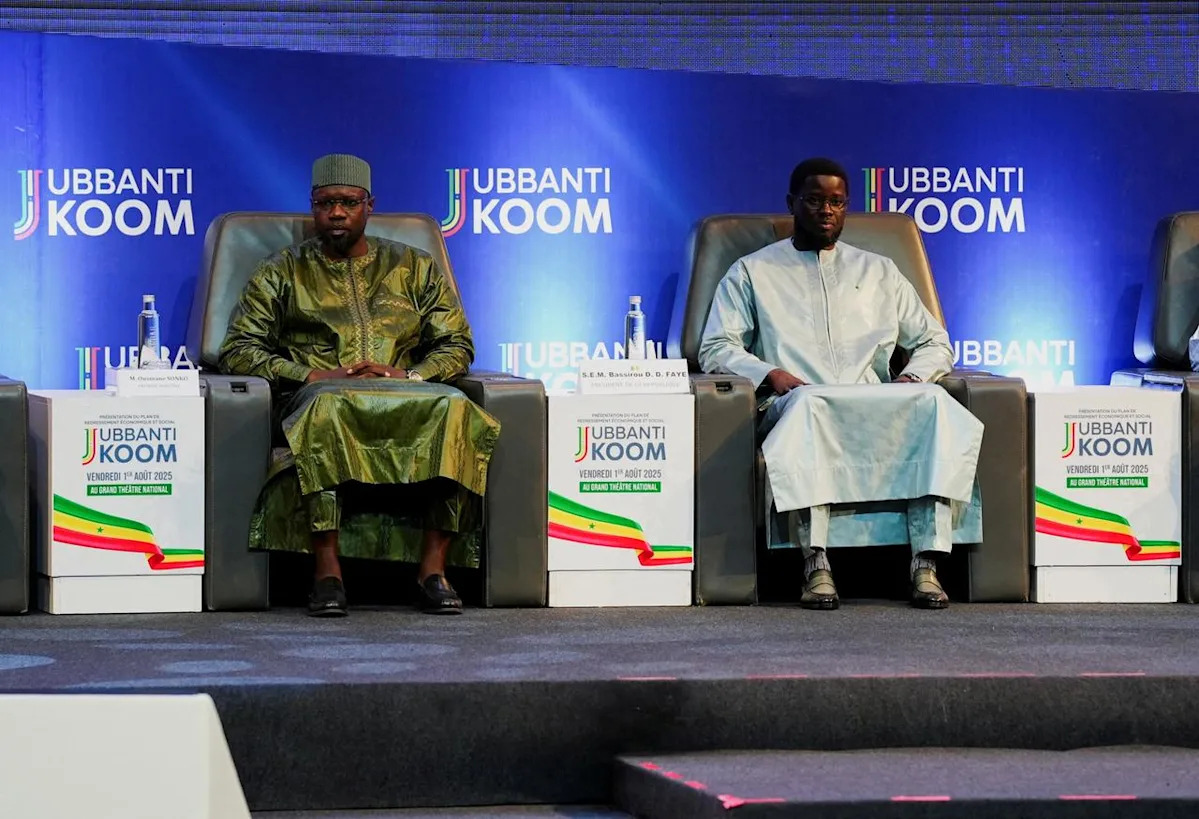
Senegal’s economic divide: Sonko vs Faye policies clash
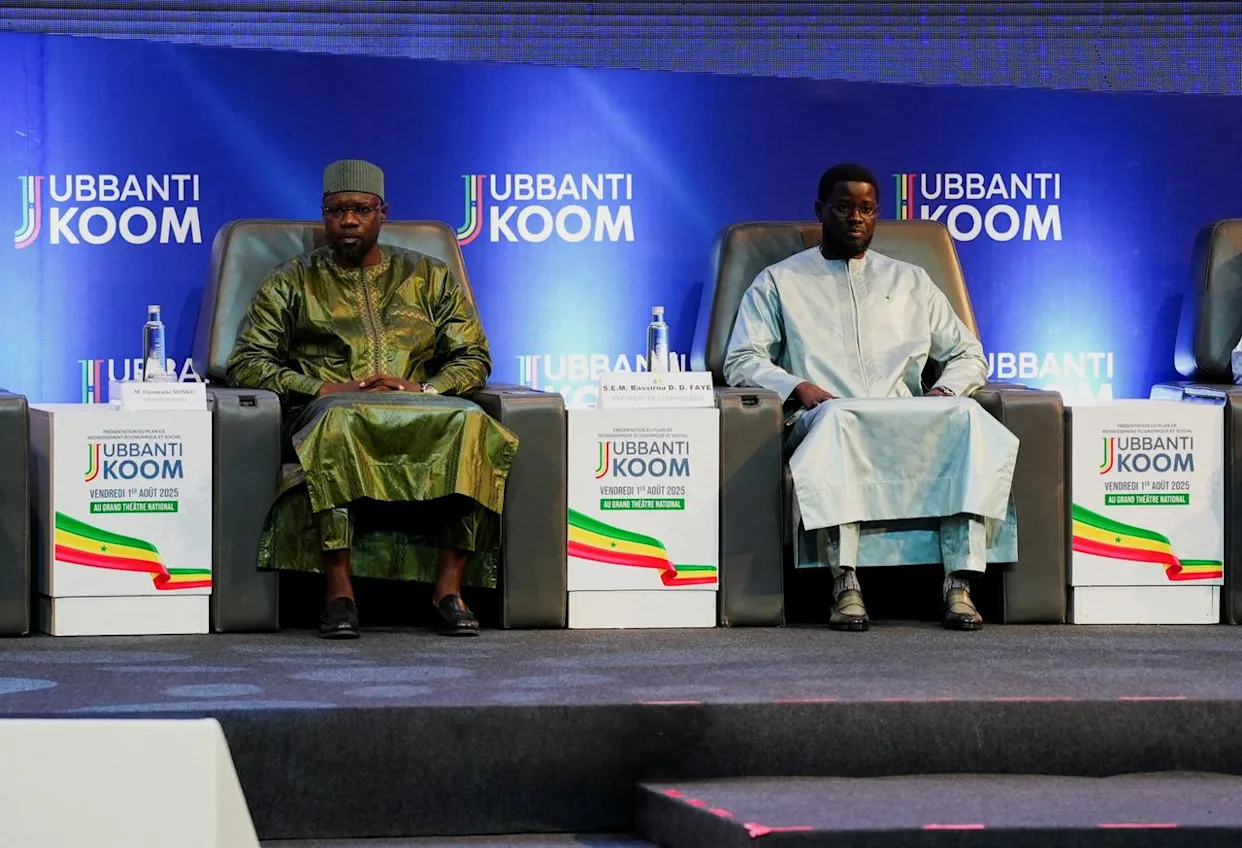
The dismissal of Ousmane Sonko by President Bassirou Diomaye Faye on May 23, 2026, wasn’t merely a political reshuffle—it marked the collapse of two fundamentally opposing economic visions that had been forcibly united under one banner. Two years after the April 2024 transition that brought Faye to power—and Sonko to the premiership—the partnership fractured over three critical economic pillars: debt management, hydrocarbon exploitation, and the very nature of capital underpinning national policy.
Debt: the first battleground
The most visible divide centered on Senegal’s debt burden. In September 2024, Sonko publicly exposed billions in previously undisclosed debt accumulated under the Macky Sall administration. By March 2025, an IMF assessment identified approximately €7 billion in unreported commitments, pushing the country’s debt-to-GDP ratio beyond 100%. Annual debt servicing consumes over 5,500 billion West African francs (€8.4 billion), with refinancing needs nearing 6,000 billion (€9.1 billion). The sovereign credit rating had been downgraded three times within twelve months.
Against this backdrop, diametrically opposed strategies emerged. Sonko rejected any restructuring, turning debt denunciation into the cornerstone of his public communication. His rhetoric resonated with the diaspora, grassroots supporters, and disillusioned citizens—he refused to be seen as the leader who would legitimize the previous regime’s mismanagement through a negotiated settlement with Western institutions. Faye, however, pursued a pragmatic path. He reopened channels with the IMF, hosted a delegation in November 2025, and launched a national dialogue in May 2026 to address the crisis.
The suspended €1.55 billion IMF program, frozen access to international capital markets, and the looming specter of sovereign default by 2028 rendered Sonko’s uncompromising stance economically unsustainable—while simultaneously cementing its political utility as a rallying cry for the Pastef (Patriotes africains du Sénégal pour le travail, l’éthique et la fraternité), the party he founded in 2014 and which holds a parliamentary majority.