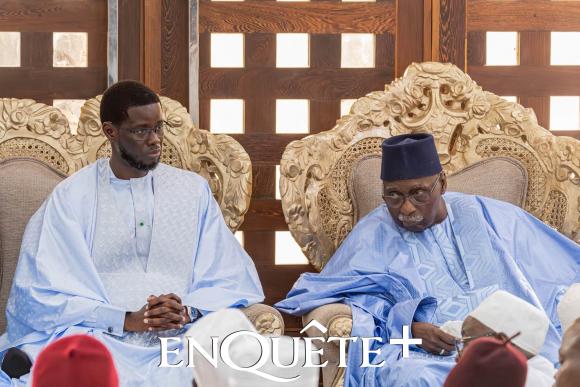
In Senegal, religion extends beyond the private sphere, actively contributing to social cohesion, crisis mediation, education, and even political regulation. Despite this pervasive influence, the interactions between the State and religious communities largely operate through informal channels. This raises a crucial question: can the institutionalization of worship help transcend clientelism without compromising the nation’s secular identity? Perhaps the core inquiry is no longer whether to formalize State-religion relations, but rather how to achieve this without inadvertently institutionalizing religion itself.
First, it is essential to dispel a common misconception: formalizing the relationship between the State and religious communities does not automatically imply making religion a state affair. Several African nations have already opted to establish public bodies dedicated to religious matters.
Mali, for instance, maintains a Ministry of Religious Affairs, Worship, and Customs, while Guinea operates a General Secretariat for Religious Affairs. Côte d’Ivoire also features a specific administration tasked with overseeing places of worship. Morocco has taken this institutionalization significantly further through its Supreme Council of Ulema and the role of Amir Al-Mouminine (Commander of the Faithful).
Senegal, too, possesses the beginnings of such institutionalization. The creation of the Directorate of Religious Affairs and the Integration of Arabic Language Graduates in April 2024 marked a significant initial stride. Its director, Djim Dramé, openly states that the Directorate’s specific objective is to “formalize the relations between the State and religions” and to foster peace, harmony, and coexistence. Consequently, the contemporary discussion revolves less around the necessity of an administration for religious matters and more around the extent of institutionalization Senegal intends to adopt.
Islamologist Abdoul Aziz Kébé views the announced transformation of the Directorate of Religious Affairs into a General Delegation as a “positive evolution” and an “institutional elevation.” His reasoning is particularly compelling: “religion is a resource in our country,” especially in areas like social cohesion and the adoption of public policies.
If religion already serves as a vital social, cultural, and even political resource for Senegal, why persist in managing its interactions with the State primarily through personal connections, courtesy visits, ad-hoc delegations, and situational arrangements? It is within this context that Ousmane Sonko’s proposition should be understood.
Sonko advocates for genuine institutionalization of State-religious community relations, structured around several key proposals: establishing a budget for worship, elevating the Delegation for Religious Affairs to a Secretary of State or a full ministry, officially recognizing certain privileges granted to religious leaders, and regulating special funds through an audited commission.
A “collaboration-based secularism between politics and religion”
The underlying principle is clear: to move beyond a system of discretionary favors towards predefined rights and established rules. When a religious leader receives administrative assistance due to proximity to the President, it constitutes a favor. However, if the same assistance is governed by a formal text, with clearly defined conditions applicable to all leaders meeting specific criteria, it transitions into an institutional framework. Therefore, the State’s role should not be to control religious practice, but rather to establish a framework that organizes its relationship with it.
Senegal is constitutionally a secular state. This fundamental reality cannot be circumvented or diminished. The Constitution affirms the Republic as secular, democratic, and social, guaranteeing equality for all citizens irrespective of religion and respecting all beliefs. Consequently, the institutionalization of worship must not lead to any form of state religion.
However, the pertinent question is whether secularism inherently forbids the State from organizing its relations with religious bodies. Political science professor Maurice Soudieck Dione highlights that Senegalese secularism possesses a distinct history. It does not precisely mirror the strict separation model seen in France. He describes it as a “collaboration-based secularism between politics and religion.” Thus, the uniqueness of the Senegalese model lies in its operation through a “pragmatic accommodation” with religious brotherhoods and the Church.
Nevertheless, the debate cannot be oversimplified to: “since religion holds a significant place in society, a Ministry of Worship must be established.” Seydou Ka, a journalist and columnist for Le Soleil newspaper, cautions against the risk of transforming secularism into a form of administrative control over religion. He expresses concern about a “bureaucratization of the sacred” and a potential drift towards a “laicism” that could undermine the autonomy of religious leaders.
This observation is crucial, as there is a fundamental distinction between institutionalizing relations *with* religions and institutionalizing religions *themselves*. In the former case, the State creates an administrative point of contact. In the latter, it gradually begins to define legitimacy, who can speak on behalf of a community, which activities are permissible, how places of worship should function, and which religious leaders receive public recognition.
The fear of a “bureaucratization of the sacred”
The State’s attempt to organize religions directly presents a clear risk, potentially altering their fundamental nature. Researcher Bakary Sambe has succinctly articulated the peril of the political-religious dynamic in Senegal. He observes that “our leaders seek in religion a legitimacy they lack in politics.” The danger of institutionalization, then, would be to transform an already clientelistic relationship into a bureaucratized form of clientelism. Instead of politicians occasionally seeking religious blessings, permanent mechanisms for distributing public resources could emerge.
It is precisely because these risks exist that I believe institutionalization is necessary. Currently, a significant portion of the interactions between the State and religious authorities remains personalized. A president cultivates a unique relationship with a particular caliph. A minister maintains close ties with a specific religious family. A community might more easily secure certain investments due to its religious influence.
A major religious event receives special support because of its significance. The question then arises: is it better to leave these practices informal or subject them to public regulations? In my view, institutionalizing them is preferable. However, with an important caveat: we must not institutionalize faith; we must institutionalize the State’s relations with the religious phenomenon.
This perspective aligns with Djim Dramé’s assertion that the Directorate of Religious Affairs aims to engage with “all religious sensibilities” and formalize State-religion relations. The National Council of Lay Catholics has also expressed support for this approach, viewing the Directorate as a potentially effective interface between the Church and the State. Its president, Philippe Abraham Tine, emphasized the need for clear communication regarding the structure’s role to prevent misunderstandings. This interconfessional dimension is paramount.
Senegal is a profoundly believing society. Muslims constitute a vast majority, while Christian communities boast a considerable historical and social presence. This socio-historical reality warrants an institutional response. If the State supports citizens in education, health, culture, or sports, why should it treat religious matters as a reality it can never institutionally address?
A public policy for religious affairs
The State can support pilgrimages, help secure major religious events, foster religious education, contribute to the renovation of places of worship, and assist religious establishments, provided that rules are transparent and equitable principles are applied uniformly. Islamologist Abdoul Aziz Kébé specifically highlights the objective of supporting “Muslim, Christian, and traditional religious communities” in their worship and development. Ultimately, Ousmane Sonko’s proposal sparks a far broader discussion than a mere administrative question.
It compels Senegal to critically examine its unique model of secularism. Seydou Ka reminds us of the risk of bureaucratizing the sacred. Étienne Smith invites us to consider “proportional equidistance.” Seydi Diamil Niane emphasizes the necessity of institutionalizing relations between public authorities and religious leaders. Maurice Soudieck Dione demonstrates a distinctive collaboration between the political and religious spheres.
The experiences of Côte d’Ivoire, Mali, Guinea, Niger, and Burkina Faso each illustrate various approaches to organizing these relationships. Sonko, however, poses another fundamental question: why continue to manage through favor what could be organized by law? This is where the true value of his proposition lies. Provided, however, that a critical error is avoided: institutionalizing worship must not mean nationalizing religion. The State must remain secular. Religions must retain their autonomy. And citizens must be free to practice their faith.
Therefore, I would not necessarily advocate for a “Ministry of Religion,” which might give the impression that the State is managing spiritual affairs. Instead, I would champion a republican institution tasked with transparently and equitably organizing the relations between the State and religious practices. Because Senegal cannot pretend that religion does not exist.
The question, then, is no longer whether to institutionalize the religious phenomenon, but how to institutionalize it without losing the distinctiveness of Senegalese secularism. In my opinion, the correct answer lies in one principle: do not institutionalize faith. Institutionalize the relations with faith. This is the only path that reconciles republican secularism, religious freedom, confessional equity, and the autonomy of religious communities.