For traders, farmers and displaced households in and around Silmossin, news of a fresh jihadist takeover is not a distant security briefing. It is the continuation of a pattern that shuts down roads, drains markets of customers and forces families away from their land this time on the doorstep of Dédougou, in western Burkina Faso.
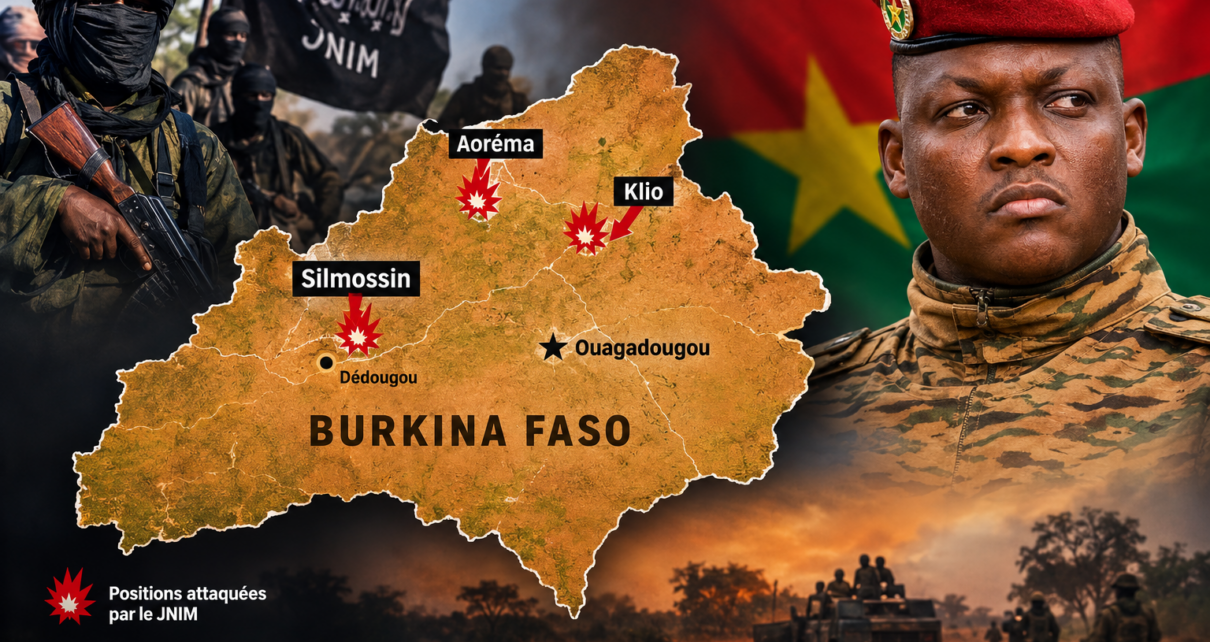
The Group for the Support of Islam and Muslims (JNIM) stated that on the evening of Friday, 25 September 2026 it took full control of several positions held by Burkina Faso’s militia forces at Silmossin. On the same day, it claimed to have seized two positions used by the national army and the Volunteers for the Defence of the Homeland (VDP) at Aoréma and Klio, in the north of the country. Beyond the accuracy of any single claim, the repetition carries a question with tangible consequences for ordinary people: how much real protection does the current security approach deliver where they live and work?
Why the latest claims matter far beyond the battlefield
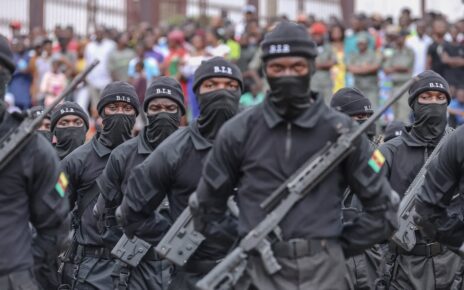
Since Captain Ibrahim Traoré took power, the authorities have presented the reconquest of territory, the strengthening of national forces and the mobilisation of the VDP as the three pillars of a new security doctrine. Yet a military strategy cannot be assessed solely by the number of troops deployed, operations announced or localities declared recaptured.
The decisive measure is the state’s capacity to hold its positions over time, keep residents safe, keep roads open and stop armed groups from filtering back into areas they have been pushed out of. It is precisely on that endurance test that the difficulties persist.
Markets, roads and harvests hang in the balance
When control of a village changes hands more than once, the consequences ripple outward. Supply routes become risky, traders avoid certain corridors, farmers abandon fields they can no longer reach safely, and schools and health posts stay shut. Each of those losses tightens the pressure on households that were already living on the edge, and it slows the local economy that the state needs to recover alongside the territory.
A security doctrine judged by what survives after the troops move on
A genuinely secure zone is one where administration functions again, classrooms reopen, markets restart, farmers return to their plots and displaced families feel able to come home. That is the standard against which the security record of the current government deserves careful scrutiny.
The heavy burden placed on volunteer fighters
The large-scale reliance on the VDP has widened the defensive footprint, but it has also placed non-professional combatants in exposed and vulnerable positions. Assessments of JNIM operations repeatedly highlight factors such as intelligence, mobility, logistics, road surveillance, coordination between units and above all the ability to hold forward positions over the long term.
Even the authorities acknowledge the limits of a purely military answer
The problem therefore runs deeper than any single battle won or lost. Retaking a position does not automatically restore the state’s authority in a lasting way. On the same day the new claims circulated, Burkina Faso’s foreign minister himself conceded the need to learn lessons from what “has not worked so far”, stressing the importance of preventing young people from being recruited by terrorist groups. That admission matters: it suggests that, even at the highest level, the military option alone is understood to be insufficient.
Drones, mobility and the difficulty of holding ground
Burkina Faso is confronting an unusually adaptable insurgency. JNIM has built up capabilities in mobility, intelligence gathering, financing and the use of new technologies, while its operations continue to stretch security forces and expose civilians. Analyses of jihadist tactics point to evolving methods, growing use of drones and the persistent difficulty Sahelian states face in stopping armed groups from re-entering spaces they have lost.
The economic and social ledger citizens are asked to carry
For Ibrahim Traoré, the challenge is no longer simply to project a narrative of victory. It is to show, with figures and results, that the approach pursued since 2022 is genuinely reducing violence over time and restoring the state’s authority. Political communication can announce progress; the ground imposes a different demand lasting safety for the people who have to travel, trade, farm and raise children there.
Should the Silmossin claims be confirmed, they would signal once again that forward positions remain fragile. Even without confirmation, the steady accumulation of claims against Burkinabè positions raises an uncomfortable question: why do certain areas remain so hard to secure despite more personnel, more equipment and more resources committed to counterterrorism?
The indicators that would settle the debate
The discussion should not be confined to slogans, images of military operations or declarations of victory. It should rest on verifiable benchmarks:
Territories that remain secure over the long term
Attacks targeting civilians and military losses
Freedom of movement along major routes
The rate at which displaced people return home
Whether public services are actually functioning again
The ability of national forces to hold recaptured positions
Without transparent data allowing these elements to be measured, the gap between the official account and what people experience will keep feeding doubt.
Results, not slogans, will decide the argument
In a conflict against armed groups, the outcome is not settled by messaging. It is settled by what endures on the ground and by whether the families around Dédougou, Silmossin and beyond can finally rebuild their lives without fear of starting over again.
By Cécile Mboua — Political News Writer