sonko strikes back after dismissal in Senegal
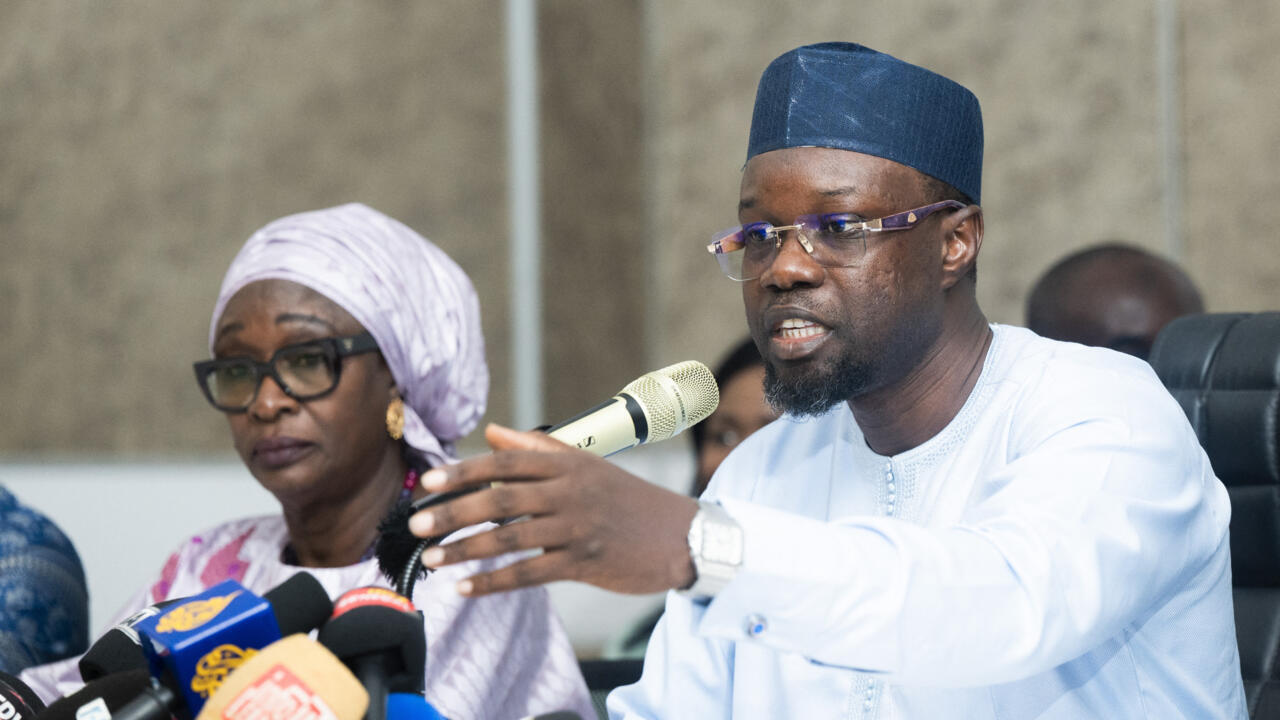
Less than a week after his removal from office by President Bassirou Diomaye Faye, former Prime Minister Ousmane Sonko fired back in a press conference held in Dakar. The leader of the Pastef party did not mince his words, sharply criticizing the new government led by Prime Minister Al Amine Lô.
Sonko, who was dismissed last week, accused the administration of lacking fundamental political legitimacy. “We have a government with no political grounding,” he declared, dismissing the coalition backing the presidency as meaningless. “This so-called coalition represents nothing,” he asserted, labeling the government’s technocratic label as a thinly veiled admission of political isolation. He emphasized that Pastef remains the largest elected party in the country and warned that governing without it amounts to ruling without the people’s mandate.
a political power struggle unfolds
Political analysts warn that the absence of Pastef from the government creates a significant challenge for President Faye. With 130 out of 165 parliamentary seats under its control, the party holds a dominant majority, setting the stage for an unprecedented internal power struggle within the presidential majority itself.
“While President Faye retains the constitutional powers of his office,” noted one analyst, “the success of his agenda hinges on his ability to maintain trust with Pastef’s lawmakers. Without their cooperation, passing key legislation and implementing reforms could become nearly impossible.”
Critics argue that the president’s recent decisions have severed his connection with the movement that propelled him to power. As one commentator put it, “Bassirou Diomaye Faye now governs in a strange space—legally legitimate, yet narratively orphaned, stripped of the historical context that once defined his purpose beyond mere state administration.”
Meanwhile, Sonko, with his 130 deputies, stands ready not just as an opponent but as the guardian of the movement’s original vision. “We were here before, and we will be here after,” he declared, positioning himself as the voice of the people’s mandate.
more than cohabitation: a deep rift
Observers describe the current political climate in Senegal as something far more complex than a typical cohabitation scenario. “This isn’t a standard power-sharing arrangement between opposing forces,” explained a political scientist. “It’s a fracture within the same movement—a president and a party controlling an absolute parliamentary majority refusing to participate in the government.”
The question now looms large: how can a technocratic government without its own parliamentary base govern effectively when faced with a party holding the majority and mobilizing over a million supporters nationwide? The answer may unfold in the coming weeks and months, not just in the corridors of power but in the streets and institutions of the nation.