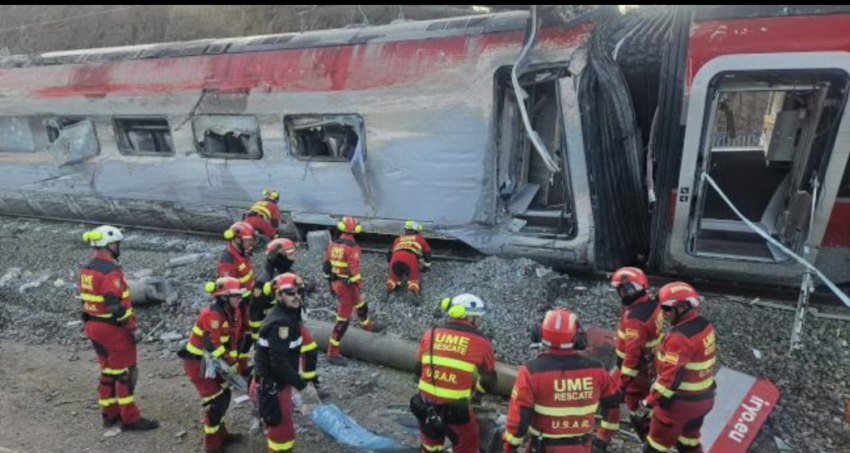
The heart of Spain has been shattered by a devastating high-speed train collision near Urda in Toledo province, where at least 46 lives were lost and 179 people were injured. As emergency crews work tirelessly to stabilize the situation, the real-world consequences of this tragedy are reverberating across the nation, forcing businesses to halt operations and travelers to question the reliability of the country’s rail infrastructure.
Human toll: families shattered and communities in mourning
The scale of the disaster has sent shockwaves through the community. Rescue teams, including firefighters, medical staff, and civil protection personnel, have been deployed to the scene to evacuate passengers trapped in derailed carriages. The collision, which occurred on a critical rail link between Madrid and Andalusia, saw multiple train cars violently thrown off the tracks, complicating rescue efforts and prolonging the agony for those awaiting news of loved ones.
Hospitals in the region have been overwhelmed, with the most critical cases requiring immediate surgical intervention. The provisional nature of the death toll underscores the urgency of the recovery operation, as authorities continue to consolidate official figures and identify the deceased. For the families of victims, the wait for closure has become an unbearable ordeal.
Economic ripple effects: disrupted supply chains and travel chaos
The fallout from the collision extends far beyond the immediate human cost. Rail services on the Madrid-Andalusia corridor have been suspended, stranding commuters and disrupting freight logistics that underpin local businesses. With the region’s economy heavily reliant on timely rail transport, the suspension of services has already started to ripple through supply chains, affecting everything from agriculture to manufacturing.
The immediate economic impact is expected to be severe, particularly for small and medium-sized enterprises that depend on rail freight to move goods. Analysts warn that prolonged disruptions could lead to delays in deliveries, increased operational costs, and potential losses for businesses tied to the affected routes.
The investigation begins: piecing together the disaster
With the human and economic stakes higher than ever, the focus now shifts to uncovering the root causes of the collision. Initial reports suggest potential issues with signaling systems or traffic management protocols, but these remain unconfirmed. A comprehensive investigation will examine:
- Technical failures: Were there malfunctions in the train control systems or signaling infrastructure that contributed to the accident?
- Human error: Did miscommunication or procedural lapses between train operators and control centers play a role in the disaster?
- Infrastructure condition: Could deteriorating track conditions or inadequate maintenance have been a factor?
Investigators will rely on data from onboard recorders, signal logs, and infrastructure inspections to reconstruct the moments leading up to the crash. The goal is not only to assign responsibility but to implement fail-safes that prevent future tragedies.
Political and public response: calls for systemic reform
The collision has reignited long-standing concerns about the state of Spain’s rail safety infrastructure. Critics are demanding a full audit of the national high-speed rail network, pointing to a series of recent incidents that suggest systemic vulnerabilities. In response, government officials have pledged to accelerate safety reviews and consider legislative changes to strengthen oversight.
Public sentiment is overwhelmingly in favor of accountability. Protests have emerged in Toledo and Madrid, with citizens and advocacy groups demanding transparency from authorities and swift action to prevent recurrences. The tragedy has also highlighted the need for improved crisis communication, as families and survivors grapple with the uncertainty of the situation.
A nation on edge: what lies ahead?
As Spain mourns its dead and tends to its wounded, the road to recovery will be long and arduous. The immediate priority remains the welfare of survivors and the dignified handling of recovery operations. Yet, the questions raised by this disaster—about safety protocols, infrastructure resilience, and accountability—will dominate the national conversation for weeks to come.
The findings of the investigation will be critical in shaping the country’s approach to rail safety moving forward. Until then, Spain remains a nation on edge, united in grief but determined to ensure that such a catastrophe is never repeated.