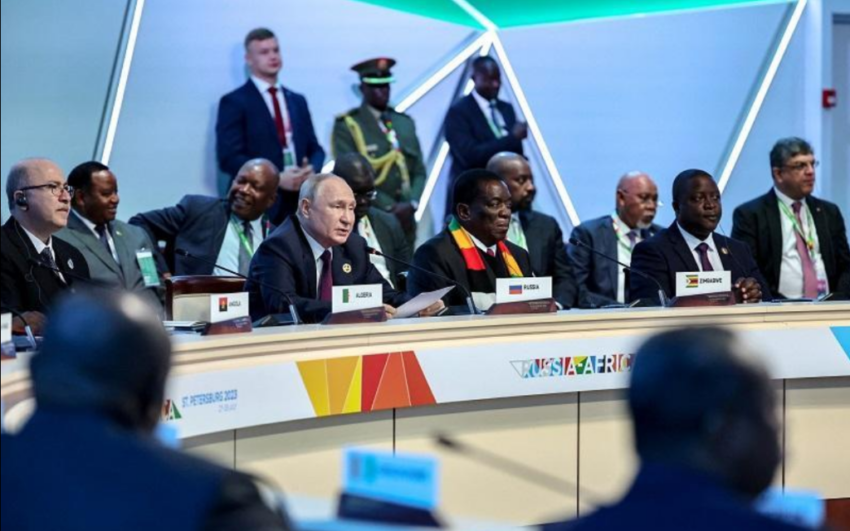
Moscow’s Russia-Africa Summit 2026 has spotlighted a striking divergence within the Sahel alliance after Mali’s transitional leader Assimi Goïta arrived in person while the alliance’s two other heads of state either sent surrogates or remain unconfirmed. The stark contrast is drawing sharp attention to the cohesion of the Alliance of Sahel States (AES) as joint security, trade and investment talks unfold.
Why Goïta’s physical presence in Moscow matters
General Assimi Goïta touched down in the Russian capital two days ahead of the official opening, accompanied by a high-profile delegation. His arrival was captured by international media, underscoring Mali’s determination to assert itself as the Sahel’s primary interlocutor with the Kremlin. In contrast, Captain Ibrahim Traoré of Burkina Faso is absent; instead, Prime Minister Rimtalba Jean Emmanuel Ouédraogo leads the Ouagadougou delegation. Even more uncertain is the status of General Abdourahamane Tiani of Niger, whose attendance was initially announced by Russian authorities but remains unverified as the summit begins.
How the absence of peers shapes Sahel perceptions
The Malian leader’s solo appearance is already reshaping perceptions of the AES. While Goïta’s physical presence projects authority, the Burkina Faso premier and Nigeria’s missing-president narrative risk conveying an image of division at a time when coordinated messaging could have amplified the alliance’s collective voice. Analysts point out that leadership signaling at high-profile summits often sets the tone for follow-on negotiations on security cooperation, grain supplies and energy infrastructure.
Moscow’s broader African guest list reveals diverse diplomatic strategies
The Kremlin confirmed participation from forty-eight of Africa’s fifty-four nations, twenty-two led by their presidents. Burundi’s Évariste Ndayishimiye, Zimbabwe’s Emmerson Mnangagwa, Ghana’s John Dramani Mahama, Mozambique’s Daniel Chapo, South Sudan’s Salva Kiir, Eritrea’s Isaias Afwerki and Equatorial Guinea’s Teodoro Obiang Nguema Mbasogo are among those personally present. Other governments opted for high-ranking substitutes: Algeria sent Prime Minister Sifi Ghrieb; Benin dispatched Vice-President Mariam Chabi Talata; Uganda fielded Vice-President Jessica Alupo; and South Africa’s delegation is led by Zane Dangor, Director-General of International Relations. These variations reflect differing domestic priorities and diplomatic calculus rather than uniform alignment with Moscow.
Six countries still missing from the official tally
Six African states have not yet been confirmed in the Kremlin’s running count. Whether their abstention reflects policy disagreements, logistical delays or other unstated reasons remains unclear. Crucially, the absence of a president does not necessarily equate to a boycott—many nations continue to engage through ministerial teams—yet the optics can influence investor sentiment and regional perceptions of stability.
Economic and security promises hinge on credible follow-through
Among the agenda items, Moscow is expected to unveil a new 2027-2029 cooperation framework covering trade, energy, agriculture and security. For Sahel governments battling insurgencies and food insecurity, tangible outcomes will outweigh symbolic diplomacy. Mali’s visible delegation may secure early gains in defense equipment and wheat supply talks, but lasting benefits will require joint implementation—and that, in turn, depends on a unified front the AES has yet to display.
What the next 48 hours could reveal about Sahel cohesion
As plenary sessions begin and bilateral meetings multiply, observers will watch closely for clues: Will Prime Minister Ouédraogo’s Burkina Faso delegation sign separate accords? Could Moscow still receive confirmation of General Tiani’s arrival? Most importantly, will the AES issue a joint communiqué on security coordination and resource sharing? Even small omissions or late arrivals can ripple across global commodity markets and defense contracts. For now, Goïta’s solo flight to Moscow has made the Sahel’s diplomatic patchwork impossible to ignore.